Someone disputes a result your AI produced. Can you explain it? That's the test we'd apply. AI data governance is the set of policies, processes and technical controls that keeps the data behind AI systems appropriate, authorized, documented, versioned and auditable across its whole lifecycle. With it, you can trace where data came from, how it changed, who approved its use, and which data shaped a model's outputs.
Production AI can steer business operations, customer experiences and regulated decisions. Accuracy alone won't explain a contested output or prove sensitive data was handled correctly.
Why does data lineage matter for AI?
Without it, investigating a wrong or biased output is guesswork.
Data lineage shows how information traveled from its source, through transformations and training pipelines, into a model. A useful record names the source datasets, ingestion steps, filtering rules, labels, joins, feature transformations and pipeline versions involved. Where practical, it also links the resulting training dataset to the model artifact, the evaluation results and the deployment.
So when an output is challenged, investigators can work backward. Did the problem come in through source data, a labeling decision, a transformation, an incomplete population, or some other pipeline stage?
Lineage supports investigation but does not prove correctness or reproduce a failure by itself. Reproduction may also require retained data, model and prompt versions, code, configuration, dependencies and execution records. It contributes to the evidence gathering described in an AI audit checklist.
It helps with the fix, too. Once you've found the problem source or transformation, you can find the affected model versions, correct the pipeline, retrain where needed, and record what changed.

What is AI data governance?
Data control, applied to whatever model training, evaluation, retrieval and production actually need. Every AI system gets tied to documented data sources, permissions, transformations, versions and assumptions.
Isn't that just data quality? Traditional data quality still matters, but it's one slice of the problem. A dataset can be technically accurate and still wrong for a model. Maybe it was collected for some other purpose, represents the wrong population, covers an outdated period, or contains information nobody authorized for training.
Good governance can answer five practical questions. Which datasets and records may this model or agent use? Who approved that use, and under which policy? What happened to the data before training or retrieval? Which dataset version produced a given model version? And what limits should operators keep in mind when using the output?
With those records, engineering, security, risk and business teams look at the same system from one shared evidence base. Without them, everyone works from informal knowledge and memory.
This is the data half of AI governance, and in our view it's the half that gets neglected.
How should teams control and version AI data?
Two jobs. First, authorize data use before it goes into training or becomes available to an AI application. Second, bind every model version to a dataset version you can recover. Enforce both in code, because a one-time manual review won't hold up.
Personal, regulated and confidential business data can each need different permissions, purposes, retention rules and processing boundaries. Identity-aware access services can weigh the user or workload identity, the requested data and the relevant policy before granting access. Attribute-based access control for data is one way to express those decisions more precisely than broad roles or shared credentials allow.
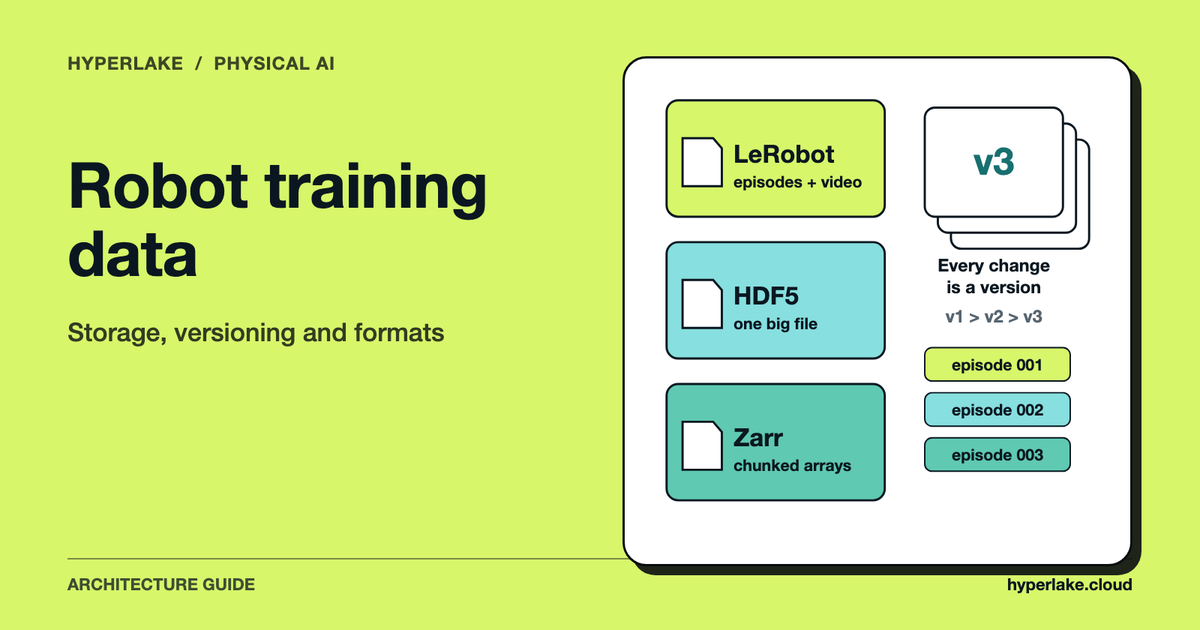
Dataset versioning is a separate requirement, though a related one. To retrain a model, reproduce an evaluation or audit a historical output, you need the exact dataset used back then; the latest copy of the underlying records won't do.
Treat training data a lot like source code. Give each training dataset a version or immutable reference, and record the pipeline, configuration and transformations that produced it. Link that version to the resulting model and evaluation artifacts. Then preserve or reconstruct it in line with applicable retention policies.
The two controls have to work together. Pulling an old dataset back for an audit shouldn't sidestep the authorization rules that protect the same sensitive information in current systems.

What data assumptions should teams document?
Start with a model trained on data from one facility. Hypothetically, it might need more evaluation before it goes into a site with different equipment, lighting, layouts or operating procedures. That's the kind of limit documentation is for.
Every dataset reflects choices. Its records might represent one geography, customer segment, device type, operating condition or time period. Collection methods can leave out certain events, introduce measurement error, or depend on labels created under specific instructions.
Write down what each dataset represents, when and how it was collected, and where its limits are: the intended purpose, represented population, collection period, methodology, known exclusions, transformation logic and relevant quality constraints. Name the accountable owner, and state the conditions under which the dataset may be used. Written down, those assumptions show the people deploying, evaluating and governing a model where its boundaries sit, and that's how teams notice a model being used outside what it supports.
Documentation won't remove those risks. It makes them reviewable before deployment.
How Hyperlake helps
Hyperlake lets teams assemble data, model, application, policy and monitoring capabilities in infrastructure they or their clients control. Its shared controls support identity, scoped access, audit and lineage, and integrated access points can use OAuth/OIDC sign-in, validated JWT identities and OPA policy decisions. To discuss a governed AI environment for your data and deployment requirements, talk to our team.
Frequently asked questions
Can accurate training data still fail governance requirements?
Easily. Accurate data can still be unauthorized, collected for an incompatible purpose, unrepresentative of the deployment population, or impossible to trace back to its source. AI data governance asks whether data is appropriate, permitted, documented, versioned and auditable, which goes well beyond whether individual values are correct.
What records are needed to investigate a biased model output?
Records that connect the model to its exact training dataset, source datasets, labels, transformations, filtering rules, pipeline version and evaluation results. Documentation of represented populations, collection periods and known exclusions adds context. Together they help you locate where the behavior may have entered the system.
Should AI data governance cover retrieval data as well as training data?
Yes. Production AI systems keep using retrieved documents, structured records, vector search results, tool outputs and other context long after training. Governance should control which identities can reach that information, record the relevant access and transformations, and keep enough evidence to explain what context fed into an output.
How is AI data governance different from model governance?
AI data governance is about the information used to train, evaluate, ground and operate an AI system. Model governance covers the model more broadly: evaluation, approval, deployment, monitoring and retirement. They overlap, since you can't oversee a model reliably without knowing which governed data produced or informed each result.