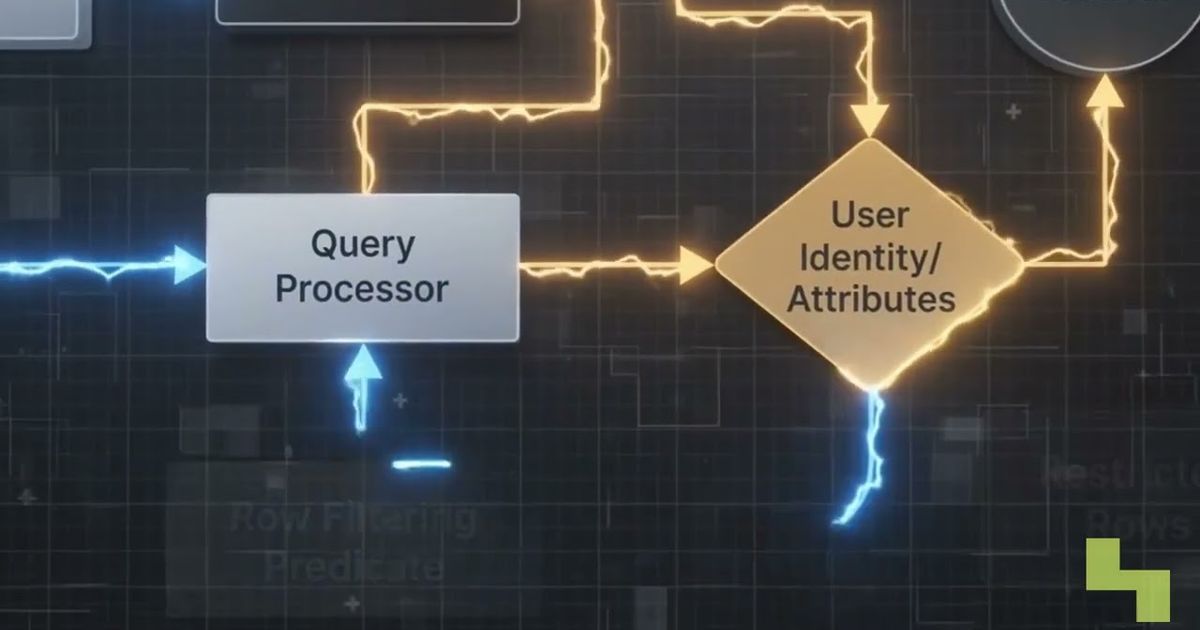
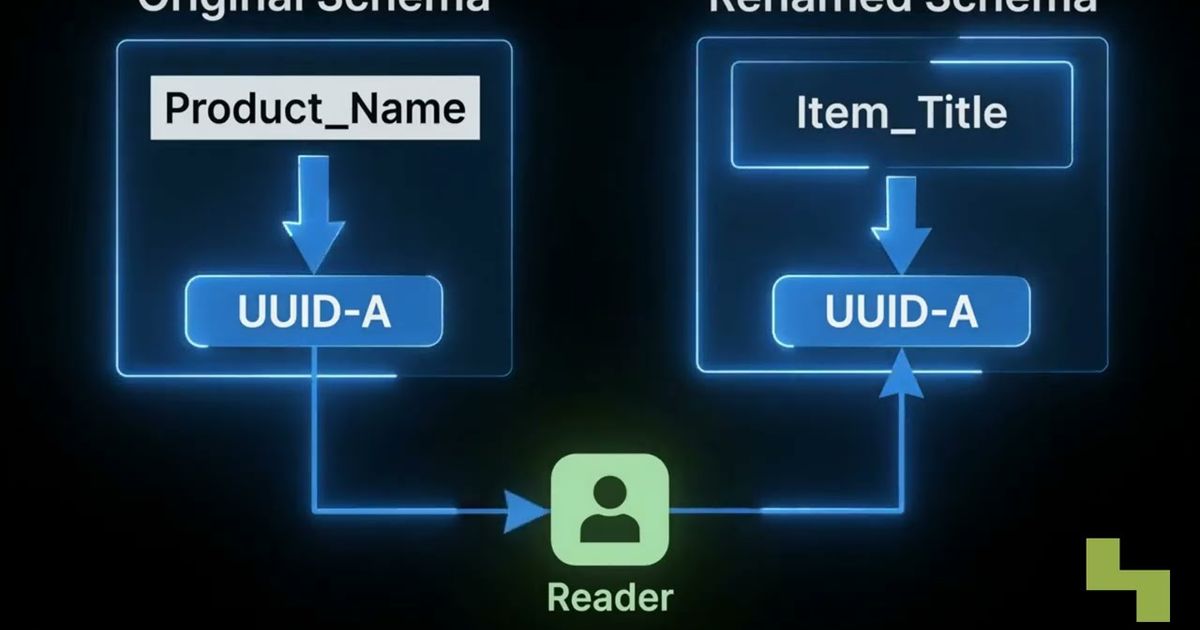
Apache Polaris is an open-source metadata catalog that gives multiple query engines a standards-based REST interface to shared lakehouse tables. It manages table specifications, snapshots, and access policies independently of compute, helping organizations apply consistent governance while reducing proprietary metastore lock-in and catalog synchronization work.
This matters because a lakehouse stops being truly open when each compute engine requires its own catalog, permissions, and copy of metadata. An open catalog separates table management from processing so teams can change or combine engines without rebuilding the governance layer. The video above walks through the core ideas.
What problem do open metadata catalogs solve?
Open metadata catalogs provide a shared, engine-agnostic system for discovering and managing tables. Without one, every analytics engine may depend on a proprietary metastore, creating isolated governance domains over data that might otherwise reside in the same storage environment.
Fragmentation produces several operational problems:
- Teams must synchronize table definitions, schema changes, and snapshots between catalogs.
- Security administrators may duplicate roles and access rules for every engine.
- Inconsistent metadata can cause engines to see different versions of the same table.
- Switching or adding compute engines becomes a catalog migration project.
- Compliance teams must reconstruct activity across separate control planes.
An open catalog replaces those disconnected interfaces with a common specification. The table format, catalog, storage, and compute engine remain distinct architectural layers, which is also central to a well-designed data lakehouse architecture.
The goal is not to put all data processing into the catalog. The catalog coordinates metadata and authorized operations while distributed query engines continue to perform the actual computation.
How does Apache Polaris work across query engines?
Apache Polaris exposes a standardized REST catalog interface that compatible query engines and tools can call. It maintains table specifications, version snapshots, and access policies without being embedded in one underlying compute engine.
A typical interaction follows four steps:
- A query engine authenticates to the catalog.
- The catalog evaluates whether the requested table operation is authorized.
- The engine receives the metadata required to locate and interpret the table.
- The engine reads or writes the underlying table files according to the approved operation and applicable storage controls.
Multiple engines can therefore work with identical table files rather than creating engine-specific copies. Compute clusters remain distributed, but catalog operations pass through a consistent interface and governance point.
This separation also makes third-party integration simpler. Instead of implementing a different proprietary metastore protocol for each platform, a compatible tool can integrate through the REST specification. Compatibility still needs validation across the chosen catalog, table format, engine, and authentication design.

How does a unified catalog improve lakehouse governance?
A unified catalog establishes one place to define and enforce metadata-level authorization across participating engines. It reduces the chance that one engine grants access differently from another because teams copied or translated policies incorrectly.
Key governance benefits include:
- Consistent role-based controls: Approved roles can be applied to catalog operations across compatible engines.
- Fewer synchronization errors: Engines consult shared metadata instead of separately maintained catalog copies.
- Clearer auditing: Read and write requests pass through a common interface that can support centralized review.
- Stable table history: Version snapshots are managed independently of transient compute clusters.
- Reduced vendor dependency: Table management is not bound exclusively to one query engine’s metastore.
Catalog authorization does not eliminate the need for identity, network, and storage security. Strong governance connects authenticated users or workloads to policy decisions, catalog permissions, and enforcement at the data access point. This broader chain is covered in AI data governance.

When should enterprises adopt an open catalog architecture?
An open catalog is most useful when several engines, teams, clouds, or organizational units need governed access to common lakehouse tables. It is especially relevant when proprietary metastores are creating duplicated policies, synchronization jobs, or constraints on engine choice.
Adoption should begin with an inventory of table formats, catalogs, engines, identities, storage permissions, and existing policy models. Teams can then identify which workloads support the target REST interface and decide how catalog roles map to enterprise identities.
Central governance does not require every business unit to operate as one undifferentiated domain. A federated metadata architecture can preserve organizational boundaries while using standardized catalog interfaces and common policy conventions. This avoids pairwise catalog synchronization while supporting controlled access across distributed teams.
Migration should be incremental. Validate read and write behavior, snapshot handling, role mappings, audit records, and failure recovery with a limited set of tables and engines before expanding. The result should be interoperable governance, not merely another catalog deployed beside the existing ones.
Key takeaways
- Apache Polaris separates governed table metadata from the compute engines that query and update data.
- A standardized REST catalog lets compatible engines work with the same underlying table files and metadata.
- Centralized catalog operations reduce duplicated policies and multi-catalog synchronization errors.
- Open catalog interfaces improve engine flexibility, integration, and compliance auditing across heterogeneous platforms.
- Storage controls, workload identity, network boundaries, and catalog authorization must work together.
How Hyperlake helps
Hyperlake can assemble governed data foundations using open technologies, including Iceberg and object storage with a fitting query engine, alongside operational, vector, graph, search, and streaming services. Its shared controls connect identity, policy, audit, lineage, and lifecycle operations across infrastructure that customers control; exact engines and procedures depend on the deployment. To discuss a multi-engine lakehouse architecture, talk to our team.
Frequently asked questions
Does Apache Polaris store the actual lakehouse data files?
Apache Polaris manages catalog metadata such as table specifications, snapshots, and authorized operations; the underlying table files remain in the configured storage environment. Query engines use catalog metadata to locate and interpret those files. This separation allows several compatible engines to access common tables without making the catalog itself the data processing engine.
Can an open catalog eliminate every form of vendor lock-in?
An open catalog reduces dependence on proprietary metastore interfaces and makes compute-engine interoperability more practical. It does not remove every dependency because storage APIs, table-format support, identity systems, engine behavior, and operational tooling can still constrain portability. Teams should test the complete architecture rather than treating catalog compatibility as sufficient on its own.
How is a metadata catalog different from a query engine?
A metadata catalog records what tables exist, how they are structured, which snapshots are current, and which operations are permitted. A query engine uses that information to plan and execute computation against the underlying data. Keeping these roles separate lets organizations add or replace compatible query engines without moving table governance into each engine.
Can a centralized catalog support federated data teams?
Yes. A common catalog interface can centralize metadata conventions and authorization while preserving separate ownership domains, roles, and operational responsibilities. Federated teams can manage data within defined boundaries while sharing governed tables through standardized interfaces. The identity, policy, and delegation model must make those boundaries explicit and auditable.