Apache Spark is a distributed processing engine for large-scale data workloads. It divides data across a cluster, processes partitions in parallel, and uses in-memory computation where practical. Spark combines batch processing, streaming, SQL, machine learning, and graph computation in one runtime while providing optimization, portability, and fault recovery.
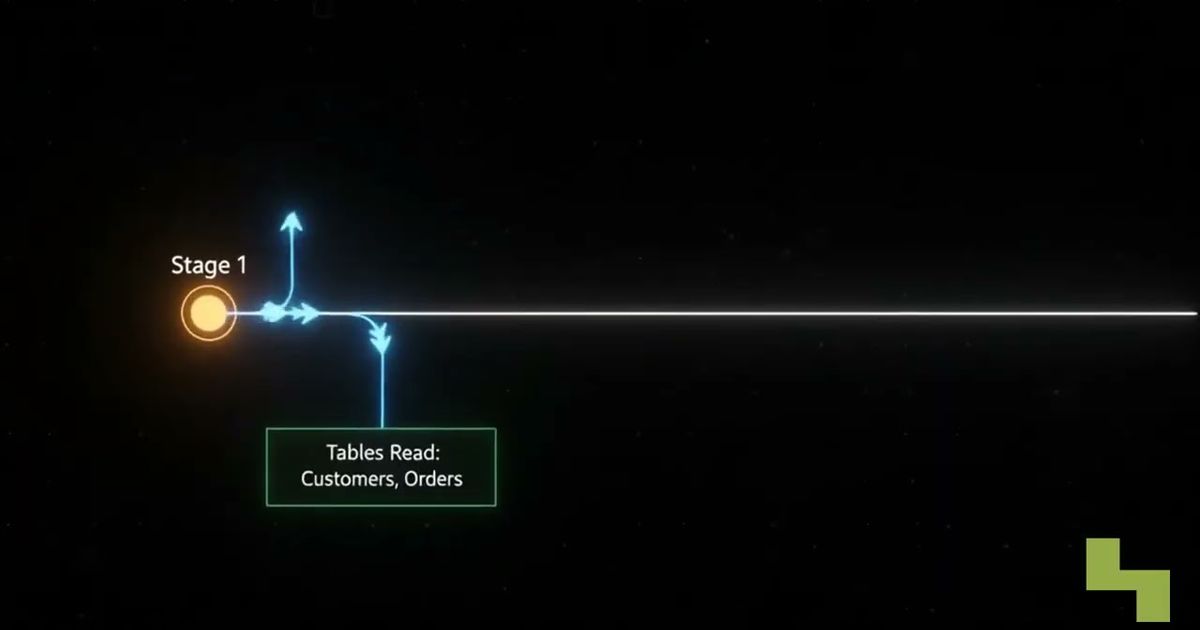
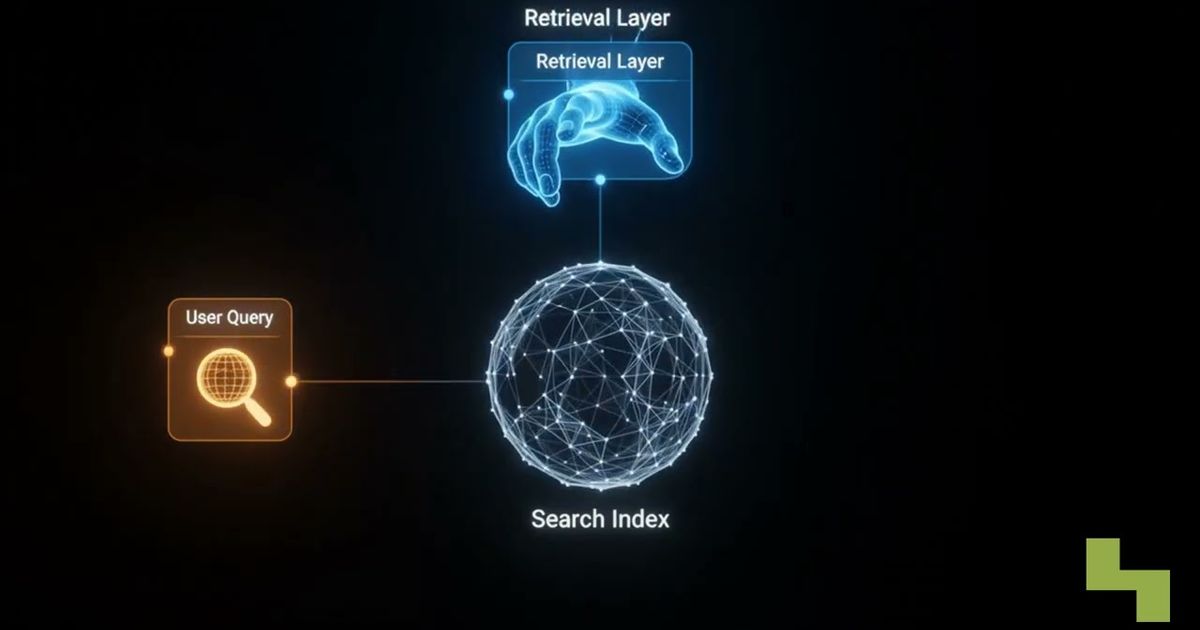
This matters because data teams can use one execution model for several workload types instead of operating a separate engine for each one. Spark also gives developers higher-level APIs while handling distributed execution, optimization, and recovery underneath. The video above walks through the core ideas.
What makes Apache Spark a distributed processing engine?
Spark coordinates work across multiple machines so large datasets and computationally intensive jobs do not depend on a single server. It partitions data, sends tasks to cluster workers, and processes those partitions in parallel.
The foundational Spark abstraction is the resilient distributed dataset, or RDD. An RDD is an immutable, partitioned collection distributed across a cluster. Because it is immutable, transformations create new logical datasets rather than changing existing records in place.
Spark became known for in-memory computation, which can reduce repeated disk reads and writes between processing stages. This does not mean every dataset always remains in memory. Spark can spill data to disk when necessary, and performance still depends on memory capacity, partitioning, network traffic, storage, and the operations a job performs.
Most modern applications use DataFrames and Spark SQL instead of manipulating RDDs directly. These higher-level interfaces describe data in rows and named columns, giving Spark more information with which to optimize execution.
How does Spark build and optimize an execution plan?
Spark records a sequence of transformations before executing the work. It represents their dependencies as a directed acyclic graph, or DAG, and can optimize the complete sequence rather than running each transformation independently.
Transformations such as filtering, selecting columns, joining datasets, and grouping values are generally evaluated lazily. An action that requests a result—such as writing output or returning records—causes Spark to finalize and execute the plan.
With DataFrames and Spark SQL, the query optimizer examines the logical operations and selects physical execution strategies based on the data and requested work. The resulting plan determines task boundaries, data movement, and how operations run across partitions.
A typical execution flow is:
- Application code defines transformations through DataFrames, SQL, or lower-level RDD APIs.
- Spark builds a logical plan and maps dependencies in a DAG.
- The optimizer chooses physical strategies and divides work into stages and tasks.
- Cluster workers execute tasks in parallel and return or store the results.
This planning model is central to understanding how data pipelines execute when transformations span large, distributed datasets.

Which workloads can Apache Spark run?
Spark supports batch processing, event streams, machine learning, and graph computation within the same runtime. The APIs differ by workload, but they share Spark’s distributed scheduling and execution foundation.
Its major workload categories include:
- Batch processing: Spark transforms bounded datasets such as files, tables, or historical event records.
- SQL and analytics: DataFrames and Spark SQL provide structured querying with optimizer-driven execution.
- Streaming: Structured Streaming treats incoming events as an unbounded DataFrame and applies query semantics similar to batch processing.
- Machine learning: MLlib provides distributed implementations and workflows for common machine learning tasks.
- Graph computation: Spark can process data represented as vertices, edges, and relationships across a cluster.
This unification can reduce the operational burden of deploying unrelated engines for every processing pattern. Batch and streaming still have different state, latency, and recovery requirements, however. Teams should understand the practical distinction between batch and streaming data processing before selecting an architecture.

How does Spark recover from failures and run across environments?
Spark builds fault tolerance into its execution model by tracking transformation lineage. If a worker fails and a data partition is lost, Spark can reconstruct that partition from the operations that produced it instead of restarting the entire job.
Lineage is especially useful for deterministic transformations whose inputs remain available. Applications may still need additional controls for external side effects, streaming state, checkpoints, and output systems because recomputing a partition is not the same as reversing an external write.
Spark is portable across several infrastructure environments. It can use its standalone cluster manager, run under YARN in Hadoop environments, or run on Kubernetes. This gives teams options for existing data platforms, containerized infrastructure, and cloud or on-premises clusters.
Portability does not remove operational work. Teams must still plan worker resources, CPU and memory allocation, storage access, network capacity, dependency packaging, monitoring, and upgrades for each environment.
Key takeaways
- Apache Spark processes partitioned data in parallel across a cluster.
- RDDs provide Spark’s resilient distributed foundation, while most modern code uses DataFrames and Spark SQL.
- Spark builds a DAG and optimizes the full execution plan before running tasks.
- One runtime supports batch, streaming, SQL, machine learning, and graph workloads.
- Transformation lineage lets Spark recompute lost partitions after many worker failures.
How Hyperlake helps
Hyperlake addresses the platform concerns surrounding production data and AI workloads: assembling data services, applications, policies, identity, monitoring, and lifecycle operations in infrastructure the customer controls. Its Kubernetes-based foundation supports portable deployments across public cloud, private cloud, and on-premises environments, while suitable data engines can be selected for each workload. To discuss how distributed processing fits into a sovereign data and AI environment, talk to our team.
Frequently asked questions
Is Apache Spark the same as Hadoop MapReduce?
No. Both process distributed data, but Spark uses a DAG-based execution model and can keep intermediate data in memory when practical, whereas classic MapReduce organizes work into map and reduce phases that commonly materialize intermediate results. Spark can still operate in Hadoop environments, use YARN for cluster management, and read data from Hadoop-compatible storage.
Should developers use RDDs or DataFrames in new Spark applications?
DataFrames and Spark SQL are generally the preferred interfaces for structured data because they let Spark inspect and optimize the requested operations. RDDs remain useful when an application requires lower-level control or works with data that does not fit structured APIs. The right choice depends on the workload, but DataFrames usually provide simpler code and more optimization opportunities.
Does Apache Spark store all data in memory?
No. Spark uses memory to accelerate processing where possible, but it does not require an entire dataset to fit in memory. It can spill intermediate data to disk, reread source data, and recompute partitions from lineage. Actual memory behavior depends on caching decisions, executor resources, partition sizes, shuffle volume, and the operations in the execution plan.
Can Apache Spark process real-time streaming data?
Spark Structured Streaming can continuously process incoming event data using an unbounded DataFrame model and query semantics aligned with batch processing. Whether it meets a particular real-time requirement depends on the configured processing mode, state management, data sources, sinks, and latency objectives. Streaming architecture also requires careful checkpointing and failure-recovery design.