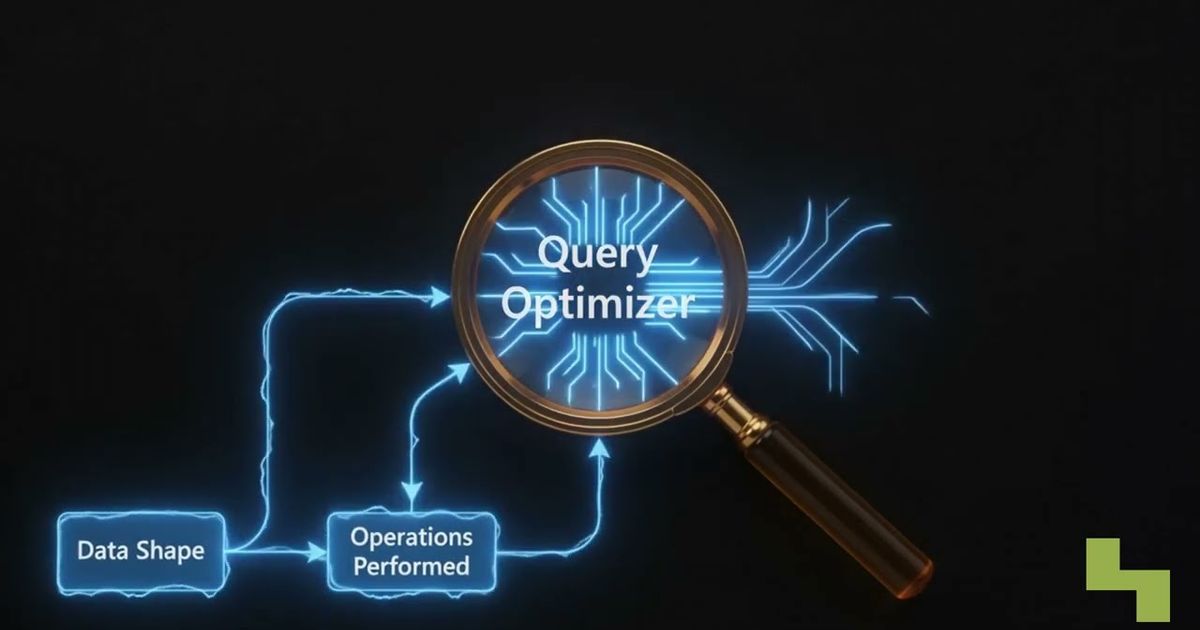
An enterprise context layer is shared infrastructure that assembles relevant, authorized, and current information for AI applications. It replaces application-specific retrieval stacks with reusable ingestion, search, access-control, freshness, and observability services, providing the right context for each user, agent, query, and task at organizational scale.
This matters because retrieval-augmented generation becomes a platform problem when many teams, applications, and users depend on it simultaneously. Shared infrastructure reduces duplicated pipelines while making context quality, permissions, and failures easier to manage. The video above walks through the core ideas.
What is an enterprise context layer?
An enterprise context layer is a governed service layer between organizational knowledge and the AI applications that use it. Applications call this layer to receive context assembled for a specific identity, query, and task.
A single developer can build a chatbot with a vector store, one retrieval call, and a prompt. That approach becomes difficult to operate when dozens of teams independently create ingestion jobs, indexes, permission logic, and retrieval behavior for hundreds of use cases.
The enterprise context layer turns those repeated functions into shared capabilities. It establishes common interfaces for finding knowledge, enforcing access, checking freshness, and recording how context was assembled. It can support copilots, agents, search experiences, and AI-native applications without requiring every team to recreate the same retrieval infrastructure.
This is broader than a vector database. The vector index may support semantic search, but the context layer also coordinates source processing, identity, authorization, metadata, freshness, and operational evidence.
Which components make up an enterprise context layer?
A complete enterprise context layer covers the full chain from source content to application-ready context. Its core components work together rather than operating as isolated retrieval tools.
- Knowledge ingestion: Pipelines continuously process internal documents, databases, communication platforms, ticketing systems, and other approved sources. They transform and index content in forms that retrieval systems can search efficiently.
- Retrieval: Semantic search and other relevant retrieval methods identify the content most closely related to a query. Retrieval quality depends on source preparation, indexing, query handling, and ranking—not only the embedding model.
- Access control: Authorization filters results so a person or agent receives only information it may use. Permissions must remain part of context assembly rather than being left to the final application prompt.
- Freshness management: The platform records when indexed content was updated and surfaces staleness signals when source material changes. Applications can then distinguish current evidence from potentially outdated context.
- Observability: Logs and traces record how sources, retrieval, policy decisions, and models contributed to an answer.
Together, these services create a repeatable grounding path. The result is related to agent grounding discipline, but applies across the shared platform rather than within one agent implementation.

How does the context layer enforce authorized retrieval?
The context layer combines retrieval with identity-aware policy enforcement. It filters candidate information according to the authenticated user or workload before that information becomes model context.
Without this control, a semantically relevant document may be retrieved even when the requester lacks permission to see it. A prompt instruction such as “do not reveal confidential data” is not a substitute for enforcing authorization at the data access and retrieval points.
A governed request typically carries user, agent, or workload identity into the retrieval service. Policy checks evaluate that identity, the requested action, resource attributes, and relevant organizational rules. The system then returns only permitted results and records the decision for later inspection.
This approach also avoids relying on shared database credentials that erase the distinction between users and agents. Permissions can be scoped to the task and resource, which is especially important when autonomous software can search multiple systems or call tools. Task-based access control for AI agents explains this authorization model in more detail.
Why do freshness and observability matter for AI context?
Freshness and observability make retrieval failures diagnosable instead of opaque. They show whether a poor answer came from the model, the selected evidence, an authorization decision, or outdated source material.
Content indexes can drift from their sources when documents, tickets, records, or policies change. Freshness metadata helps operators identify when content was last processed and whether a source update has reached the searchable index. The appropriate tolerance depends on the use case: a policy assistant may require different update behavior from an archive search tool.
A production trace should connect the request identity and query with retrieval results, access-control decisions, freshness signals, assembled context, and model response. Teams can then inspect the chain instead of treating every incorrect answer as a model problem. Logging should itself follow security and retention policies because queries and retrieved passages may contain sensitive information.
This operational evidence also supports testing and incident response. Platform teams can compare retrieval behavior over time, identify broken ingestion paths, and determine whether a policy correctly excluded content.

Key takeaways
- An enterprise context layer makes context assembly a shared platform capability rather than an application-specific retrieval stack.
- Ingestion, retrieval, access control, freshness management, and observability must operate as one chain.
- Authorization should filter information before it enters the model context.
- Freshness signals help applications and operators identify potentially outdated evidence.
- End-to-end traces make it possible to distinguish model failures from context infrastructure failures.
How Hyperlake helps
Hyperlake lets teams assemble data and knowledge services, model services, applications, policies, and monitoring in infrastructure they or their clients control. Its identity-to-data approach uses authenticated services, validated JWT identity, OPA policy decisions, and enforcement and logging at integrated access points. Teams can combine fitting data engines, vector or graph services, model serving, observability, and lifecycle controls according to the deployment, then talk to our team.
Frequently asked questions
Is an enterprise context layer the same as a vector database?
No. A vector database can store embeddings and support semantic retrieval, but an enterprise context layer coordinates the wider process around it. That process includes source ingestion, identity-aware access control, freshness tracking, context assembly, and observability across applications. A vector database may be one component within the layer.
Does every enterprise need one centralized context store?
Not necessarily. The layer can provide shared interfaces and governance while data remains distributed across databases, document systems, indexes, and business applications. What matters is consistent context assembly, authorization, freshness handling, and tracing—not forcing every type of enterprise information into one physical repository.
What happens when source permissions change after content is indexed?
The context layer should apply current authorization when content is requested, rather than assuming permissions captured during indexing remain valid forever. Depending on the architecture, a permission change may also trigger metadata updates or reprocessing. Retrieval and policy logs should show which identity requested the content and why a result was included or excluded.