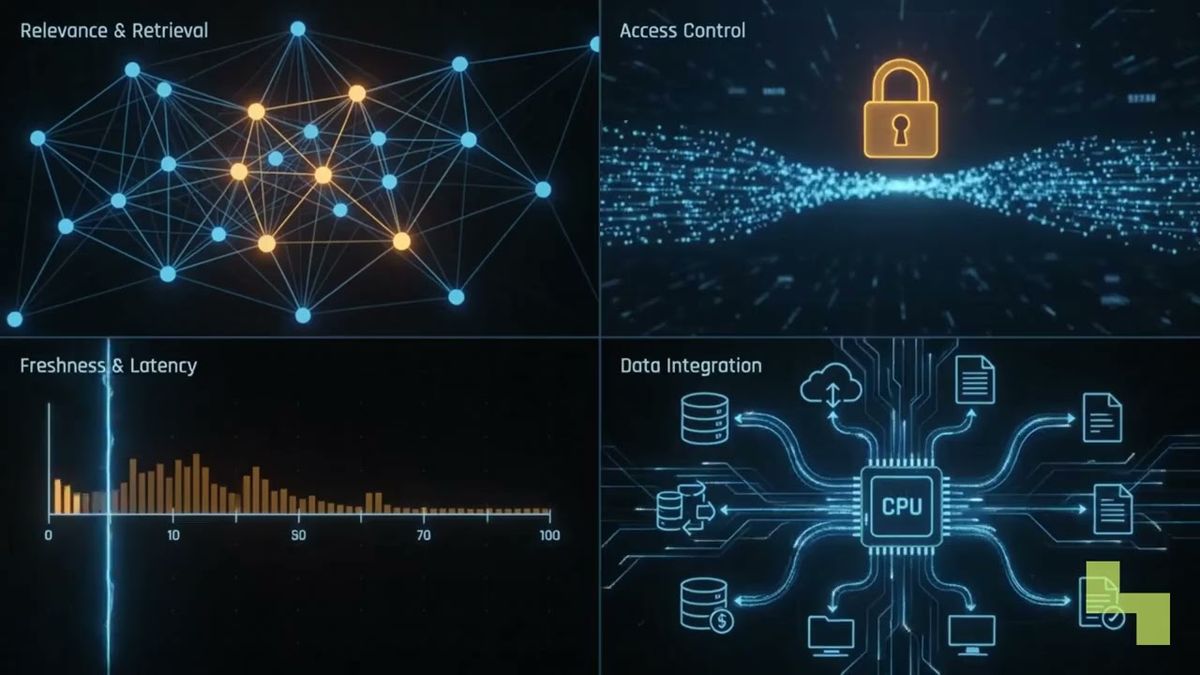
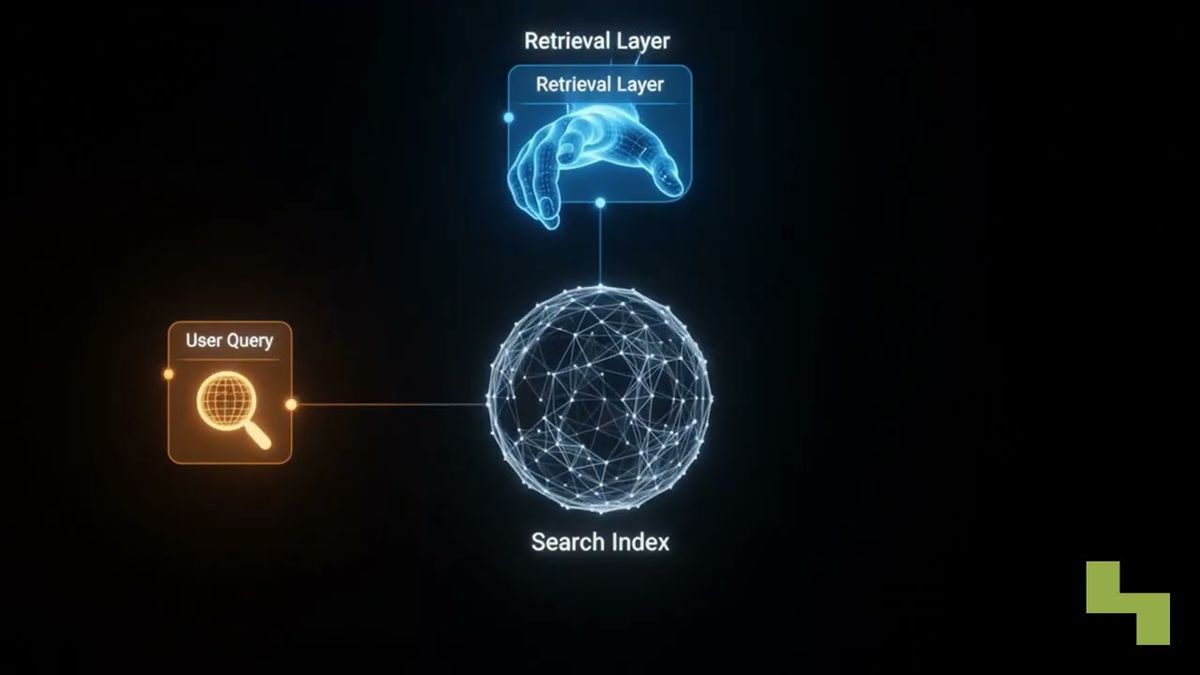
A context layer for AI is the infrastructure that decides what a model gets to see at query time. It assembles, filters, ranks, compresses and delivers conversation history, enterprise data, user attributes and system instructions. With one in place, models and agents answer the situation in front of them and stop falling back on generic training knowledge.
Got a bad answer? Check what the model was handed before you blame the model. We'd bet on the context first.
What is a context layer for AI?
Think of a go-between. The model sits on one side, and on the other sits everything it needs to understand a request. An AI context layer takes scattered data, earlier turns, identity signals and operating instructions and boils them down to a package the model can use.
Why does that need to be a layer at all? Because a model has no idea what your company looks like today. It hasn't read your private documents, and what was said three turns ago is gone unless something puts it back. Doing that at runtime means you never bake changing facts into the model.
Agents raise the stakes. In a single run one agent might read the request, look up records, recall its own earlier steps, follow policy and pick a tool, and every one of those choices depends on context.
Retrieval-augmented generation covers only a slice of this. Retrieval finds documents; a full enterprise context layer also has to square instructions, identity, conversation state, structured data and permissions with the limits of the model on the receiving end.
What information belongs in AI context?
There's no fixed recipe: it depends on the application, the task, the user's identity and your data policies. A typical mix looks like this:
- Conversation history, so the system can resolve "that one" instead of restarting every turn.
- Documents and database records that hold current facts the training data lacks.
- User profile data (role, preferences, history, other approved attributes).
- System instructions covering the task, boundaries, response format and prohibited behavior.
- Agent state and tool results: earlier outputs, workflow state, or evidence an authorized tool returned.
Sending all of it every time is a mistake. Scope what goes in to this user and this purpose.
Two habits help. If the application has to explain which evidence shaped an answer, keep provenance. And watch freshness: an old document can look perfectly relevant while flatly contradicting today's operational record.
How does a context layer work?
Four moves, in order, and all of them inside the model's token limit and your application's latency budget.
First, assemble candidates: conversation turns, documents, database records, user attributes and instructions. Second, filter, so anything stale, off-topic, unauthorized or tied to the wrong user or task drops out. Third, rank and compress, putting the best evidence first and using summaries or extracted passages to save tokens. Last, deliver: format the winners next to the current request and whatever instructions apply.
The stages lean on each other, and that's where it gets fiddly. Ranking depends on the question being asked right now. Filtering depends on who is asking, whether a human or a workload.
Compression is the sneaky one. Shortening text is easy; keeping the facts, the qualifications and the relationships between them isn't. Contextual compression and reranking can tighten retrieved evidence before the model sees it.

What causes context layer failures?
Information that is missing, irrelevant, stale, wrongly scoped or unauthorized. Since the model will usually still write a fluent reply, a wrong result can look convincing.
Starve it and it works from half the evidence: a generic answer, a missed exception, a guess at details an authoritative source should have supplied.
Flood it and you get a different headache. Irrelevant passages fill the window and pull the model's attention toward things that have nothing to do with the question, so more retrieval doesn't promise a better answer.
Wrong context is worse than either, in our view. A stale policy, another user's record or a snippet from an unauthorized source can prop up an answer that hangs together beautifully and should never have been given.
Reliable context engineering therefore borrows from data engineering as much as from model work: source quality controls, identity-aware access, metadata, freshness checks, retrieval evaluation, token management, latency monitoring, and traceability from an output back to the evidence behind it.

How Hyperlake helps
Hyperlake lets teams assemble data and knowledge services, model endpoints, applications, identity controls, policies and observability in infrastructure they or their clients control. Agents reach enterprise context through authenticated, governed services, with scoped identity and policy enforcement at integrated access points. Teams keep control of their data, models, applications and keys. To talk through a context architecture for a specific workload, talk to our team.
Frequently asked questions
Is a context layer the same as retrieval-augmented generation?
No. Retrieval-augmented generation is one mechanism a context layer can use. RAG finds relevant documents or records, while the context layer goes further: it combines those results with conversation history, identity attributes, system instructions, agent state and authorization decisions, then formats or compresses the lot before the model sees any of it.
How does a context layer fit information into a model's context window?
It filters out irrelevant or unauthorized material first, then ranks what's left against the current request. From there it may pick passages, drop duplicates, summarize or pull out key facts. The goal isn't a short prompt; it's the most useful evidence and instructions inside the token budget.
Why can more context make an AI response worse?
Extra context can drag in irrelevant, contradictory or stale material that competes with the evidence the task needs. It also uses up limited window space and can bury the detail that mattered. A reliable system ranks by relevance and authority, so loosely related items don't all go to the model.
How should sensitive enterprise data be added to AI context?
Through authenticated services that enforce access by user, workload, task and applicable policy. Leave unauthorized records out before the prompt is built, and log access at the appropriate enforcement points. Keep context scoped to the current interaction so that one user's or tenant's information can't leak into another's response.