Short videos on building and running sovereign AI.
Explainers from the Hyperlake YouTube channel, each on its own page with a link to the full article on the blog.
 2:31
2:31What is AI Platform Engineering
AI platform engineering gives teams shared model access, observability, evaluation, cost controls, and governance for secure, scalable AI delivery.
Watch the video 2:51
2:51What is AI Policy Enforcement The Gap Between Written Rules and Running Systems
AI policy enforcement turns written governance rules into runtime checks for identity, model access, PII, content, budgets, and auditable evidence.
Watch the video 2:00
2:00What is an Agentic Control Plane
An agentic control plane orchestrates, monitors, and governs enterprise AI agents with scoped access, audit trails, quality checks, and cost controls.
Watch the video 1:57
1:57What is a Data Catalog
A data catalog is a searchable metadata inventory that helps teams discover, understand, govern, and trust assets across databases, lakes, and pipelines.
Watch the video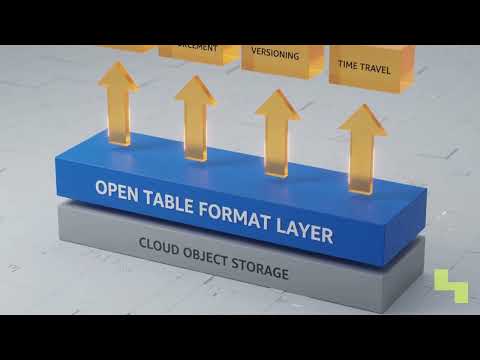 2:06
2:06What is a Data Lakehouse
A data lakehouse combines low-cost object storage with warehouse-grade transactions, governance, and SQL access for analytics and machine learning.
Watch the video 2:09
2:09What is a Data Mesh
Data mesh distributes data ownership to business domains while using product thinking, self-service infrastructure, and federated governance at scale.
Watch the video 1:57
1:57What is a Data Pipeline
A data pipeline moves data from sources to useful destinations through ingestion, transformation, and loading, with controls for reliable retries.
Watch the video 1:58
1:58What is a Data Product
A data product is curated, owned data with contracts, metadata, access controls, and service expectations that make it trustworthy and reusable across teams.
Watch the video 2:08
2:08What is a Metastore The Catalog That Makes Data Discoverable
A metastore catalogs table schemas, file locations, partitions, and access rules so query engines and AI agents can discover and use governed data.
Watch the video 2:32
2:32What is AI Interoperability
AI interoperability lets models, agents, tools, identity, and observability systems work together through standards instead of custom integrations.
Watch the video 2:55
2:55Task Based Access Control How AI Agents should be authorised
Task-based access control gives AI agents temporary, task-scoped permissions that reduce standing access while preserving auditable enterprise governance.
Watch the video 2:08
2:08Tensor Parallelism vs Pipeline Parallelism vs Sequence Parallelism
Tensor parallelism, pipeline parallelism, and sequence parallelism split model work across GPUs to improve scale, memory capacity, and utilization.
Watch the video 2:02
2:02Time Travel in Data Systems
Time travel in data systems lets teams query prior committed table states for pipeline recovery, audits, reproducible ML, and historical comparisons.
Watch the video 2:03
2:03Triton Inference Server Deployment and Dynamic Batching Architecture
Triton Inference Server uses dynamic batching, concurrent execution, routing, and ensembles to balance inference latency with GPU throughput.
Watch the video 1:58
1:58Unstructured Data Pipelines and Parsing Engines for Vector ETL
Unstructured data pipelines turn complex files into clean, metadata-rich chunks for more accurate vector search, source citations, and enterprise RAG.
Watch the video 3:05
3:05Vector Databases & Semantic Search
Vector databases enable semantic search by storing embeddings and retrieving meaning-based matches for grounded RAG and enterprise AI applications.
Watch the video 1:57
1:57Vector Indexing Algorithms Deep Dive HNSW vs IVF PQ vs SCANN
Vector indexing algorithms make embedding search scalable. Compare HNSW, IVF-PQ, and ScaNN across recall, latency, memory use, and data size.
Watch the video 2:22
2:22Vendor Lock in Prevention in AI
Vendor lock-in prevention in AI requires portable interfaces, owned evaluations, controlled data, and multi-provider routing before switching is urgent.
Watch the video 2:20
2:20Structured vs Unstructured Data for AI
Structured vs unstructured data for AI requires different retrieval pipelines. Learn how SQL, semantic search, and RAG connect both data types.
Watch the video 2:09
2:09SGLang vs TensorRT LLM
SGLang vs TensorRT-LLM compares flexible dynamic serving with compiled GPU execution, helping teams choose for latency, throughput, and operations.
Watch the video 1:54
1:54Row Filtering and Column Masking for Data Security
Row filtering and column masking enforce identity-aware data security inside tables by limiting visible records and protecting sensitive field values.
Watch the video 1:51
1:51Schema Evolution in Data Systems
Schema evolution changes table structure without rewriting historical data. See how stable column IDs and Apache Iceberg metadata keep old files queryable.
Watch the video 1:57
1:57Semantic Chunking vs Hierarchical and Structure Aware Chunking
Semantic chunking preserves topic continuity, while hierarchical and structure-aware chunking add parent context and document-aware boundaries for retrieval.
Watch the video 2:19
2:19Semantic Layer Architecture One Definition for Every Question
Semantic layer architecture defines metrics, dimensions, and joins once, giving BI tools, data apps, and AI agents consistent answers across changing data.
Watch the video 3:10
3:10Shadow AI The Risk Already Inside Your Enterprise
Shadow AI creates hidden data and compliance risk. Learn why bans fail and how sanctioned tools, layered detection, clear policies, and audits restore control.
Watch the video 1:35
1:35Reverse ETL and Operational Analytics Architecture
Reverse ETL moves refined warehouse data into operational applications, providing synchronized business context for automated workflows and faster decisions.
Watch the video 2:00
2:00Real Time Data Integration Kafka + Flink
Real-time data integration with Kafka and Flink continuously captures, transforms, and delivers fresh operational events for analytics and AI systems.
Watch the video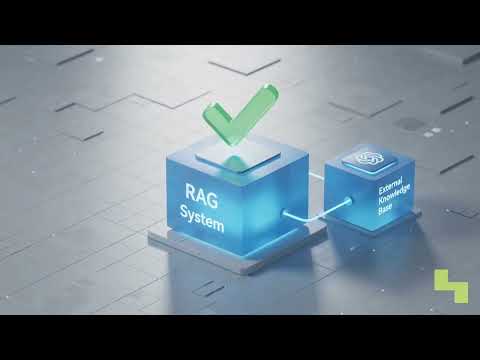 3:29
3:29RAG vs Fine Tuning
RAG vs. fine-tuning comes down to knowledge versus behavior. Learn when to retrieve current facts, retrain model behavior, or combine both approaches.
Watch the video 2:10
2:10Query Federation What Actually Happens When You Query Across Data Systems
Query federation lets one SQL statement run across separate data systems. Learn how planning, pushdown, cross-source joins, and result assembly work.
Watch the video 2:59
2:59Quantization Explained
Quantization explained: learn how lower-precision weights reduce LLM memory and bandwidth demands, and when to choose 8-bit, 4-bit, FP8, PTQ, or QAT.
Watch the video 3:25
3:25PII Redaction for AI Gateway Layer vs Application Layer
PII redaction for AI belongs at the gateway layer, where one policy sanitizes prompts before providers process sensitive data and centralizes audits.
Watch the video 2:03
2:03Open Table Formats Explained
Open table formats add ACID transactions, time travel, schema evolution, and efficient query planning to data lakes. Compare Iceberg, Delta, Hudi, and Paimon.
Watch the video 2:42
2:42Open Source vs Closed Models How to Choose
Open source vs. closed models is a workload decision. Compare performance, cost, privacy, customization, and vendor dependency before deployment.
Watch the video 2:02
2:02Open Metadata Catalogs Apache Polaris
Apache Polaris provides an open metadata catalog for consistent table metadata, access control, and multi-engine interoperability across cloud lakehouses.
Watch the video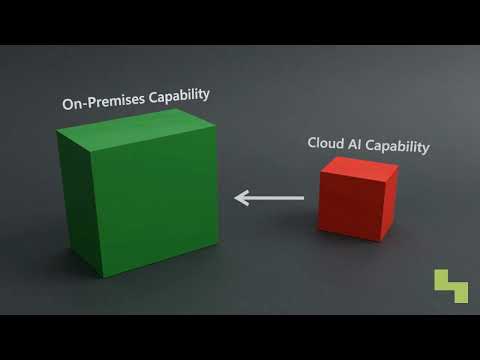 2:50
2:50On Premises AI
On-premises AI keeps models, inference, and data in controlled infrastructure, while hybrid routing provides cloud access for selected workloads.
Watch the video 2:08
2:08Multi Vector Retriever & Parent Document Retrieval Patterns
Multi-vector retrieval indexes several representations per source, while parent document retrieval returns full context with traceable evidence for grounded AI.
Watch the video 2:35
2:35Multimodal Models Beyond Just Text
Multimodal models combine text, images, audio, and video in one reasoning context, enabling richer analysis and agents that perceive real environments.
Watch the video 2:53
2:53MCP Authentication and Authorization Securing AI Agent Connections
MCP authentication and authorization secure remote AI agent connections with OAuth 2.1, scoped access, centralized identity, and complete audit logs.
Watch the video 3:22
3:22LLMOps vs MLOps Why Your ML Operations Stack Will Miss LLM Failures
LLMOps vs MLOps explains why model-centric monitoring misses prompt, context, retrieval, semantic quality, token usage, and cost failures in production.
Watch the video 2:16
2:16LLM Testing and Benchmarking in Enterprise
LLM testing and benchmarking combines golden datasets, model-based judges, and live monitoring to detect regressions, drift, bias, and compliance gaps.
Watch the video 2:17
2:17LLM Observability
LLM observability combines request traces with quality, latency, cost, and drift signals to explain why technically successful AI outputs still fail.
Watch the video 3:09
3:09LLM Failover and Load Balancing
LLM failover and load balancing keep AI applications available by routing around outages, rate limits, slow responses, and unhealthy model endpoints.
Watch the video 2:47
2:47LLM evals
LLM evals systematically measure model behavior, catch regressions before release, and monitor production quality with repeatable tests and evidence.
Watch the video 3:01
3:01LLM Cost Attribution Who Owns Which Part of the AI Bill
LLM cost attribution maps every model request to a team, feature, model, and customer so finance can assign spend, detect anomalies, and assess ROI.
Watch the video 2:59
2:59LLM Access Control and RBAC
LLM access control replaces shared provider keys with role-based permissions, scoped identities, budgets, rate limits, attribution, and audit logs.
Watch the video 2:53
2:53KV Cache Routing The Cluster level Optimisation
KV cache routing preserves prefix-cache locality across inference replicas, reducing repeated prefill work when workloads reuse long shared contexts.
Watch the video 2:05
2:05Indirect Prompt Injection Attacks & Supply Chain Risk Management
Indirect prompt injection turns external content into hidden commands. Learn how isolation, least privilege, auditing, and supply chain controls reduce risk.
Watch the video 1:58
1:58Iceberg Table Partitioning
Iceberg table partitioning uses hidden transforms to prune files automatically, evolve layouts without rewriting data, and keep physical design out of queries.
Watch the video 1:54
1:54Iceberg Snapshots Explained
Apache Iceberg snapshots preserve immutable table states, enabling safe concurrent reads and writes, time travel, and metadata-driven file pruning.
Watch the video 2:46
2:46Guardrails How Enterprises Keep AI Safe
AI guardrails enforce prompt injection defenses, PII controls, content safety, and agent permissions consistently across enterprise model calls.
Watch the video 2:10
2:10Guardrail Frameworks NeMo Guardrails and Guardrails AI
NeMo Guardrails and Guardrails AI protect agent workflows by combining dialogue controls with schema-based input and output validation in production.
Watch the video 3:03
3:03FinOps for AI How to Govern What You're Actually Spending
FinOps for AI brings token, model, agent, and workflow costs into one attributed view, helping teams govern spending against business value and budgets.
Watch the video 2:02
2:02Federated Computational Governance
Federated computational governance turns shared data standards into automated policy checks, so domain teams can move independently without losing control.
Watch the video 2:05
2:05Feature Stores Feast, Training Serving Skew
Feature stores prevent training-serving skew by keeping historical training features and low-latency production features consistent, reusable, and auditable.
Watch the video 2:58
2:58EU AI Act Explained What Enterprises Actually need to know
The EU AI Act sets risk-based rules, phased deadlines, and extraterritorial duties. See what applies now and how enterprises should prepare for compliance.
Watch the video 2:11
2:11ETL vs ELT
ETL vs ELT differs in when data is transformed. Learn how destination compute, raw-data retention, security, recovery, and analytics shape the choice.
Watch the video 2:53
2:53Economics of Large Language Models
The economics of large language models depends on token usage, infrastructure, orchestration, governance, and whether owned capacity fits demand.
Watch the video 2:23
2:23Data Virtualization Explained The Interface Layer Between AI and Distributed Data
Data virtualization gives applications and AI a governed logical view of distributed data, balancing live queries, caching, push-down, and semantics.
Watch the video 3:01
3:01Data Residency vs Data Sovereignty
Data residency vs. data sovereignty separates where AI data is processed from which laws control access. Learn how to assess both for enterprise AI.
Watch the video 2:08
2:08Data Products vs Data Mesh
Data products vs. data mesh: learn why a mesh requires data products, while reliable, reusable data products can succeed without decentralized ownership.
Watch the video 2:01
2:01Data Products Best Practices
Data product best practices improve trust and adoption through named ownership, versioned schemas, continuous quality checks, catalogs, and realistic SLEs.
Watch the video 1:53
1:53Data Observability
Data observability continuously monitors volume, freshness, schema, distribution, and lineage to detect pipeline failures and protect trusted data.
Watch the video 1:54
1:54Data Mesh Roles and Responsibilities
Data mesh roles and responsibilities clarify who owns data products, builds them, runs shared infrastructure, sets policy, and improves quality.
Watch the video 2:09
2:09Data Mesh Architecture
Data mesh architecture uses domain ownership, data products, self-service infrastructure, and federated governance to decentralize data safely.
Watch the video 2:12
2:12Data Lakehouse Architecture Explained The Four Layers That Make It Work
Data lakehouse architecture uses four layers—object storage, table formats, metadata catalogs, and compute—to deliver open, governed analytics.
Watch the video 2:04
2:04Data Ingestion Explained
Data ingestion moves source data into usable systems. Compare full, incremental, and CDC patterns, and learn to handle schema drift and pipeline failures.
Watch the video 2:09
2:09Data Lake vs Data Warehouse vs Data Lakehouse Which One Do You Actually Need
Data lake vs. data warehouse vs. data lakehouse: compare structure, governance, cost, and workloads to choose the right foundation for analytics and AI.
Watch the video 2:09
2:09Data Fabric vs Data Mesh
Data Fabric vs Data Mesh compares a metadata-driven integration layer with decentralized domain ownership—and shows why enterprises often combine both.
Watch the video 2:09
2:09Data Engineering Challenges
Data engineering challenges include schema drift, silent quality failures, weak observability, late data, and unclear lineage across production pipelines.
Watch the video 2:23
2:23Continuous Batching How AI APIs Serve Thousands of Users at Once
Continuous batching schedules LLM requests one token step at a time, improving GPU utilization, throughput, and latency under concurrent AI API demand.
Watch the video 2:46
2:46Compound AI Systems Why the Future of AI Is Architecture, not just models
Compound AI systems combine models, retrieval, tools, memory, and guardrails to produce reliable, governed AI outcomes in real production environments.
Watch the video 2:00
2:00Contextual Compression and Reranking ColBERT or Cross Encoders
Contextual compression uses ColBERT or cross-encoders to rerank retrieved text, reduce context noise, lower token use, and improve RAG precision.
Watch the video 1:51
1:51Chunked Prefill and FlashDecoding
Chunked prefill and FlashDecoding reduce long-context LLM serving bottlenecks by interleaving prompt work and parallelizing attention decoding.
Watch the video 1:54
1:54Change Data Capture Debezium
Debezium change data capture streams inserts, updates, and deletes from transaction logs into low-latency pipelines while reducing SQL polling load.
Watch the video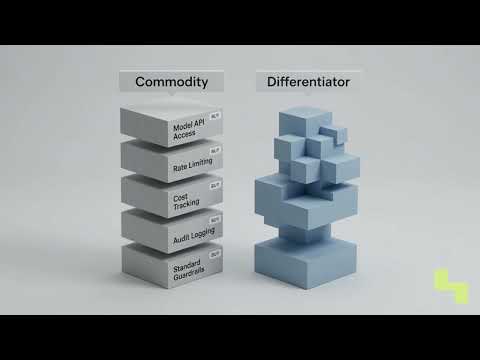 2:48
2:48Build vs Buy for AI Infrastructure
Build vs. buy for AI infrastructure starts by separating commodity capabilities from differentiating logic, then weighing lifecycle costs and risk.
Watch the video 2:03
2:03AWQ, GPTQ, and GGUF Quantization Methods Comparison
AWQ vs GPTQ vs GGUF explains how weight quantization and model packaging affect memory, quality, speed, and hardware compatibility for local AI.
Watch the video 2:03
2:03Apache Iceberg vs Delta Lake
Apache Iceberg vs. Delta Lake comes down to engine strategy: choose Iceberg for broad interoperability or Delta Lake for a Databricks-centric stack.
Watch the video 2:06
2:06Apache Arrow PyArrow and DuckDB for In Memory Data Processing
Apache Arrow, PyArrow, and DuckDB speed local analytics through columnar memory, lower-overhead data exchange, and vectorized SQL on large datasets.
Watch the video 3:07
3:07Air Gapped AI The Strictest Standard in Enterprise AI
Air-gapped AI runs with no physical or logical external network connection. Learn its architecture, offline operations, governance, and tradeoffs.
Watch the video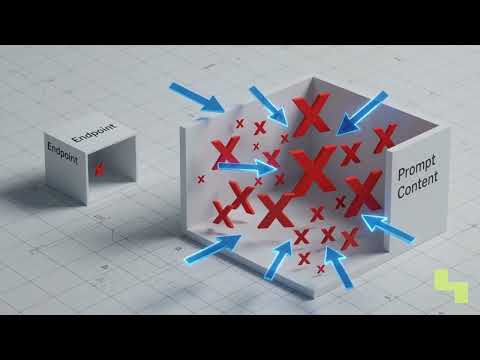 2:52
2:52AI Gateway vs API Gateway
AI gateway vs API gateway: learn how they differ in metering, content security, model routing, failover, observability, and production use.
Watch the video 2:15
2:15AI Data Strategy
AI data strategy aligns availability, quality, governance, and discoverability so AI systems use reliable, auditable data at scale for training and inference.
Watch the video 2:06
2:06AI Data Quality
AI data quality requires completeness, consistency, representativeness, timeliness, and accurate labels, backed by continuous monitoring in production.
Watch the video 2:03
2:03AI Data Governance
AI data governance makes training data traceable, authorized, versioned, and documented so teams can investigate outputs and audit model decisions.
Watch the video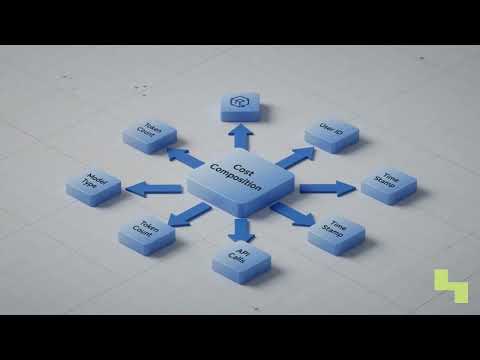 2:36
2:36AI Cost Observability Seeing Your Spend Before the Bill Arrives
AI cost observability traces model usage to features, workflows, teams, and business outcomes so you can explain spend and act before invoices arrive.
Watch the video 3:08
3:08AI Audit Checklist What Regulators Actually Look for
Use this AI audit checklist to build continuous evidence for system inventory, access controls, model behavior, incidents, and operational governance.
Watch the video 2:08
2:08Agent Grounding The Missing Discipline in Enterprise AI
Agent grounding connects AI agents to current enterprise data and tools, reducing confident errors and making responses relevant, governed, and actionable.
Watch the video 1:59
1:59ABAC Fine Grained Governance for Data
ABAC enables fine-grained data governance by evaluating identity, resource, action, and context attributes for each access request in real time.
Watch the videoStart with a workload. Build the environment around it.
Explore example deployments, or see how the platform assembles, deploys, governs and operates the stack.