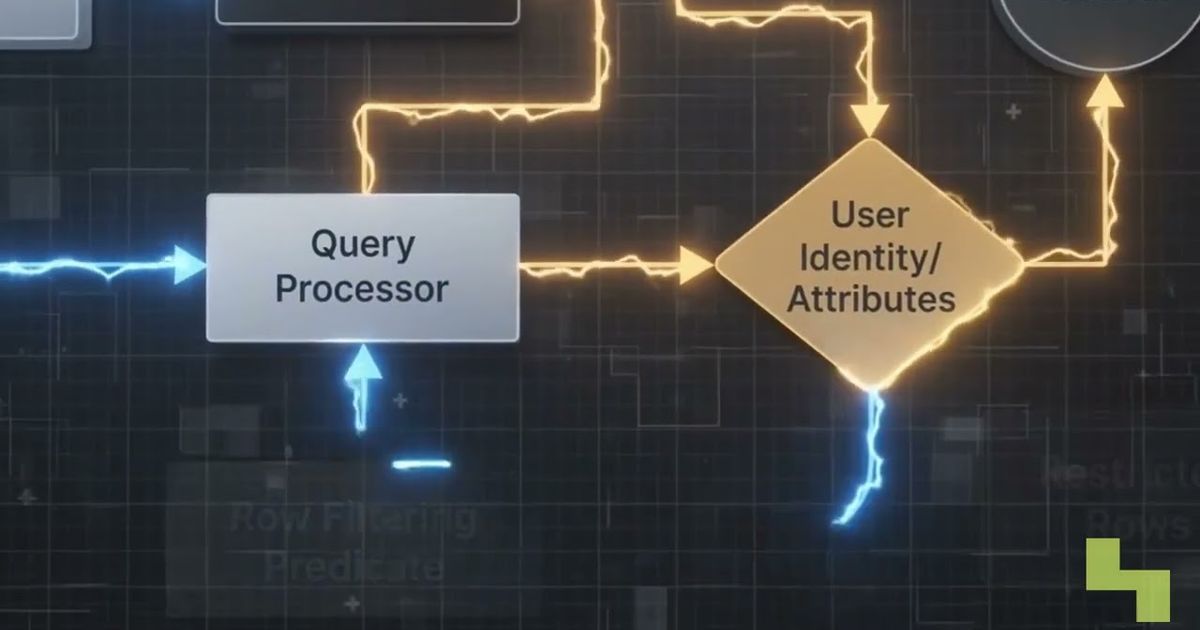
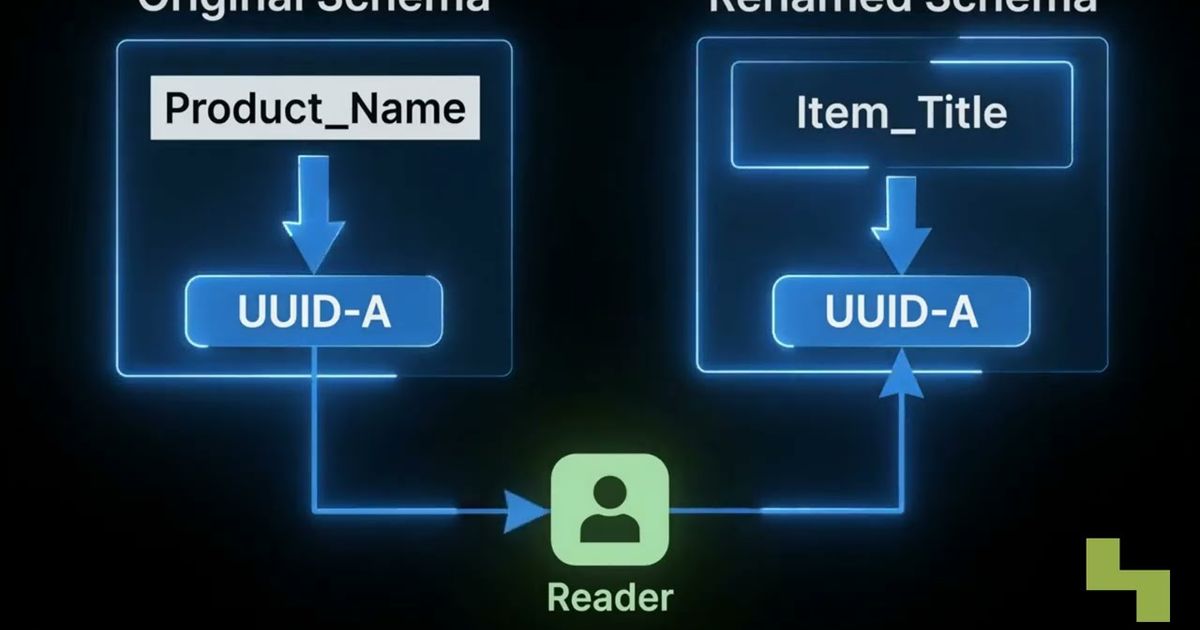
Apache Iceberg vs. Delta Lake is primarily a choice between multi-engine neutrality and stack-native integration. Both add transactional table behavior to Parquet data on object storage, but Iceberg emphasizes engine-independent metadata, while Delta Lake offers its deepest integration in Spark and Databricks. The right default follows the engines that must share the data.
That choice affects portability, maintenance, partition changes, and how easily separate compute engines can operate on one authoritative table. The feature gap has narrowed considerably, so architecture and operating context now matter more than checklist comparisons. The video above walks through the core ideas.
What do Apache Iceberg and Delta Lake have in common?
Both are open table formats that organize Parquet files on object storage and add database-like capabilities. They support ACID transactions, schema evolution, and time travel without requiring the underlying data to live in a traditional database.
These capabilities solve common data lake problems. Transactions prevent readers from seeing partially committed updates, schema evolution manages approved column changes, and time travel lets an engine query an earlier table state. Metadata tracks which files belong to each valid snapshot.
The formats therefore share much of the same functional territory. Since 2023, their feature gap has narrowed, making format selection less about basic feature availability and more about architecture, engine support, and operating model. The decision should sit within a broader AI data strategy, especially when the same data will serve analytics, applications, and AI agents.
What is the architectural difference between Iceberg and Delta Lake?
The deepest difference is how each format represents and discovers table state. Iceberg uses a tree of immutable metadata files, while Delta Lake uses an ordered transaction log whose entries are replayed to reconstruct the table.
An Iceberg-compatible engine can navigate the metadata structure without depending on Spark-specific libraries. This design supports native access from engines such as Spark, Trino, Flink, and Snowflake, subject to each engine’s supported operations and version.
Delta Lake originated around Spark’s execution model. The Delta library manages transaction-log replay, and the format continues to provide its deepest performance and feature integration inside Spark and the Databricks platform. Other engines can access Delta tables, but teams should validate the exact read, write, and maintenance capabilities they require.
Both architectures ultimately reference Parquet files. The difference lies in how engines discover valid files, coordinate changes, and implement table operations.

How do partition evolution and liquid clustering differ?
Iceberg partition evolution changes the partition specification as a metadata operation, without requiring existing data files to be rewritten. Old files remain valid under their original specification, while new data follows the updated partitioning strategy.
Delta Lake addresses changing data layout through liquid clustering. Rather than treating a new partition specification as the same kind of metadata evolution, liquid clustering organizes data using clustering keys as files are written or optimized.
These are different architectural approaches, not identical features with different names. Teams should test how each approach affects pruning, file maintenance, write behavior, and the query patterns that matter to their workloads.
Which format should a data platform choose?
Choose Delta Lake when the platform is centered on Databricks and Spark, because that is where its native integration is strongest. Choose Iceberg as the safer default for new platforms that require concurrent access from multiple engines such as Spark, Trino, Flink, and Snowflake.
Evaluate four practical signals:
- Primary execution stack: A Databricks-centric environment points toward Delta Lake.
- Multi-engine sharing: Independent engines operating on the same tables point toward Iceberg.
- Changing data layout: Compare Iceberg partition evolution with Delta liquid clustering against actual queries and maintenance procedures.
- Operational compatibility: Validate reads, writes, schema changes, compaction, and recovery for every required engine.
Interoperability reduces the consequences of the initial decision. Delta UniForm can generate Iceberg metadata alongside Delta commits, allowing compatible Iceberg engines to read the same underlying data without converting the Parquet files. Apache XTable can translate metadata among formats in multiple directions.
Neither mechanism removes the underlying architectural differences. Teams still need to test supported operations, consistency expectations, and governance controls as part of their AI data governance model.

Key takeaways
- Iceberg and Delta Lake both add transactions, schema evolution, and time travel to Parquet data on object storage.
- Iceberg’s metadata architecture is designed for broad, native multi-engine access.
- Delta Lake provides its deepest integration in Spark and Databricks environments.
- Partition evolution and liquid clustering address changing layouts through different mechanisms.
- UniForm and XTable improve interoperability but do not make the formats architecturally identical.
How Hyperlake helps
Hyperlake can assemble and operate a governed data foundation using Iceberg and object storage with a fitting query engine, including Trino where appropriate. It packages data services with identity, policy, observability, lineage, and lifecycle controls for deployment in infrastructure the customer controls; exact operational procedures depend on the engine and solution pack. To discuss the right architecture for your workload, talk to our team.
Frequently asked questions
Can an existing Delta Lake table be read by Iceberg engines?
It can when Delta UniForm is enabled and the selected engine supports the generated Iceberg metadata. UniForm creates Iceberg metadata alongside Delta commits, avoiding conversion of the underlying Parquet files. Teams should still validate supported operations, engine versions, and whether access is read-only or includes the write and maintenance behavior they need.
Is Apache Iceberg always faster than Delta Lake?
No. Performance depends on the query engine, file sizes, data layout, metadata maintenance, caching, and workload. Delta Lake can benefit from deep Spark and Databricks integration, while Iceberg can simplify access across different engines. Representative workload testing is more reliable than choosing a format based on a general performance claim.
Should an organization standardize on one table format?
A standard format can reduce tooling and operational complexity, but the choice should follow actual engine and deployment requirements. A Databricks-centered organization may standardize on Delta Lake, while a platform shared by Spark, Trino, Flink, and Snowflake may favor Iceberg. Interoperability layers can help during migrations or mixed-format periods, but they still require validation.