Shipping an AI app without guardrails is like shipping software with no input validation or access control: it works fine right up until it doesn't. AI guardrails are runtime controls that inspect and constrain user inputs, retrieved context, model outputs and agent actions. Run on every request, they cut the risk of prompt injection, sensitive-data exposure, unsafe content and excessive agency before any of it reaches users, enterprise systems, auditors or regulators.
We care about controls that actually execute in production. Policies that only live in a document matter much less.
How do AI agent guardrails limit autonomy?
Consider a support agent. Reading an order status? Fine. Issuing a refund or changing an account should wait for a human to approve it.
That's the pattern: tie every consequential action back to identity, scope, policy and evidence, and give the agent the tool and data permissions its job needs, nothing more. In practice you'll find scoped credentials, explicit tool allowlists, argument validation, spending or resource limits, and approval steps for anything consequential.
Authorization has to happen at action time, too. A harmless first prompt says nothing about the fifth tool call, especially once the agent keeps memory, reads retrieved content or works through a multistep plan.
So each time, the runtime check asks three questions. Who or what is acting? Which resource is affected? Is the action inside policy?
Keep that chain in the logs: agent identity, request, policy decision, selected tool, resulting action. When something goes wrong, that record is how you spot it, investigate it and stop it.
What are AI guardrails protecting against?
Four runtime risks, mostly, and each can come in through user input, retrieved data, the model's own behavior or a connected tool.
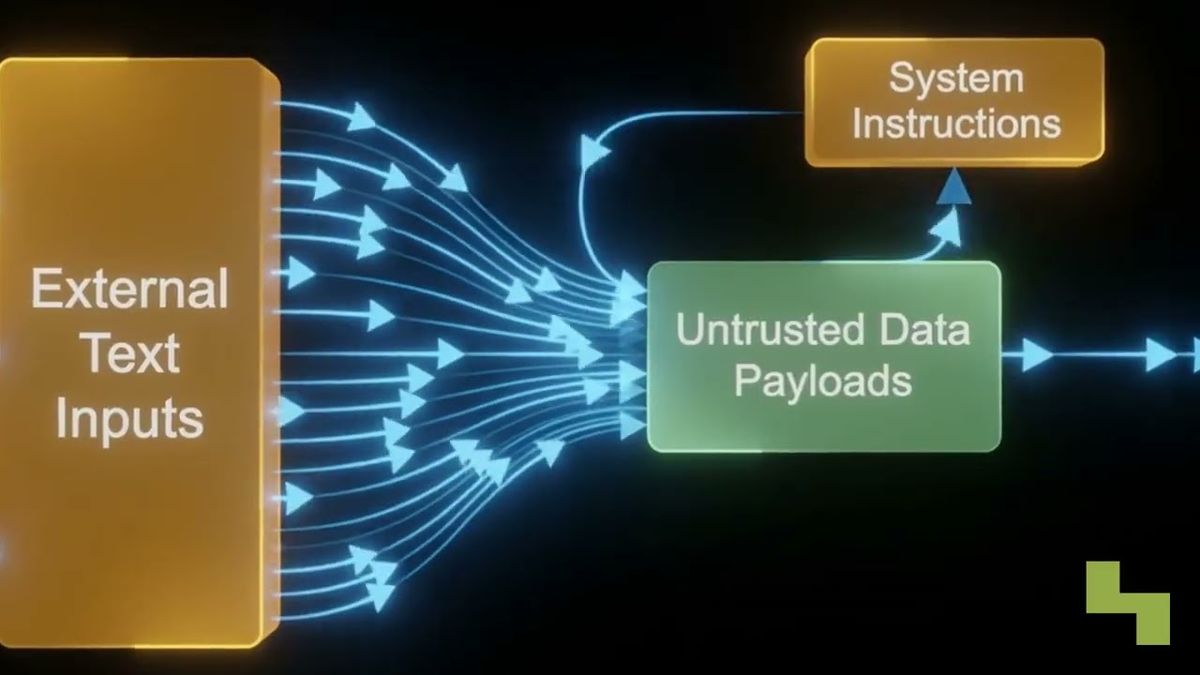
Prompt injection is the one people hear about: malicious or conflicting instructions try to override what the application is meant to do. They don't always arrive in the prompt, either. They can hide inside retrieved documents, web pages and emails.
Sensitive-data leakage is quieter. Personal, health, financial or confidential information sitting in prompts and retrieved sources can turn up in outputs, and depending on the data and the jurisdiction, that can create obligations under frameworks such as GDPR or HIPAA.
Content safety covers what the model writes. Without checks against your rules, it can produce harmful, off-policy, misleading or legally risky material.
Then there's excessive agency. An agent may call tools, open records, spend resources or change systems beyond what it was authorized to do, and the risk grows with every extra bit of autonomy and every more powerful tool you hand over.
Guardrails sit alongside secure application design, model evaluation, access controls and human oversight. They're an enforcement layer; they don't guarantee the model will always behave.

Where should enterprise AI guardrails be enforced?
At the gateway. For most enterprises, the shared checks belong at an AI gateway or a similar model-access layer: put them there once and every application inherits them, with no team rebuilding the same controls.
Follow one request. On the way in it passes input validation, injection detection, identity and policy checks, and sensitive-data handling before it reaches a model. Coming back, the response gets content and disclosure checks. Tool calls go through authorization as well, inside the gateway's policy context, so they can't slip around it.
Policies stay consistent across applications and model endpoints, and security teams can update common controls without touching every app. Requests, decisions, denials and outputs land in one set of audit records. Application teams get to spend their time on domain behavior and skip the copied security logic.
Central doesn't mean one-size-fits-all, though. A healthcare workflow and an internal coding assistant might share baseline defenses and still apply very different data, content and action policies. For a structure to hang those enforcement points on, our piece on guardrail frameworks for enterprise AI walks through the options.

What guardrail evidence do auditors expect?
Proof that controls ran on real requests. A statement that a policy exists won't do much for them. Useful evidence includes timestamped decisions, policy versions, authenticated identities, redaction events, denied actions, tool calls, approvals and the results of relevant checks.
The EU AI Act and other regulatory regimes assign different duties depending on system role, risk classification, geography and use case, and the requirements arrive on phased timelines. Get proper legal guidance; a gateway log isn't automatic compliance.
The evidence also needs to be reviewable and wired into incident response. When a request was blocked or allowed, your team should be able to say which rule ran, why, and whether a recent policy change shifted behavior. Our AI audit checklist for runtime governance helps organize the technical and procedural side.
Our view is simple. If your enterprise AI serves real users, touches regulated data or can act on external systems, guardrails are minimum production infrastructure.
Written policies still matter. Runtime enforcement is how you show they actually shape what the system does.
How Hyperlake helps
Hyperlake gives you shared controls for identity, network isolation, access policy, scoped secrets, audit and lineage across data, models, applications and tools, in infrastructure you control. Its identity-to-data pattern can use OAuth/OIDC sign-in, validated JWT identity, OPA policy decisions and enforcement at integrated access points, depending on the deployment. To talk through applying these controls to your enterprise AI or agent environment, talk to our team.
Frequently asked questions
Are AI guardrails the same as model safety training?
No, they're different layers. Safety training changes what a model has learned, while guardrails apply external checks while it runs. You usually want both, because a well-trained model can still receive malicious instructions, expose retrieved data or attempt a tool call it shouldn't. Runtime policy can also be updated without retraining anything.
Can prompt filtering alone stop prompt injection attacks?
It helps, but it won't reliably catch every direct or indirect injection. Pair it with limits on retrieved sources, a clear split between trusted instructions and untrusted content, data and tool permissions, output validation and monitoring of policy decisions. The aim is layered containment, since no single classifier recognizes every attack.
Should every AI application have different guardrail policies?
Each application should inherit the common enterprise controls, then add its own. The shared layer might cover identity, logging, sensitive-data handling and baseline injection defense. A specific app can tighten things from there, for example by requiring human approval for account changes or limiting which records an agent can open.
Do runtime guardrails make an AI system compliant?
Not on their own. They supply important enforcement and audit evidence, but compliance also depends on the use case, data handling, risk classification, documentation, oversight, testing, incident procedures and the law that applies. Map your technical controls to your specific obligations and keep evidence that they work as intended.