Indirect prompt injection is an attack in which malicious instructions are embedded in external content that an AI agent reads as context. If the system does not separate data from control, those instructions can influence the model, causing unauthorized actions, leakage of confidential session context, or secondary API calls.
This risk grows as autonomous agents process emails, web pages, documents, and customer tickets while holding credentials or access to enterprise tools. The video above walks through the core ideas.
What is indirect prompt injection?
Indirect prompt injection uses content retrieved by an agent to introduce adversarial instructions. Unlike a direct attack typed into a chat interface, the malicious text arrives through a document, message, website, search result, or connected data source.
A typical attack follows four stages:
- An attacker places hidden or misleading instructions in external content.
- An agent retrieves that content for summarization, analysis, or decision-making.
- The language model receives trusted instructions and untrusted data in the same context.
- The agent follows the injected instruction, potentially calling a tool, leaking context, or changing a workflow.
The security boundary includes more than the prompt. It also covers the agent’s identity, permissions, credentials, network access, tools, APIs, data sources, and approval requirements. A model-level failure becomes an infrastructure incident when the surrounding system lets model output trigger consequential actions.

How can agent architecture contain prompt injection?
Agent systems should treat all external text as untrusted data, not as authority. Effective containment combines structural separation with controls that remain enforceable even when a model produces a manipulated response.
Important controls include:
- Structural prompt isolation: Clearly separate system instructions, trusted application state, retrieved content, and tool results.
- Least-privilege access: Give each agent only the data and actions required for its assigned task.
- Input and output validation: Sanitize suspicious input, constrain accepted formats, and validate generated arguments before tools receive them.
- Action boundaries: Require deterministic policy checks or human approval before sensitive writes, payments, disclosures, or infrastructure changes.
- Behavioral auditing: Record retrievals, model decisions, tool calls, policy outcomes, and unusual execution patterns.
Input sanitization helps, but attackers can disguise instructions in ordinary prose, markup, encoded text, or data fields. Security therefore needs layered enterprise AI guardrails rather than a filter that assumes every malicious instruction can be detected in advance.
Why are dual-LLM patterns useful?
A dual-LLM pattern separates untrusted content processing from instruction execution. One model reads or extracts information from external data, while a second model operates on a constrained representation rather than receiving the original content directly.
For example, the first model might convert a customer ticket into validated fields such as category, urgency, and requested action. The primary executor then receives those fields without the ticket’s free-form instructions.
This pattern reduces instruction contamination, but it does not eliminate risk. Malicious content can survive in summaries or structured fields, so the architecture still needs schemas, validation, narrowly scoped tools, policy enforcement, and logging. The data-processing model should not hold the same operational privileges as the execution model.
How does prompt injection become a supply chain risk?
Prompt injection becomes a supply chain problem when agents depend on external feeds, connectors, websites, documents, vendor APIs, or ingestion pipelines. A trusted integration can deliver hostile content if its source, account, parser, or upstream system is compromised.
Risk management should cover the full path from content origin to agent action. Teams should verify integration ownership and authentication, record provenance, restrict connector scopes, review transformations, and validate data before it reaches models or tools. Changes to feeds, parsers, permissions, and pipeline components also require review.
Continuous behavioral security auditing can reveal unusual retrievals, unexpected tool calls, abnormal data movement, or repeated policy failures. An operational AI audit checklist can help teams connect these runtime records to ownership, review, and remediation processes.

Key takeaways
- Indirect prompt injection hides malicious instructions inside external content processed by an AI agent.
- A weak boundary can turn model manipulation into unauthorized actions, context leakage, or secondary API calls.
- Structural isolation, least privilege, validation, policy enforcement, and auditing must work together.
- Dual-LLM designs reduce exposure by separating untrusted data processing from privileged execution.
- Supply chain controls must extend to every external data integration and automated ingestion path.
How Hyperlake helps
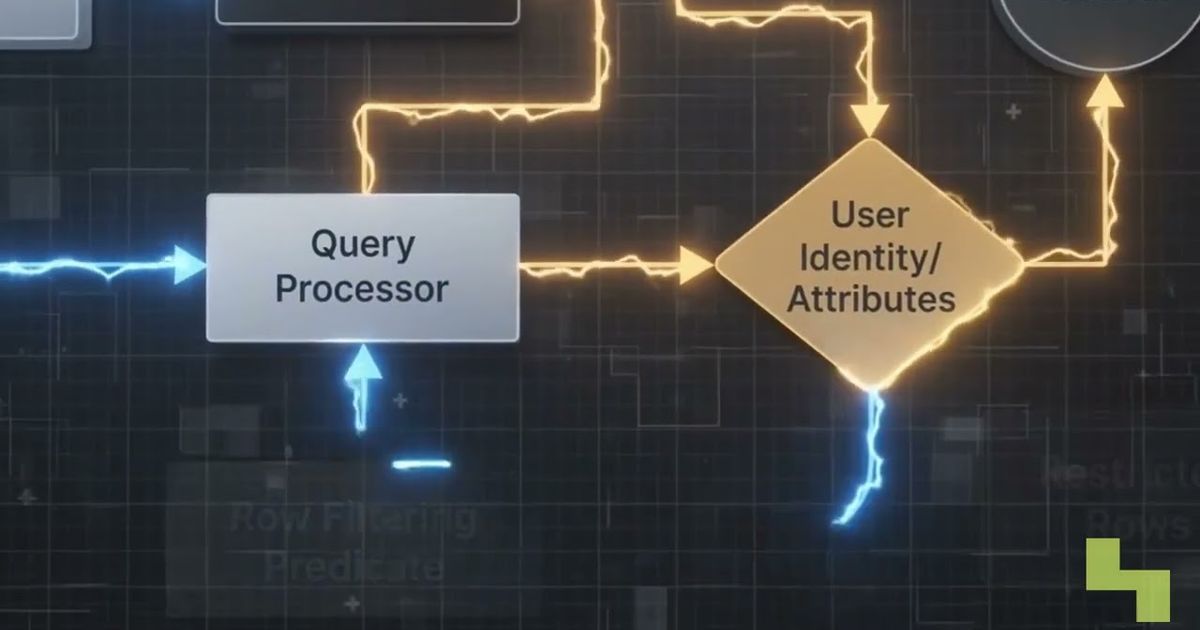
Hyperlake provides shared controls for identity, network isolation, scoped secrets, access policy, audit, and lifecycle management around agent applications and data services. Its identity-to-data pattern can use OAuth/OIDC sign-in, validated JWT identity, OPA policy decisions, and enforcement and logging at integrated access points. These capabilities help contain an affected model by limiting what its workload can access or execute, while specific integrations and automations depend on the deployment. To discuss an agent environment and its security boundaries, talk to our team.
Frequently asked questions
Can input filtering completely prevent indirect prompt injection?
No. Filtering can remove known patterns, dangerous markup, or disallowed fields, but malicious instructions can be expressed in many forms and may resemble legitimate business text. Strong defenses assume some hostile content will reach the model, then limit its influence through isolation, constrained formats, policy checks, least-privilege tools, and monitored execution.
What permissions should an autonomous AI agent receive?
An agent should receive only the minimum data and tool permissions required for its current task. Read and write access should be separated where practical, credentials should be scoped to the workload, and consequential actions should pass deterministic authorization checks. Human approval is appropriate when policy requires review before an action can create significant impact.
Does retrieval-augmented generation protect against prompt injection?
Retrieval-augmented generation does not inherently prevent prompt injection because retrieved documents become part of the model’s context. The retrieval layer should enforce access policy and provenance, while the application isolates retrieved text from system instructions. Outputs must still be validated before they reach tools, APIs, or downstream agents.
Why should external data integrations receive supply chain reviews?
External integrations can change independently of the agent and may inherit risks from suppliers, compromised accounts, upstream sources, or pipeline updates. A supply chain review examines ownership, authentication, permissions, provenance, transformation steps, and change controls. Runtime monitoring remains necessary because a previously approved source can later deliver malicious content.