NeMo Guardrails and Guardrails AI are complementary frameworks for controlling language-model applications. NeMo Guardrails steers conversations through defined topics and dialogue flows, while Guardrails AI validates inputs and outputs against structural rules. Used together, they help keep agent behavior bounded, predictable, and aligned with enterprise policies.
This matters because autonomous agents can generate offensive content, violate policy, expose data, or initiate unintended system actions, creating legal, security, and reputational risks. Guardrails reduce these risks by adding programmable checks around model interactions, although they do not guarantee security or regulatory compliance by themselves. The video above walks through the core ideas.
What are programmable AI guardrails?
Programmable AI guardrails are controls placed between users, application context, models, tools, and outputs. They inspect or constrain interactions before the application accepts content or permits an action.
Unlike a general instruction in a system prompt, a programmable guardrail can apply explicit logic. It may reject a prohibited request, redirect an off-topic conversation, validate a field’s type, sanitize text, require a corrected response, or block a tool call that does not satisfy policy.
These controls address several production risks:
- Unsafe content: A model may produce offensive, harmful, or otherwise prohibited material.
- Policy violations: An interaction may conflict with organizational, contractual, or regulatory rules.
- Adversarial prompts: A user may attempt to override instructions, extract protected context, or manipulate an agent.
- Unintended execution: An autonomous workflow may try to call a tool or change a system without proper authorization.
Guardrails are one layer of defense. Identity, authorization, network isolation, scoped credentials, audit records, and human approval for consequential actions remain necessary, as described in an AI audit checklist.
How do NeMo Guardrails and Guardrails AI differ?
NeMo Guardrails primarily controls conversation trajectory, while Guardrails AI primarily validates data against explicit requirements. The two frameworks address related but different failure modes.
NeMo Guardrails uses Colang, a specialized language for defining dialogue behavior. Teams can describe expected conversational flows, topical boundaries, and how the application should respond when a request falls outside its intended scope. This makes it useful when an assistant must remain within a defined operational role rather than follow every user-suggested direction.
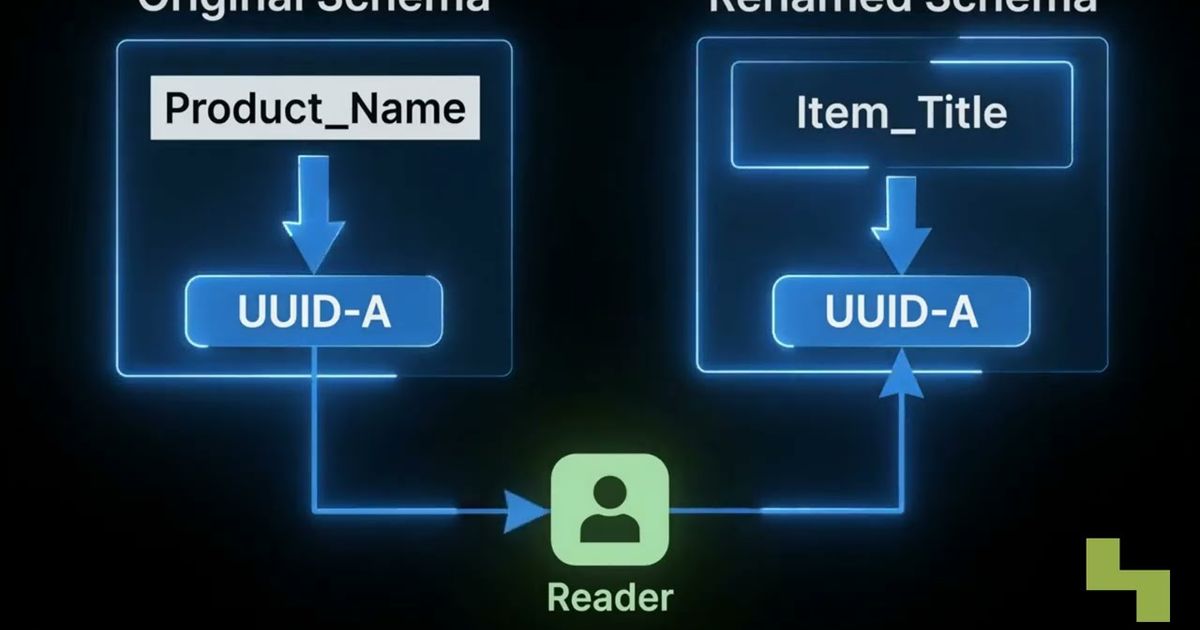
Guardrails AI takes a schema- and validator-driven approach. Validators can inspect model inputs and outputs for required types, formats, values, and content constraints. The framework can sanitize or reject invalid text, check structured responses against a declared schema, and, where configured, ask the model to produce a corrected response when validation fails.
Dialogue steering answers, “Should this conversation proceed in this direction?” Structural validation answers, “Is this input or output acceptable in the form the application requires?” Neither approach alone covers every risk.

Why combine dialogue steering with structural validation?
Combining the frameworks creates two distinct verification layers: one constrains what the model discusses, and the other checks what the application receives. This is especially important when an agent’s output becomes executable input to another service.
For example, a support agent may be restricted to account-service topics through a predefined dialogue flow. If it generates a structured escalation request, validators can then require an approved category, a valid identifier, and correctly typed fields before the request reaches another system.
The combined approach can:
- Keep conversations within approved operational boundaries.
- Detect malformed or prohibited inputs and outputs.
- Trigger rejection, correction, or reasking when validation fails.
- Reduce the chance that adversarial prompts become unauthorized operations.
A dual-layer design improves predictability, but it does not make an application automatically compliant or immune to prompt attacks. Teams still need grounded context, authorization checks, testing, monitoring, and incident procedures. Effective agent grounding also limits the information an agent can use when producing decisions.
How should teams deploy guardrails for autonomous agents?
Teams should place checks at every trust boundary rather than relying on a single output filter. Inputs, dialogue state, tool requests, and final outputs have different risks and require different controls.
A practical request path is:
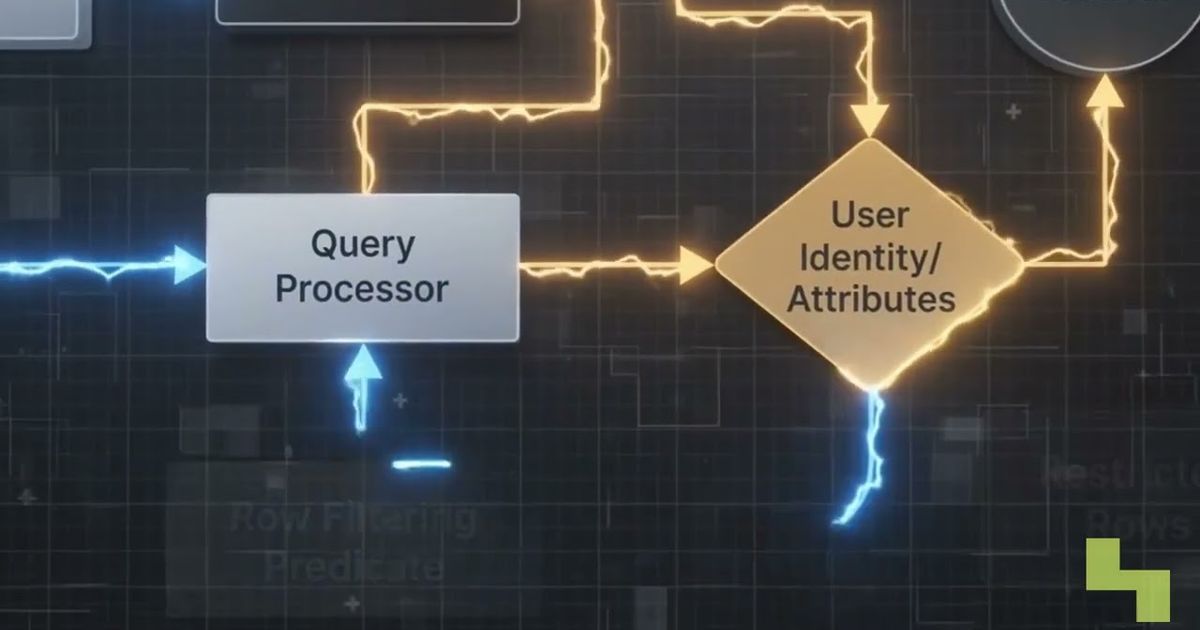
- Validate the input. Inspect user content, identity, request shape, and prohibited patterns before sending context to the model.
- Constrain the dialogue. Apply topical boundaries and approved conversation flows while preserving the application’s operational purpose.
- Authorize execution. Validate tool arguments and enforce permissions before any external system action. Guardrails should not substitute for access control.
- Validate the output. Check structure, type assertions, content rules, and required fields before displaying or forwarding the response.
Failure handling should be explicit. Depending on the risk, the application might sanitize content, ask the model to try again, return a safe refusal, stop the workflow, or route the request to a person. Reasking is appropriate only when another model attempt is permitted and cannot itself cause an unsafe side effect.
Teams should also log guardrail decisions, validation failures, model responses, tool requests, and approvals. Regular adversarial testing helps identify gaps as prompts, models, policies, and connected tools change. Real-time autonomous applications require continuing verification, not a one-time configuration.

Key takeaways
- NeMo Guardrails defines dialogue flows and topical boundaries for model interactions.
- Guardrails AI applies structural validators to inputs and outputs and can request corrected responses when configured.
- Using both approaches combines conversation steering with explicit format and content validation.
- Guardrails reduce operational risk but do not replace identity, authorization, monitoring, or human approval.
- Autonomous workflows need validation before model use, tool execution, and downstream output consumption.
How Hyperlake helps
Hyperlake provides a sovereign environment for assembling, deploying, and governing the data, models, applications, and tools behind enterprise agents. Teams can surround agent and guardrail components with OAuth/OIDC sign-in, scoped JWT identity, OPA policy decisions, network isolation, scoped secrets, logging, audit, and lifecycle controls in infrastructure they or their clients control. To discuss the controls required for a specific agent deployment, talk to our team.
Frequently asked questions
Can AI guardrails prevent every prompt injection attack?
No. Guardrails can detect prohibited patterns, constrain dialogue paths, validate outputs, and block some unsafe requests, but attackers can develop new techniques or exploit weaknesses elsewhere in the application. Defense requires multiple layers, including least-privilege access, trusted context boundaries, tool authorization, monitoring, adversarial testing, and human review for consequential actions.
Do guardrail frameworks replace identity and access management?
No. A guardrail may determine whether a request or response follows an application rule, but identity and access management determines who or what may reach data and execute operations. Production agents need authenticated identities, scoped permissions, protected secrets, policy enforcement at access points, and audit records in addition to model-level controls.
Should validation happen before and after the model call?
Yes, when the application’s risk warrants both stages. Input validation can reject malformed, prohibited, or suspicious requests before they reach the model, while output validation checks that generated content satisfies structural and policy requirements. Tool arguments should receive a separate authorization and validation step before execution because a correctly formatted request may still be unauthorized.