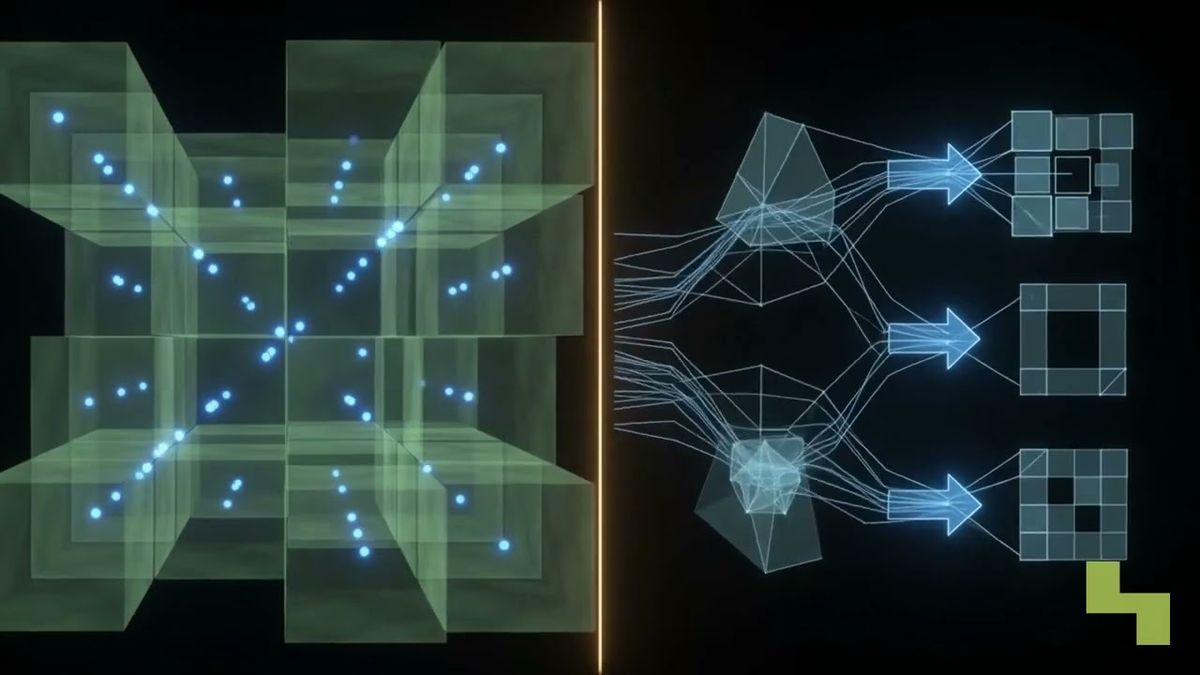
Multi-vector retrieval indexes several representations of the same source, so a search can match summaries, passages, tables or other content forms. Parent document retrieval searches compact child records but returns the larger source sections they came from. Used together, these patterns sharpen retrieval precision and still hand an AI application its context, provenance and supporting evidence.
Financial statements and scientific papers are where you feel the difference. Formulas, nested tables, charts and irregular layouts can defeat basic text extraction. Better parsing and retrieval cut the formatting work, so professionals get more time to analyze what the documents actually say.
Multi-vector retriever vs parent document retriever: how do they differ?
Same goal, opposite moves. A multi-vector retriever widens what can match; a parent document retriever widens what comes back.
The multi-vector retriever stores several searchable representations for one logical source. One document section might show up as its original text, a short summary, extracted table content or embeddings for distinct elements, and a query can match whichever representation expresses the concept best. All of those records still point to a common source, so the system can merge duplicates and keep provenance.
The parent document retriever works in four moves. Split a source into meaningful parent sections, then cut smaller child chunks for indexing and similarity search. Put a parent identifier on every child. At query time, search the children, deduplicate their parent identifiers, and return the relevant parents.
Why choose? You don't have to. Several searchable representations can point to child records or straight to a parent, and the final response carries the broader source context. Reranking or contextual compression can then narrow what evidence reaches the model.

What problem do these retrieval patterns solve?
Small chunks match well. Big chunks make sense. You usually need both.
That's the tradeoff both patterns deal with: small records are easier to match precisely, and larger ones carry the context needed to read a result correctly. Traditional parsers can flatten document structure, cut captions off from their charts, or scramble multi-column text. Build a retrieval pipeline on that output and it returns passages that look relevant but are missing the table heading, formula definition, reference or surrounding argument that gives them meaning.
The fix is to separate what you search from what you hand to the application. The system searches concise records tuned for relevance, then resolves them to richer source material, with metadata pointing back to the original file and location. That separation is a big part of effective agent grounding.
How does complex document extraction support retrieval?
It comes first, and everything downstream depends on it. Complex document extraction turns difficult files into structured representations a retrieval system can index, while keeping layout and provenance.
Modern extraction systems may combine layout analysis, to find columns, sections, tables, captions and references, with optical character recognition for text in scans or embedded images. Multimodal understanding reads visual and textual elements together. The output then becomes Markdown, JSON or another organized structure that indexing can work with.
Tools such as LlamaParse and Docling apply specialized parsing to challenging documents. Docling focuses on document understanding and layout extraction; LlamaParse is designed to keep important formatting relationships intact as it turns complex files into usable content.
Whatever you use, keep the metadata on the resulting records: source document, page, section, element type, parent identifier. Those references let you trace a retrieved passage back to where it came from and inspect the evidence used during search or generation.

How should teams implement these retrieval patterns?
Skip the argument about chunk size. Start from document structure and traceability, because the right boundaries depend on where meaning lives: paragraphs, sections, tables, figures, or the relationships between them.
Keep stable source and parent identifiers through extraction and indexing. Captions stay with their visuals, table headers with their rows, and definitions near the formulas or passages that use them. During retrieval, log which representation matched, which parent came back, and where the evidence originated.
Then test with realistic questions from the target workflow. A highly ranked document isn't enough. Does the returned context hold enough evidence to answer accurately, without dragging in unrelated material? That second check is easy to skip.
How Hyperlake helps
Hyperlake can assemble governed data and knowledge services next to model, agent, application, identity, policy, observability and lifecycle capabilities, in infrastructure the customer controls. Teams can ground private AI applications in approved documents, structured data, vector search, knowledge graphs or ontologies, using suitable engines such as Qdrant or Milvus where the deployment supports them. To talk through a governed retrieval environment for your documents and applications, talk to our team.
Frequently asked questions
Can one document section have multiple embeddings?
Yes. A section can carry separate embeddings for its original text, summary, table content or other extracted representations, and each vector should keep an identifier linking back to the same logical source. Queries get several ways to find the section, and the application doesn't treat each representation as its own document.
Why not return the small chunk that matched the query?
Because a small chunk can rank well on relevant terms and still lack the definitions, qualifiers, headings or evidence needed to interpret it. Parent document retrieval uses the small chunk for precise search and returns a larger source section for context. The parent still needs sensible boundaries, or you'll swamp the model with unrelated content.
How does metadata improve citations and traceability?
It links each indexed representation to its source file, page, section, element type and parent record. When retrieval returns evidence, the application can use those fields to show where the information came from. Engineers use the metadata to diagnose parsing errors, duplicate results and cases where relevant text got separated from its table or caption.
Are advanced document parsers necessary for every retrieval system?
No. Basic text extraction can be enough for clean, consistently formatted documents made mostly of ordinary paragraphs. Advanced layout analysis, OCR or multimodal processing earns its keep when files contain scans, formulas, nested tables, charts, visual relationships or irregular columns. Match parser complexity to your document types and evidence needs.