Query federation is the mechanism that executes one SQL query across multiple independent data systems and returns one result. A federated engine parses the statement, plans access by source, pushes supported work to those sources, moves the necessary intermediate data, and combines the outputs for the requester.
This matters because enterprises often need current data from several operational systems without first copying everything into one store. Understanding the execution path helps teams predict performance, network traffic, and where costly joins will occur. The video above walks through the core ideas.
What is the difference between data federation and query federation?
Data federation is the architectural principle of presenting distributed data through a unified access layer. Query federation is the technical process that runs an individual query through that layer.
The distinction is useful when designing a platform. An architecture may promise federated access, but its practical behavior depends on how the query engine discovers sources, translates SQL, optimizes operations, and handles intermediate results. Query federation is therefore one implementation mechanism behind a broader federated data architecture.
It is closely related to data virtualization as an interface layer, although virtualization can include broader abstraction, catalog, security, and semantic capabilities beyond SQL execution.
What happens when a federated query runs?
A federated engine converts one SQL statement into a distributed execution plan. It identifies the required tables, assigns each operation to either a source or the central engine, and coordinates the final result.
A typical execution follows four stages:
- Parse and analyze: The engine validates the SQL and resolves referenced tables, columns, functions, and source systems.
- Plan and decompose: The planner divides the statement into source-specific subqueries and determines dependencies or execution order.
- Execute and transfer: Each source runs the operations it supports and returns rows or partial results to the federated engine.
- Reassemble: The engine performs any remaining joins, filtering, or aggregation and presents one unified result.
The exact plan depends on source capabilities, data distribution, query shape, and the optimizer’s estimates. Two logically equivalent SQL statements can therefore produce different execution plans and network costs.

How does predicate pushdown improve query federation?
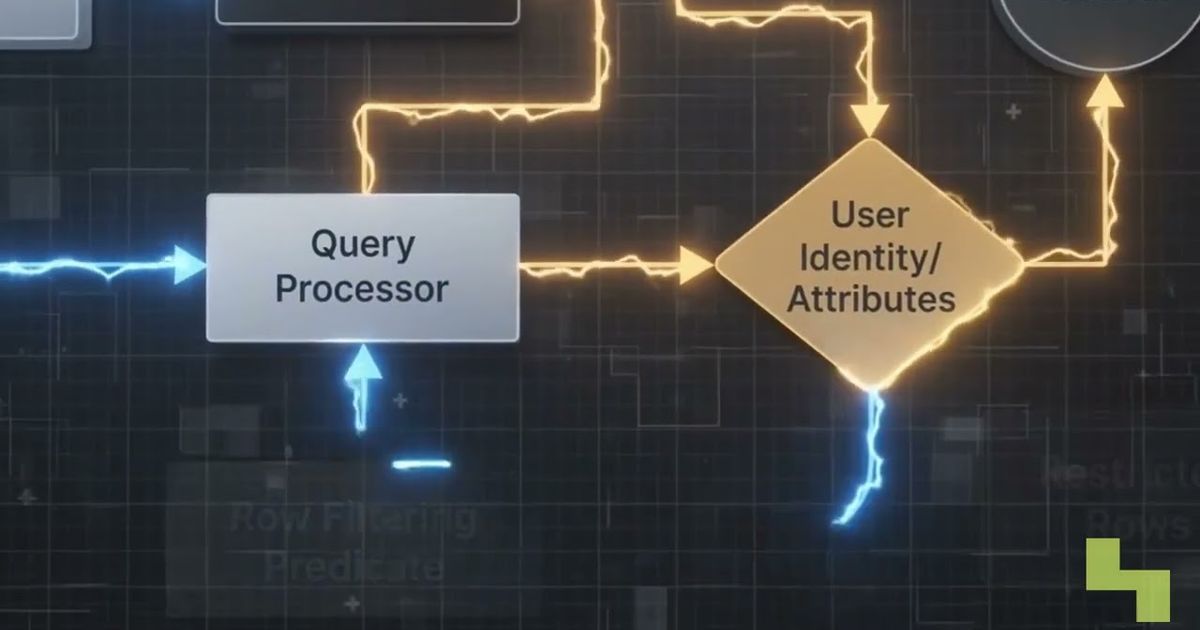
Predicate pushdown sends as much compatible work as possible to each source. It reduces the amount of data transferred to the federated engine and limits the central processing required.
Without pushdown, the engine may retrieve broad datasets and then filter, join, and aggregate them centrally. With pushdown, it rewrites source subqueries to include supported WHERE clauses, aggregations, projections, and sometimes join conditions. Each source processes its own data before returning a smaller result.
Pushdown is not all-or-nothing. A source may support filters but not a particular function, data type conversion, or join operation. The planner must divide the work according to what each connector and source can execute correctly.

Why are cross-source joins expensive?
Cross-source joins require data from separate systems to meet at a common processing location. The federated engine must retrieve both inputs and perform the join, often using memory and potentially moving substantial data over the network.
A join works well when one input is small enough to broadcast to the processing nodes handling the larger input. The cost rises when both sides contain large tables because neither can be moved cheaply. Filtering and aggregation before transfer can help, but they cannot remove the fundamental need to combine matching records.
Teams should inspect join cardinality, filter selectivity, source latency, and expected result size. For recurring large joins, replication or materialization may still be more practical than performing the same distributed work on every query.
How does query federation support enterprise AI?
Query federation lets AI applications and agents work with current operational data through one query interface without requiring a new replication pipeline for every use case. The engine can combine approved information while the underlying systems remain separate.
For example, an agent could join customer status from a CRM, order history from an ERP, and pricing from a product catalog in one federated statement. The result can provide current context for a response or workflow, subject to the identity, access, and policy controls around each source.
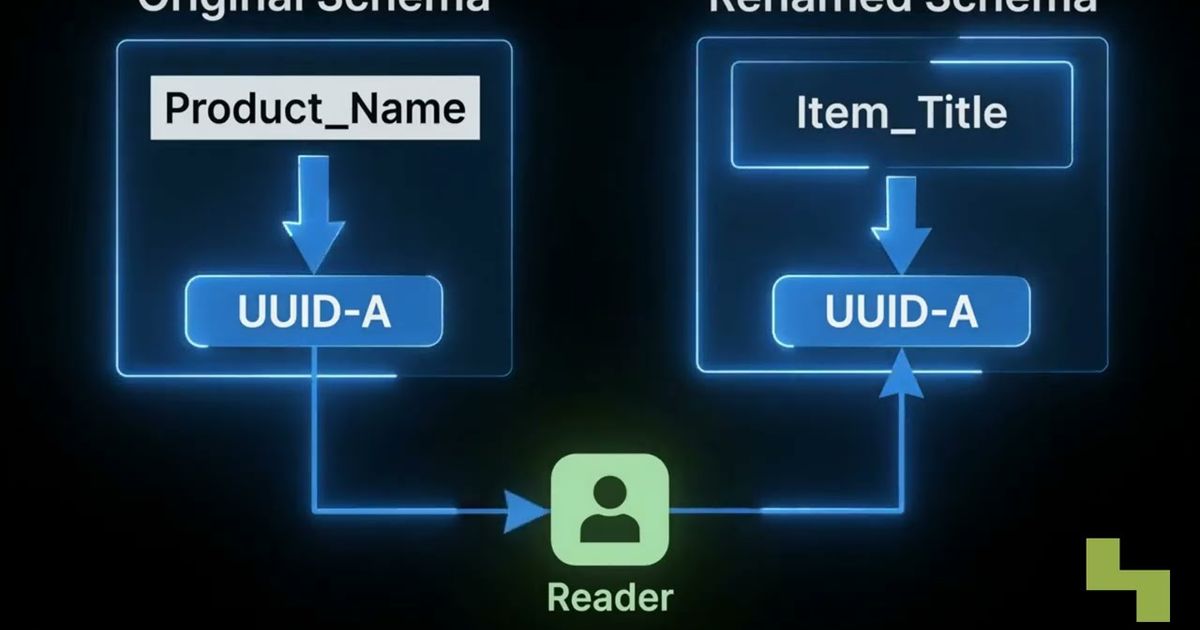
Federation supplies access, not trustworthy meaning by itself. Teams still need governed schemas, reviewed semantics, data quality controls, and appropriate agent grounding practices so agents receive approved and interpretable context.
Key takeaways
- Query federation executes one SQL statement across multiple independent data systems.
- The planner decomposes the query and assigns operations to sources or the central engine.
- Predicate pushdown reduces network transfer by processing data close to its source.
- Cross-source joins become costly when large inputs must move to a common location.
- Enterprise agents can query current operational data without a dedicated replication pipeline for every task.
How Hyperlake helps
Hyperlake can assemble governed data foundations using engines that fit the workload, including Iceberg and Trino for lakehouse analytics alongside operational, vector, graph, search, and streaming services. It provides shared identity, policy, observability, and lifecycle controls in infrastructure controlled by the organization or its client. To discuss a federated data and AI deployment, talk to our team.
Frequently asked questions
Does query federation copy data into a central warehouse?
Query federation does not require data to be permanently copied into a central warehouse before it can be queried. It sends subqueries to source systems and transfers the rows or intermediate results needed for the current request. Teams may still materialize or replicate frequently used datasets when repeated cross-source processing becomes too slow or expensive.
Can a federated SQL engine push every operation to its sources?
No. Pushdown depends on the SQL operation, connector, source engine, data types, and supported functions. A source might execute filters and aggregations but be unable to handle a cross-system join or specialized function. Unsupported work remains in the federated engine, which can increase data movement and central processing.
When should a team avoid a large cross-system join?
A team should reconsider a federated join when both inputs are large, filters remove little data, source latency is high, or the query runs repeatedly. In those cases, moving and joining the data for every request may be inefficient. A materialized view, replicated data product, or scheduled transformation can provide a better operational tradeoff.
How current are the results of a federated query?
Federated results reflect the data each source exposes when its part of the query executes, subject to transaction isolation, caching, and connector behavior. This can be more current than a scheduled replication pipeline, but it does not guarantee a perfectly synchronized snapshot across unrelated systems. Applications should account for possible timing differences between sources.