Data virtualization is a software layer that gives applications a unified logical view of data spread across multiple systems. It takes a standard query, translates it, sends it to the relevant sources and combines the results, all without copying everything into one database, warehouse or lake. Not all data can live in one place, and not all of it should.
For enterprise AI, this interface layer is where agents get consistent concepts, governed access and predictable performance while the data systems underneath keep changing. Whatever enterprise AI platform sits on top depends on it.
Why does a semantic layer matter for AI agents?
Agents shouldn't be reading raw tables, columns and join keys. They need stable, governed business concepts: entities, calculated metrics and relationships, named in terms like customers, orders, revenue and margin. A semantic layer supplies those.
The payoff is biggest when AI is translating natural-language requests into data queries. Which revenue field is authoritative? How is a customer defined? An agent shouldn't have to guess, or assemble a definition from schemas it has never seen, and a reviewed semantic model spells out the intended meaning.
Stable semantics also keep physical change from rippling into applications. Migrate a database and the tables or storage layouts may change entirely, while the logical concepts consumers see stay put (someone still maintains the mappings underneath).
One caveat: understanding a concept isn't permission to see it. An agent can understand margin perfectly well and still be barred from viewing it for certain accounts or regions. Good agent grounding practices combine approved context, stable definitions, traceable sources and scoped tool access.
Data federation vs. data virtualization: what's the difference?
Federation is the idea; virtualization is the software. Federation says: query distributed data where it lives. Virtualization is how you actually do that, and it's where the real choices about query execution, performance, governance and semantics get made.
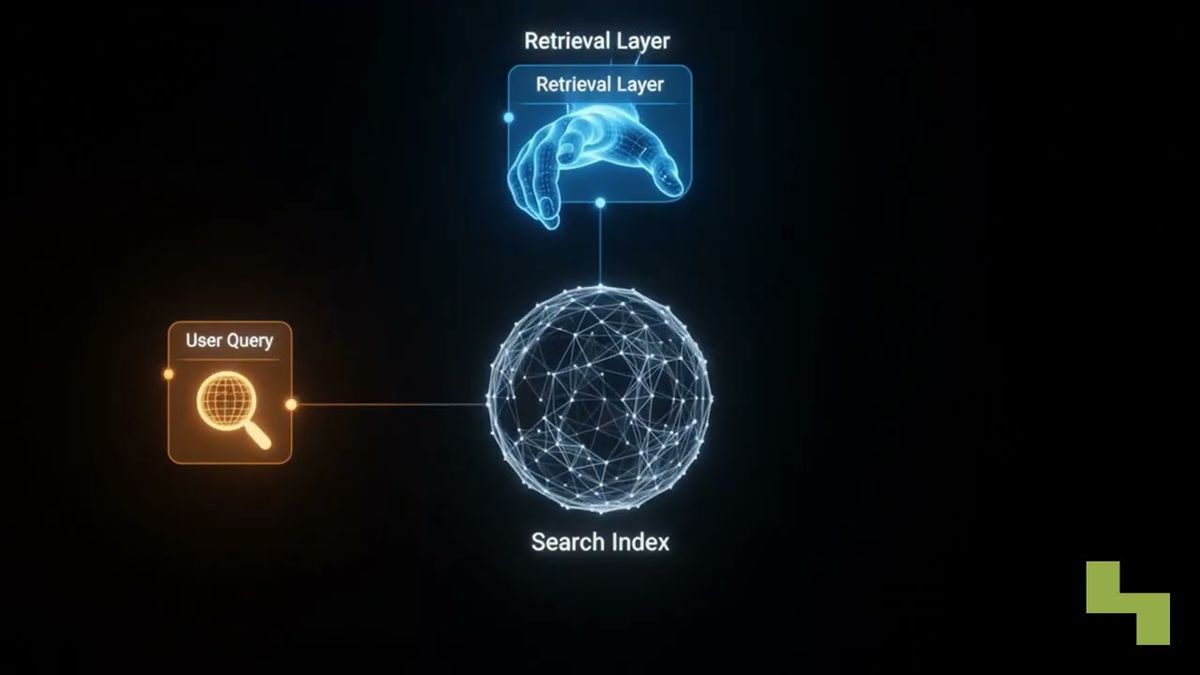
The virtualization layer sits between applications and the physical data sources. An application doesn't integrate separately with every operational database, warehouse, lakehouse or document store; it queries one logical view that looks like a single database.
Don't mistake it for a replacement for your data lake, warehouse or lakehouse. Those platforms still matter for durable historical storage, transformations, optimized analytics and workload isolation. Its contribution is an interface across data that can't, or shouldn't, be consolidated. Our guide to data lakes, warehouses, and lakehouses covers how those platforms differ.
How does a data virtualization query work?
The application asks one question in standard form, as if it were talking to a single system. After that the layer does the heavy lifting. It figures out which sources are involved, translates the request into source-specific operations, runs the subqueries and stitches the results together.
That usually breaks into four stages. First the layer interprets the logical query, resolving the requested fields, entities, filters, metrics and relationships. Then it plans source access, finding which systems hold the data and what operations they support. Next it executes translated subqueries, each in a format or dialect its source understands. Last, it combines what came back by joining, filtering, aggregating and formatting for the application.
Applications end up carrying less source-specific logic, but the differences between systems don't vanish. Data types, network latency, availability, permissions and query capabilities all still shape execution. On governance we're firm: carry the identity and permissions of the requesting person or workload all the way through. Shared database credentials undo the point.

How is data virtualization performance optimized?
Three questions drive it. Where does computation happen? How much data crosses the network? How fresh must results be?
Three design options answer them: live pass-through queries, intelligent caching and push-down optimization.
Pure pass-through sends every query to the live sources, so it's the freshest view you can get. Complex cross-source joins, though, can be slow, and they can load up operational systems.
Caching materializes frequently requested results. Latency and source load both go down; what you lose is a little currency in the data. Set refresh policies by how fast the data changes and how much staleness the workload can live with.
Push-down moves filters, aggregations, joins or other supported work into each source, so the source's own query optimizer does it and less data travels. Results vary with the source's capabilities and the structure of the query.
Nothing stops you mixing all three. One design might pass time-sensitive fields straight through, cache stable reference data and push selective filtering into capable sources. Whichever you pick, have observability show latency, source load, cache behavior, failures and execution plans, so operators can track down the bottlenecks.

How Hyperlake helps
Hyperlake can assemble a governed data foundation from engines suited to the workload, with a reviewed semantic layer so agents see approved data. It supports authenticated access through OAuth/OIDC, scoped JWT identity, OPA policy decisions, and enforcement and logging at integrated access points. Specific integrations depend on the deployment. To talk through deploying these capabilities in your infrastructure or a client environment, talk to our team.
Frequently asked questions
Can data virtualization query operational databases without copying their data?
Yes. Data virtualization can query supported operational systems in place and combine their results without first copying everything into a central platform. Those queries still draw on source and network resources, so limit concurrency, push selective operations down where you can, and keep unsuitable analytical workloads off production databases.
Does data virtualization always return real-time data?
Not always. Pass-through queries see whatever current state each source exposes, but transaction timing, network delay and source availability can affect consistency. Cached or materialized results may be deliberately older, so give each logical dataset a freshness policy that fits its business use.
When should data virtualization be used alongside a lakehouse?
When some data is best kept in centralized historical storage and other data has to stay in operational or independently governed systems. The lakehouse holds durable analytical datasets, and virtualization gives you one interface across the lakehouse and the remote sources, without forcing every dataset into a single storage model.
Can a semantic layer stop an AI agent from accessing restricted data?
Not by itself. A semantic layer defines approved business concepts, but restricted data also needs authenticated identity, authorization policies, scoped credentials, enforcement at access points and audit logging. The agent should receive only the concepts and records permitted for its user, workload and action.