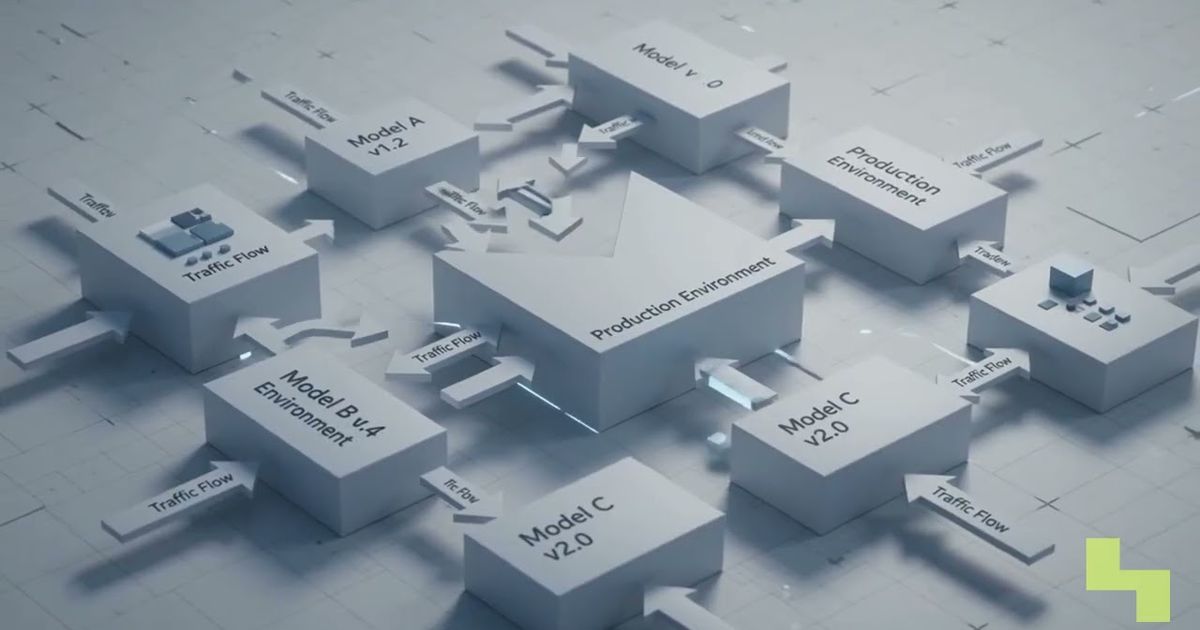
Data mesh is an architectural and organizational approach that gives business domains responsibility for the data they generate and understand. Instead of routing every request through a central data team, domains publish reliable data products on shared infrastructure while organization-wide policies are applied through federated, automated governance.
This matters because centralized request queues, lost domain context, and slow delivery can prevent data initiatives from scaling with the organization. The video above walks through the core ideas.
What is a data mesh architecture?
A data mesh distributes data ownership without abandoning shared infrastructure or standards. It changes who is responsible for producing, maintaining, and serving data across the organization.
In a conventional centralized model, business units send data to a central lake or warehouse. A central engineering team then interprets that data, builds pipelines, addresses quality issues, and responds to requests from analysts and application teams. Data mesh moves much of that responsibility to the domains closest to the source, such as finance, manufacturing, logistics, or customer operations.
Each domain publishes data for others to use through documented, governed interfaces. A platform team still provides common capabilities, but it enables domains rather than becoming the owner of every dataset. This combination of distributed responsibility and shared foundations distinguishes data mesh architecture from a collection of disconnected domain systems.
Data mesh does not replace a data lake, warehouse, lakehouse, or database. Those technologies remain storage and processing layers; data mesh defines how teams organize ownership, delivery, and governance around them.
Why do centralized data platforms stall as organizations grow?
Centralized platforms can work well at smaller scales, but a single team eventually becomes a bottleneck when it must understand every domain and fulfill every request. More domains, sources, consumers, and use cases increase the coordination burden.
Several problems commonly follow:
- Request queues grow because one team mediates access and delivery for the entire organization.
- Domain meaning can be lost when engineers far from the source translate business concepts into schemas and pipelines.
- Data quality can degrade because the team operating the data lacks the context needed to identify incorrect or incomplete records.
- Source teams lose accountability after handing their data to the central platform.
- Insights may arrive too late for the people who need to act on them.
Data mesh treats these issues as an ownership and operating-model problem, not simply a need for another database or orchestration tool. Central specialists still have an important role, but they focus on reusable platform services, standards, and enablement rather than implementing every domain request.

What are the four principles of data mesh?
The four principles are domain-oriented ownership, data as a product, a self-serve data platform, and federated computational governance. They work together; adopting only distributed storage or assigning new dataset owners is not enough.
- Domain-oriented ownership: The teams that generate and understand data own its delivery and operation. Ownership includes schema decisions, documentation, quality, access expectations, and changes over time.
- Data as a product: Domains design data outputs for consumers rather than exposing raw operational exhaust. A data product needs a clear purpose, discoverable interfaces, defined quality expectations, and an accountable owner.
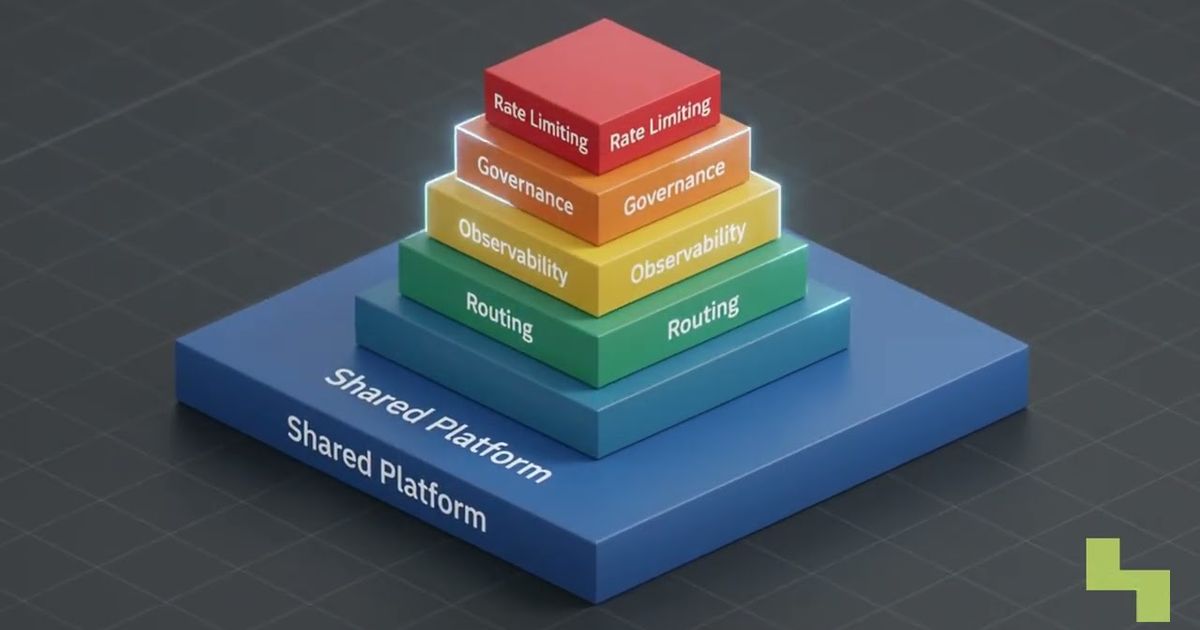
- Self-serve data platform: Shared infrastructure lets domain teams build, publish, observe, and maintain data products without becoming infrastructure specialists. Common tooling also prevents every domain from assembling an incompatible stack.
- Federated computational governance: Domains participate in governance, while shared policies remain consistent across the organization. Rules should be encoded and enforced through platform controls where practical instead of relying entirely on a central team to review each action manually.
The governance principle balances local autonomy with interoperability, security, and compliance. Federated computational governance keeps decisions close to domains while using common policy definitions and automated enforcement to avoid uncontrolled fragmentation.

How do you implement data mesh successfully?
Successful data mesh adoption starts with responsibilities and incentives, then adds the platform capabilities needed to support them. The organizational transition is usually harder than the technical implementation because domains must accept durable accountability for data products.
A practical rollout should:
- Select domains with clear boundaries and consumers rather than reorganizing the entire company at once.
- Define what ownership covers, including quality, documentation, access, support, and lifecycle changes.
- Establish organization-wide interoperability, identity, security, metadata, and audit requirements.
- Give domains reusable platform services for storage, processing, publishing, observability, and policy enforcement.
- Measure whether data products are useful and dependable, not merely whether pipelines completed.
Avoid interpreting autonomy as permission for every team to choose unrelated formats, tools, and controls. The self-serve platform should reduce specialized infrastructure work, while federated governance should preserve standards across domains. Without product accountability, platform enablement, and enforceable policies, a data mesh can become fragmented data ownership under a new name.
Key takeaways
- Data mesh distributes ownership to the business domains that generate and understand the data.
- Data products require clear interfaces, quality expectations, discoverability, and accountable owners.
- A self-serve platform gives domains autonomy without requiring every team to become an infrastructure team.
- Federated computational governance combines domain participation with shared, enforceable standards.
- Data mesh changes the operating model around data rather than replacing the underlying storage layer.
How Hyperlake helps
Hyperlake can provide modular data and knowledge services with shared identity, policy, observability, lifecycle, audit, and access controls in infrastructure the organization controls. Teams can package reusable deployment patterns for domain data products while selecting engines that fit each workload, including Iceberg and Trino, PostgreSQL, ClickHouse, Kafka, vector databases, and graph engines. To discuss how this foundation could support a data mesh operating model, talk to our team.
Frequently asked questions
Is data mesh the same as a data lakehouse?
No. A data lakehouse is a technical architecture that combines aspects of data lakes and warehouses, while data mesh is an organizational and architectural approach to ownership. An organization can implement domain-owned data products on a lakehouse, warehouse, or combination of systems, provided domains have clear accountability and operate within shared governance standards.
Does each data mesh domain need its own platform?
No. Domains can share a self-serve platform while retaining responsibility for their own data products. The platform should provide reusable infrastructure, identity, policy, observability, and publishing capabilities so domains do not rebuild common services. Separate infrastructure may be appropriate for some security or operational boundaries, but it is not a defining data mesh requirement.
Who is accountable for data quality in a data mesh?
The domain that owns a data product is accountable for its quality, documentation, interfaces, and lifecycle. Consumers still need to report issues and use the product according to its contract, while platform and governance teams provide common controls. This model keeps quality responsibility close to the people with the strongest knowledge of the source and its business meaning.