AI compliance means meeting the legal obligations for building, deploying and running AI, not earning a one-time certification. It connects applicable rules to owners, governance controls, runtime enforcement and auditable evidence, adapting as systems, uses, jurisdictions and requirements change.
The regulatory gray zone narrowed in 2025. For 2026, enforcement and proof of working controls take priority. Overlapping laws need one program, rather than a governance system per law.
What is AI compliance?
Begin with the AI system you have. Which legal requirements cover it, and what proves that suitable controls work throughout its lifecycle? A statement of ethical principles won't answer those questions. Nor will a governance committee on its own, although both can be a start.
Take the policy off the page and ask what happens in operation. For a given system, the applicable rules will usually call for documentation, risk assessment and enforced controls. Record the intended use, limitations, data sources and responsible owners. Assess risk before release and again after changes, and enforce access, security, human oversight and escalation controls. Monitoring doesn't stop at deployment: both the model and the application need watching, with evidence retained for audits, inquiries and internal reviews.
A compliance assessment from six months ago is not a permanent clearance. New obligations may have arrived since then; a material change in the model, data, users or purpose may also mean assessing it again. The responsibilities and decision processes for that ongoing work can sit within a broader AI governance framework.
What evidence demonstrates AI compliance?
An auditor or regulator needs evidence of the design of your controls and evidence that they actually ran. Organize both before anyone asks for them. These three artifacts give that work a structure:
- A control catalog lists governance controls, their owners, the systems they cover and how each is enforced at runtime. A policy requiring human review, for example, should point to the workflow that blocks consequential action without approval.
- A compliance matrix maps each control to the regulatory clauses or obligations it serves. It should also show which requirements have no implemented control or not enough evidence.
- A risk register records identified risks, severity or priority, accountable owners, mitigations, review status and evidence that the mitigations work.
Build all three before an inquiry, linking them to system documentation, access logs, approvals, evaluations, incident records and change history. Otherwise, you are left reconstructing decisions under examination pressure: difficult work that leaves you with a weaker, less reliable compliance posture.

Why do overlapping AI regulations create compliance risk?
An answer based only on the headquarters address will miss part of the picture. Who uses the system, and where? Who is affected by its decisions? Along with the industry, deployment context and decision type, these details can put one system within the scope of several regulatory frameworks.
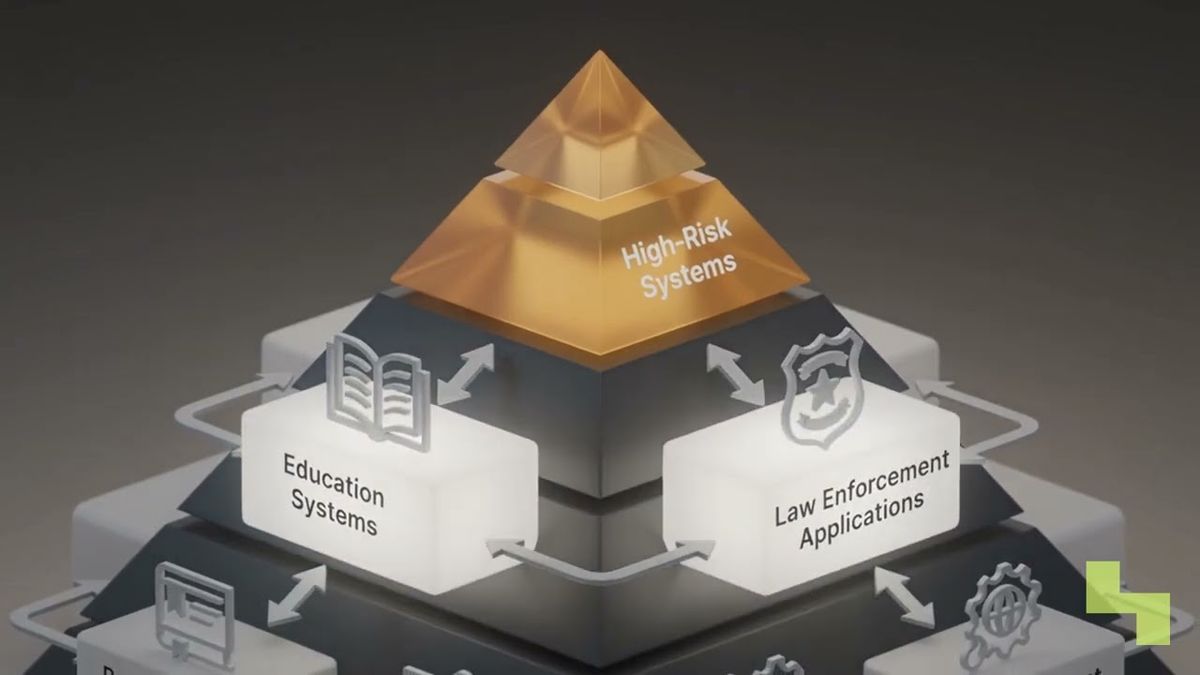
Employment is a useful example. You might have an AI system within the EU AI Act's territorial scope, making that Act relevant. Then look at the locations of users and affected individuals: US state laws could apply there, with employment and privacy rules adding to the picture. A system used in finance, healthcare, education or critical infrastructure can also have sector-specific requirements to meet.
Our preference is to run one governed program, mapping shared controls across the frameworks. Separate processes for every jurisdiction are harder to manage. A single program doesn't remove the need for careful scope analysis or continuing legal monitoring, though. Document the applicable rules, the reasons they apply and the places where one control meets several obligations.

Which enterprise AI rules and AI compliance requirements must you track?
For Europe, start with the EU AI Act, the major reference framework. For the US, there is a patchwork to work through: voluntary frameworks, procurement expectations, sector rules and state legislation. Neither the exact obligations nor their application dates can be read off without considering the system's classification and circumstances. This is a check to make with qualified counsel using current legal requirements.
The EU AI Act reached general application on August 2, 2026. You still need to check each provision and the timeline for the relevant category. A covered high-risk system may bring risk-management, data-governance and documentation requirements; it may also need technical robustness, transparency, human oversight, recordkeeping and conformity assessment. Location outside the EU is not enough to rule the Act out. Organizations there can fall within its reach if the Act's territorial conditions are met.
There is no single comprehensive US federal AI law equivalent to the EU AI Act. For an enterprise, the requirements and frameworks to consider may instead include:
- The NIST AI Risk Management Framework, widely used as a governance reference and able to influence federal contracting expectations.
- State frameworks, including Colorado and Texas laws addressing certain high-impact automated decisions.
- California requirements related to generative AI transparency.
- Sector-specific obligations in areas such as finance, healthcare and critical infrastructure.
One assessment is not necessarily enough for every deployment in a national operation. State legislation is still developing, so the monitoring work must reach back into the inventory of systems and the design of controls, as well as the AI audit process.
How Hyperlake helps
Hyperlake lets teams deploy data, models, applications, policies and monitoring in infrastructure they or their clients control. Its shared controls can support authenticated access, scoped identity, OPA policy decisions, logging, audit and lifecycle operations; procedures vary by engine and deployment. To talk through how these capabilities fit an AI compliance architecture, talk to our team.
Frequently asked questions
Is AI compliance the same as AI governance?
No. There is overlap, but compliance asks whether the organization satisfies the legal and regulatory obligations that apply to its AI. Governance deals with who is responsible, how decisions are made, how risk is managed and how the systems are overseen. You need that operating structure to carry out compliance work consistently: controls and approvals, but also monitoring and evidence.
How often should an AI compliance assessment be updated?
Look again when regulations change. Look again, too, after a material change to what the system is for, whose lives it affects, where it operates or what decisions it has authority to make, or to its model or data. Even without those changes, periodic reviews are useful: controls can deteriorate while the design on paper stays the same. Set the schedule according to risk and applicable law.
Does a company outside Europe need to consider the EU AI Act?
It may need to. Under the EU AI Act's territorial scope provisions, specified conditions can bring an organization established outside the EU into scope. Some uses of systems or outputs in the EU are among those situations. Work through the exact deployment, affected parties, provider and deployer roles, and current implementation timeline with qualified legal counsel.
Can policy documents alone prove AI compliance?
Not usually. A policy records what is supposed to happen. An auditor or regulator may want evidence of what happens in the deployed system as well. Access logs, approval records, risk assessments, technical documentation, evaluations, incident histories and change records can provide that evidence when tied to accountable owners.