AI policy enforcement means applying governance rules to live AI requests and outputs. You don't trust each application to implement policy correctly. A runtime control point checks identity, model access, sensitive data, content and usage limits instead, then allows, blocks, limits or filters activity according to the rules you've defined.
A policy document can't stop an unauthorized request, and it can't prove a control ran in production either. That distance between written rules and running systems is why we push for central enforcement.
What evidence should runtime enforcement produce?
Imagine an auditor asking whether that unauthorized model call was really denied. "Our policy says so" won't do. They want a record.
So for each relevant production request, keep a traceable account of which policy applied and what happened. A useful audit event identifies the request or workload, the applicable policy and its version, the enforcement time, the decision and the resulting action. Depending on privacy requirements, log references, classifications or redacted data and skip the complete prompts and outputs.
Records like these support compliance reviews, regulatory inquiries, incident investigations and customer due diligence. They can show that a model call was denied, or that a budget limit stopped further requests. An enforcement layer that can't show what it checked and what happened leaves a big evidence gap.
AI policy enforcement only counts as evidence if the records survive. Protect these records from unauthorized access and alteration. An AI audit checklist can help you check whether your policies, runtime controls, approvals and evidence add up to a complete governance process.
What is AI policy enforcement?
AI policy enforcement is the step where a written rule becomes a technical decision on production traffic. The rule says what an AI system, user, workload or agent may do under specific conditions.
Policies typically cover five areas. Model access (which models an application, team or user may call). Identity and authorization, so only the right users or roles perform a requested operation. PII handling for prompts, retrieved context and outputs that contain personally identifiable information. Content boundaries, meaning which subjects or output categories a system may address. And usage limits on the tokens, requests or other resources a feature or team may consume in a defined period.
All of that can be written down. A document still does nothing to a live request.
Enforcement needs a technical system that evaluates the request, picks the policy that applies and carries out the defined consequence when the request breaks it.

How does an AI gateway enforce policies at runtime?
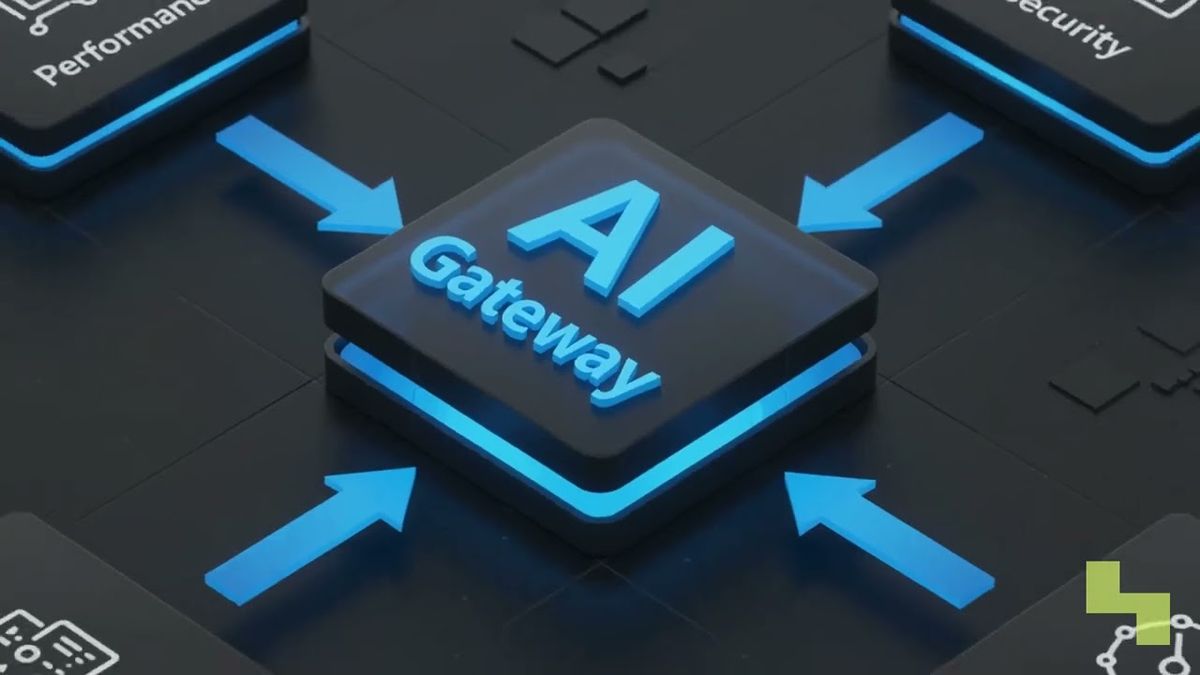
By sitting in the middle. An AI gateway is a control point between applications and model services, and every model request passes through it. That's how it can run the same checks before and after inference for everyone.
Follow a request:
- Authenticate it: validate the user or workload identity and work out which operation it's attempting.
- Evaluate the applicable policy against relevant request attributes (selected model, prompt, role, feature, current usage).
- Apply the consequence. Allow, deny, stop requests once a limit is hit, or filter an output that breaks content rules.
- Record the decision: when the check happened, which policy applied, what was decided and the result.
Make the gateway a mandatory path. Offer it as an optional library and applications will route around it, and you can no longer claim consistent enforcement. That role also separates an AI gateway from a conventional API gateway: both manage traffic, but AI gateways deal with model-specific concerns such as prompts, model selection, token consumption and generated outputs.

Why should AI policies be managed as configuration?
So a rule change doesn't take twenty code releases.
Policy logic buried inside individual applications causes trouble. Teams read the same requirement differently, applications pick up updates at different times, and older services cling to obsolete behavior. As the AI portfolio grows, the whole control environment gets hard to inspect and maintain.
Centralize AI policy enforcement instead: define policies in one place, and update them without every application team changing and redeploying code. A team scopes a rule to the relevant identities, models, operations or output categories, reviews the change and updates the policy engine. The gateway, or another integrated enforcement point, then checks later requests against the new configuration. New or revised rules apply to future requests at the shared enforcement point.
Application-level safety design still counts. Central configuration sets a consistent baseline, and applications add the controls that depend on their own business context.
How Hyperlake helps
Hyperlake provides shared controls for identity, access, scoped secrets, network isolation, audit and lineage across AI services in infrastructure the customer controls. Authenticated services can use OAuth/OIDC sign-in, validated JWT identity, OPA policy decisions, and enforcement and logging at integrated access points, depending on the deployment. To talk through how these controls fit your AI environment, talk to our team.
Frequently asked questions
Can runtime policy enforcement replace AI testing?
No, you need both. Testing finds failures before release, while runtime enforcement evaluates live requests under current identities, policies and usage conditions (production inputs and access contexts rarely look exactly like test cases). Runtime controls give you a final decision point, but applications still need evaluation, secure design and appropriate human oversight.
Where should PII policies be enforced in an AI application?
In three places: before a prompt reaches the model, when enterprise context is retrieved, and before generated output reaches the user. A mandatory gateway is a consistent spot for request and output checks, but data services must enforce their own access policies. Aim to minimize sensitive data exposure, and avoid keeping unnecessary PII in logs.
How quickly can a new AI policy take effect?
Quickly, once it's reviewed, approved and activated in the enforcement system. A centrally configured policy applies to the next requests without any application shipping a new version. How fast exactly depends on your change controls, policy engine and deployment architecture.
Does AI policy logging create additional privacy risk?
It can, if logs keep complete prompts, outputs, identifiers or sensitive retrieved context with no clear need. Record enough to prove enforcement happened, and minimize or redact sensitive content. Treat policy logs like any other security evidence: same access controls, retention rules and tamper protection.