Air-gapped AI is an AI system with no physical or logical connection to an outside network. Everything (inference, telemetry, licensing, updates, monitoring, admin) runs inside the security perimeter, and models, software and data only come in through approved offline or one-way transfers.
In practice, "air-gapped" gets stretched to cover a VPC with tight egress rules, a rack in a company basement, even a laptop with the Wi-Fi switched off. None of those count. The standard exists for cases where a leak would cause damage no contract, insurance policy or breach letter can undo. Lifting a cloud setup onto your hardware won't get you there, because every dependency and routine process has to work with the internet gone.
What is a true air-gapped AI environment?
Here's a quick test. Does anything in the system need to reach outside, even once a month? Then it isn't air-gapped.
A real air gap has no outbound path and no quiet external dependency. The cable simply isn't there. Approved data and software still get in, but only on inspected physical media or a strictly controlled one-way device like a data diode.
It goes all the way down the stack. Phone home for any of these and the gap is broken:
- Inference, for a model or an app.
- Telemetry, crash reports, usage analytics.
- License checks.
- Downloads of models, containers or packages.
- Public certificate authorities.
- Remote admin or vendor support.
An air gap restricts network connectivity; it does not by itself establish legal sovereignty, trustworthy operators, key control or safe transfer practices. Assess those separately. Sovereignty requirements may also permit governed network connections.
How is air-gapped AI different from isolated private AI?
An air gap removes ordinary network paths to outside systems. Insider access, removable media, supply-chain compromise, physical access and operational mistakes still need controls.
Private clouds, VPCs, segmented networks and egress allow lists are real security controls, and we'd recommend most of them. But while any controlled outbound path stays open, the system isn't air-gapped. An isolated deployment might pull patches from an approved registry, ship telemetry to a monitoring tool, or call a hosted model; an air-gapped one needs a local stand-in for each.
So please don't treat the words as synonyms. The label changes your threat model, procurement, software licenses, incident response, patching and what your auditors will ask to see. An AI audit checklist helps you map those controls to owners.

What does an air-gapped AI deployment require?
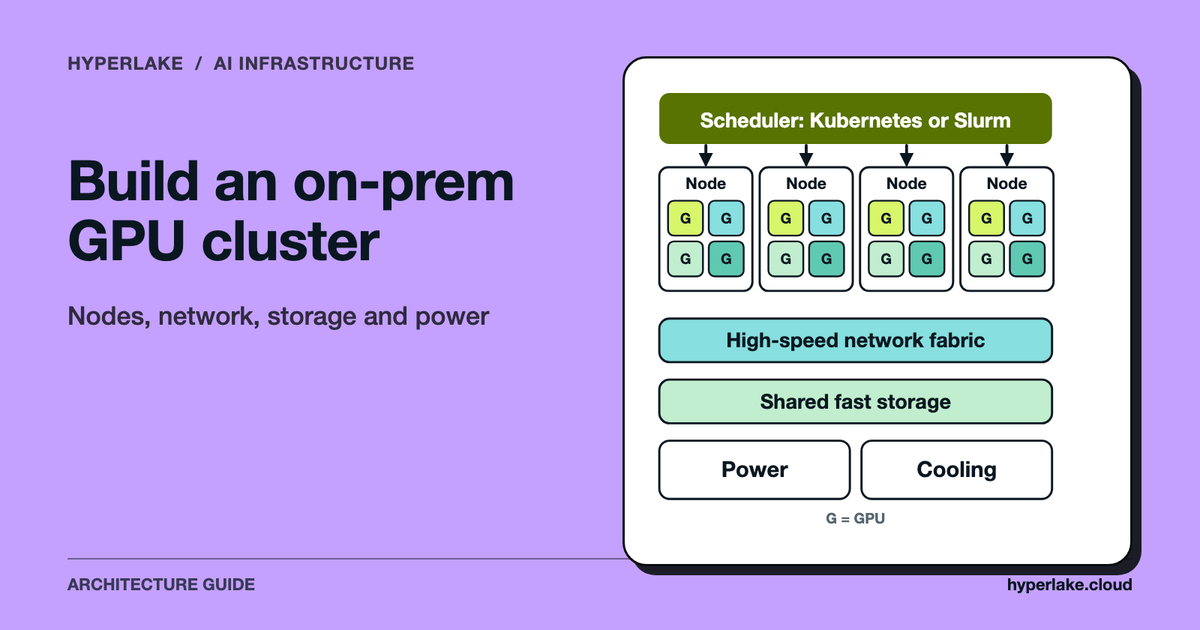
A complete supply chain that lives inside the fence. Everything you need to install, run, watch, recover, patch or upgrade the system has to be in there already.
For air-gapped AI infrastructure, that usually means:
- Model weights, tokenizers, configs and evaluation sets.
- Container images, runtimes, inference libraries, drivers and OS packages.
- Local registries for artifacts, packages, containers and models.
- Internal identity, certificate authority, secrets and policies.
- Local logs, metrics, traces, alerts, audit records and lineage.
- Offline backup, restore, rollback and fix-up procedures.
Drivers are the item teams forget. Support happens on site too, since remote admin and vendor support are external.
Updates can't be pulled on demand either; you need an approved transfer process that checks each artifact's provenance and integrity, scans it, records who signed off, then promotes it into the local registry. Software that calls home to validate a license may not work unless the vendor supports offline licensing.
Kubernetes helps by giving you a portable base, but portable isn't air-gapped. Images, operators, dependencies, admin access and recovery all still need proving offline.

How are air-gapped AI models updated and governed?
Slowly, and on purpose. Weights and security patches can't just arrive, so governance runs through local registries, planned releases, internal testing and written approvals.
A workable release cycle:
- Prepare outside. Gather approved weights, packages, docs and security notes in controlled staging.
- Inspect and transfer. Verify integrity and provenance, scan, authorize, then transfer by the approved method.
- Evaluate inside. Test quality, safety, compatibility, resource use and policy compliance there.
- Promote and watch. Publish the accepted version locally, keep rollback artifacts, and monitor with internal tools.
Set an approved update and emergency-patching process against the workload and risk. Offline inspection and transfer can delay updates, so measure that process and document prioritization, exceptions, rollback and risk acceptance.
The good news: open-weight models now handle a lot of enterprise work without an outside inference endpoint. Whether one fits still depends on local evaluation, your hardware, its license and the workload. And even with everything local, a model should only see approved context, through governed agent grounding.
When is air-gapped AI necessary?
When outside connectivity carries a risk that normal cloud controls can't push down to a level you'd accept. Base that call on information classification, the rules that apply, mission consequences and a formal risk assessment. Not on a hunch.
Typical candidates: defense programs with classified information, government agencies on classified networks. Hospitals handling protected health data under strict rules might qualify, and so might banks guarding trading algorithms or fraud models. But plenty of workloads in those sectors don't need an air gap. Legal, regulatory, contractual and operational requirements draw the line, not the industry name.
What you're trading is stronger isolation for slower updates, messier artifact management, more work for your operators and a longer wait for better models. If controlled connectivity is acceptable, private or sovereign AI with strict egress, identity and policy controls is often the saner choice.
How Hyperlake helps
Hyperlake is the AI cloud for your team and your agents, on your cloud. Teams use it to assemble, deploy and govern data, open models, applications and tools on infrastructure they or their clients control: their own AWS or Google Cloud account today, with private cloud and on premises coming soon. Because it's modular and built on Kubernetes, it can support locally run model services, governed access, observability and lifecycle processes. For a true air gap, every dependency, integration, license and transfer step still needs checking for your deployment, so talk to our team.
Frequently asked questions
Can an air-gapped system call a cloud-hosted AI model?
It can't. A cloud model call needs an outside network path, which an air gap rules out. Bring approved open or custom weights in through a controlled transfer instead and serve them locally, as long as the model's license and its software work offline.
How do teams patch AI infrastructure without internet access?
Patches go to a controlled staging area first to be checked for provenance and integrity, scanned and approved. They cross on authorized physical media or a permitted one-way device, then get tested and promoted through local registries, with audit records and a rollback path kept.
Does running AI on premises make it air-gapped?
Not by itself. An on-prem system can still talk to public registries, outside telemetry, remote support tools, hosted model endpoints or license servers. It's air-gapped only with no physical or logical outside connection and every dependency inside the perimeter.
Are open-weight models suitable for disconnected enterprise environments?
Often, yes. Lots of enterprise tasks run fine on open-weight models without an outside inference service. Test quality, security, licensing, hardware needs, task performance and policy fit locally, and keep offline copies of tokenizers, libraries, containers, drivers and every other runtime dependency.