Debezium change data capture (CDC) is an open source framework for streaming committed row-level database changes from transaction logs. Instead of repeatedly querying application tables, it captures inserts, updates, and deletes as structured events, enabling downstream systems to receive low-latency updates with less interference to primary transaction processing.
This matters because SQL polling can add database load, delay updates, and miss intermediate states when records change several times between queries. Log-based CDC provides a continuous event stream for analytics, search, replication, and real-time ELT pipelines. The video above walks through the core ideas.
What is Debezium change data capture?
Debezium is a framework that reads database transaction logs and converts committed row-level changes into structured events. It captures changes below the application query layer, so applications do not need to expose custom extraction logic for every downstream system.
Operational databases already write transaction logs to support durability and recovery. Debezium connectors follow those logs, track their position, and represent supported insert, update, and delete operations as events. An event generally includes the affected table, operation type, record key, source metadata, and row state; the availability of complete before-and-after values depends on the database and its configuration.
This event history can support replication, lineage, debugging, and auditing. However, a CDC stream is not automatically a complete compliance record: retention, access controls, schema history, event integrity, and downstream handling still need explicit governance. Those decisions should form part of a broader AI data strategy when CDC feeds models, agents, or analytical products.
How does Debezium capture and deliver database changes?
Debezium follows a commit-to-consumption sequence: the application writes a transaction, the database records it in its transaction log, a connector converts the change into an event, and downstream consumers process that event asynchronously.
A typical flow has four stages:
- Commit: An application inserts, updates, or deletes a record, and the database commits the transaction.
- Capture: The database records the operation in its transaction log, which Debezium reads using a database-specific connector.
- Publish: Debezium serializes the change and publishes it to an event-streaming layer, commonly a distributed log.
- Consume: Analytics pipelines, search indexes, caches, and replication services process the event independently.
Because consumption is asynchronous, a slow analytical workload does not have to block the original application transaction. Connectors also retain source positions so they can resume after interruption, although reliable recovery depends on correct offset storage, transaction-log retention, and deployment configuration. Initial synchronization may require a snapshot before continuous log streaming begins.

Why is CDC better than SQL polling for fast-changing data?
CDC is usually better when systems need low-latency, continuous updates without repeatedly scanning operational tables. SQL polling remains simpler for small, infrequent extracts, but it becomes inefficient when many consumers repeatedly ask what changed.
Polling introduces several limitations:
- Every query competes with application traffic for database CPU, memory, indexes, and connections.
- Update latency is bounded by the polling interval.
- Several modifications to one row can collapse into a single observed state between polls.
- Consumers often need timestamps or status columns to infer which records changed.
Log-based CDC reads the change sequence the database already produces. It can preserve individual committed operations and send them to multiple consumers through an event log, allowing search indexes and analytical environments to update continuously.
CDC reduces application-facing query pressure, but it does not create zero overhead. Connectors consume database, storage, network, and event-streaming resources. Teams should assess the workload rather than assume that either polling or CDC is universally cheaper, an approach also central to building reliable AI data quality controls.

What is required for reliable Debezium replication?
Reliable replication requires more than installing a connector. Teams must configure the source database, event transport, schemas, offsets, consumers, and recovery procedures as one end-to-end system.
Important requirements include:
- Enable and retain the required transaction logs, with narrowly scoped connector permissions.
- Plan the initial snapshot and the transition from snapshot data to streaming changes.
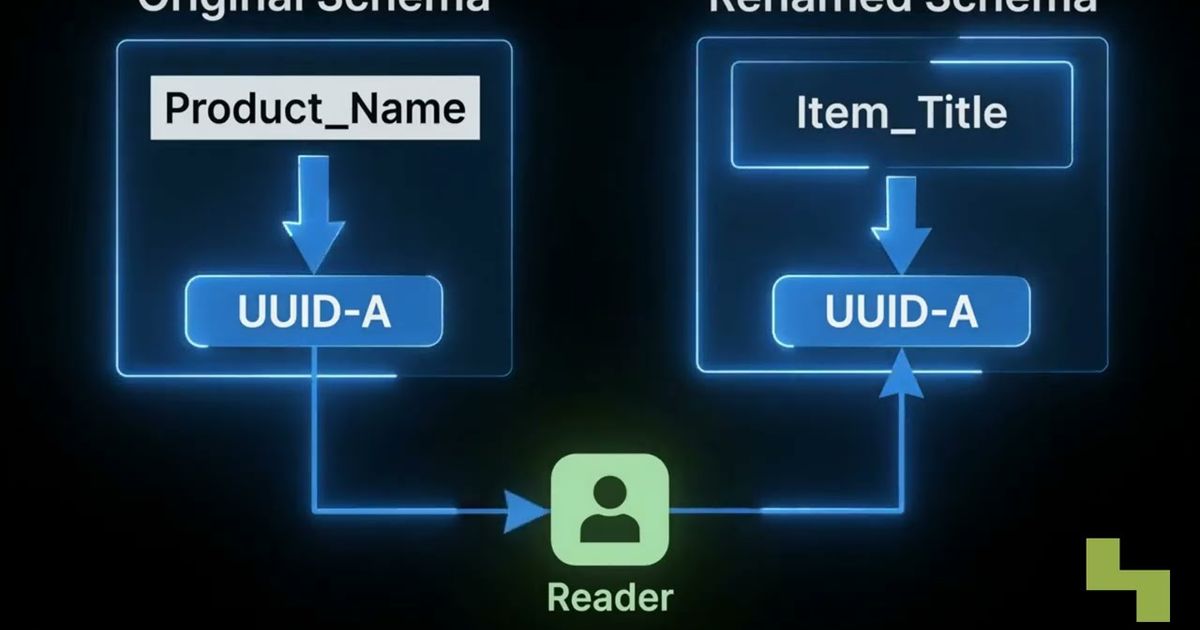
- Define stable record keys and manage schema evolution across producers and consumers.
- Preserve ordering where it matters and make consumers tolerant of duplicate delivery.
- Monitor connector health, replication lag, offset state, log retention, and failed events.
- Protect sensitive before-and-after values with access policies, encryption, and appropriate retention.
Transaction-log parsing can provide an exact sequence of source changes, but that does not automatically guarantee exactly-once results across every downstream system. Failures may cause events to be retried, reordered across partitions, or rejected by consumers. Idempotent processing, reconciliation, checkpoints, and tested recovery procedures are therefore essential for accurate synchronization.
Key takeaways
- Debezium streams committed inserts, updates, and deletes from database transaction logs.
- Log-based CDC avoids repeated table polling and can reduce interference with transaction workloads.
- Structured change events can continuously update analytics, search, replication, and ELT systems.
- End-to-end accuracy depends on snapshots, offsets, ordering, schema handling, retention, and idempotent consumers.
- CDC supports auditability, but governance and security controls must cover the complete pipeline.
How Hyperlake helps
Hyperlake can provide the portable Kubernetes foundation and modular data services around a CDC architecture, including Kafka for streams and workload-appropriate analytical, operational, search, vector, or graph engines. Teams can package identity, policies, monitoring, applications, and data services into repeatable deployments in their own infrastructure or their clients’ environments. To discuss the surrounding architecture for a governed real-time data platform, talk to our team.
Frequently asked questions
Does Debezium query application tables continuously?
No. During normal streaming, Debezium reads database transaction logs rather than repeatedly polling application tables for changed rows. An initial snapshot may query source tables to establish a baseline, depending on the connector and configuration, after which the connector follows new log entries from a recorded position.
Does Debezium guarantee exactly-once replication?
Debezium can capture committed database changes and maintain source offsets, but exactly-once results depend on the complete pipeline. Event transport, partitioning, retries, consumer behavior, and destination writes all affect delivery semantics. Consumers should use stable keys, idempotent writes, checkpoints, and reconciliation to prevent duplicate processing or unnoticed gaps.
Can Debezium update analytics and search systems in real time?
Yes. Debezium events can flow through an event-streaming layer to analytical stores, search indexes, caches, and ELT pipelines with low latency. Actual freshness depends on connector lag, event infrastructure, consumer throughput, and destination performance, so teams should monitor the full path rather than only the source connector.