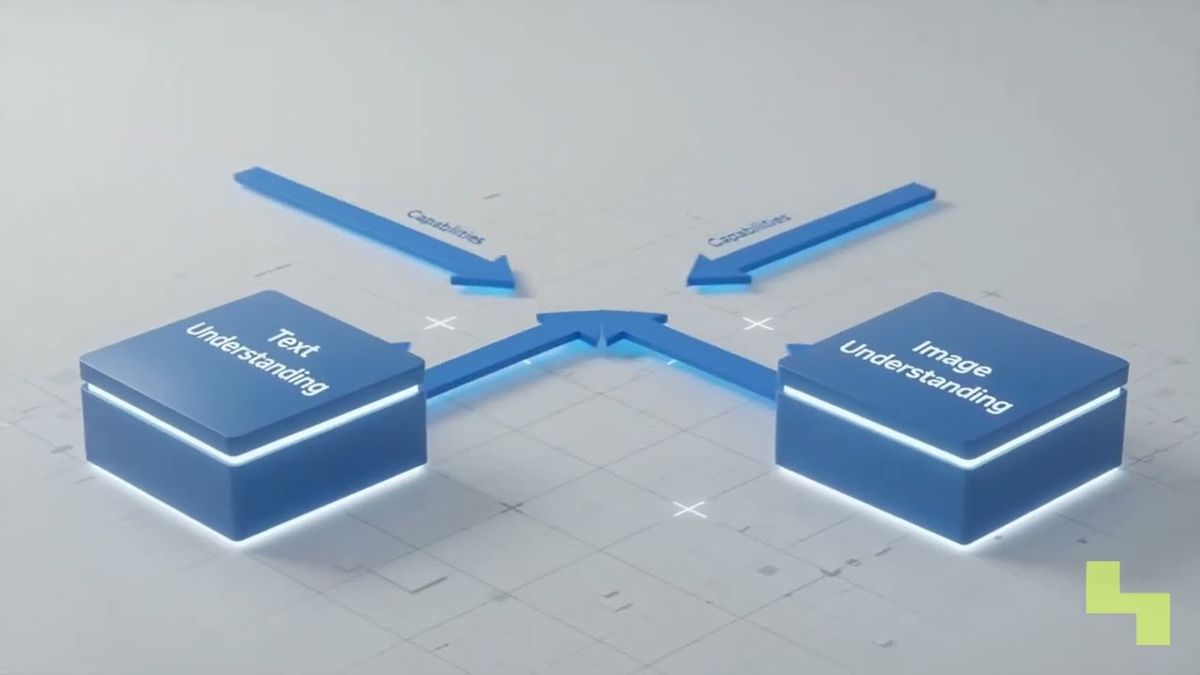
Compound AI systems get a task done by coordinating several specialized components, so the work never rests on a single model. They pair a model with retrieval, tools, memory, guardrails and observability across the whole system. That lets you manage context, actions, policy enforcement and failures as one production architecture.
Our bet: the next big reliability gain in your AI app probably won't come from a bigger model. Improving the system around the model can add reliability, control and domain relevance by itself, and it moves engineering attention from model quality in isolation to how the whole application behaves.
Why can architecture improve AI reliability?
Give a strong model the wrong context and you still get a weak answer. Model quality matters, but even a good model struggles when it lacks current, proprietary or domain-specific information. Architecture helps by supplying better context and by putting limits around what the model does.
Start with retrieval. It can pull relevant documents from a curated knowledge base before generation, which grounds the agent in approved context so it isn't leaning entirely on what it learned in training. Grounding won't guarantee correctness; it just gives the system firmer footing for specialized questions.
Next, a guardrail layer can check the response before it reaches a user or sets off an action. Depending on the use case, it might look at format, permissions, policy conditions, or whether the required evidence is there.
Both are upgrades to the system, not the model, and the gains can compound while the underlying model stays exactly the same.
What does it cost? Complexity. Every new interface is another place where data can go stale, permissions can be misapplied or an integration can break. Give each component an explicit contract and someone who owns it operationally.
What is a compound AI system?
What you build when a model alone can't do the job reliably. Several components interact to complete a task, each with a specialized role, and an orchestration layer coordinates the workflow.
A typical setup has:
- A language model for reasoning, interpretation and generation.
- Retrieval, to find relevant information in curated data sources.
- External tools that query systems, call APIs or take permitted actions.
- Memory, which keeps useful context across steps or sessions.
- Guardrails that apply policy, validate outputs and filter unsafe or inappropriate content.
Observability spans all of it, so operators can see what the system actually did.
The connections are what make it a system rather than a pile of disconnected services. Retrieval results must reach the model in usable form. Tool calls need the right identity and permissions. Memory has to stay properly scoped, and guardrails have to catch outputs at the right point.

How should compound AI systems be observed?
End to end, or barely at all. Watch each component alone and you can't tell how one failure shaped the final outcome, so you need traces that tie together model calls, retrieval results, tool activity, memory operations and policy decisions.
For any request, can you rebuild the inputs, component versions, retrieved context, tool calls, policy checks, errors and outputs? Once a system has five or more interacting components, a plausible-looking answer can hide an upstream retrieval miss, a failed tool call or a guardrail that didn't run as intended.
Trace-level visibility answers three practical questions:
- Which component failed?
- Under what inputs?
- What did that change downstream?
The same evidence feeds incident response, evaluation and AI audit preparation. A caution, though: sensitive prompts, retrieved content and tool results sitting inside the observability system need their own retention and access controls.
Skip this view and you can still build impressive demos. Diagnosing failures, or showing enough control for production, will be hard.

Where does competitive advantage move as models improve?
Toward everything around the model. Capable models are getting easier to come by, and for many tasks the gaps between them are narrowing, so differentiation drifts to orchestration, organizational context and governance. The product isn't only the model; it's the architecture that makes the model useful and dependable in one particular environment.
Orchestration decides how components cooperate and how they recover when something fails. Memory keeps relevant context without leaking information to everyone. Governance controls which identities may reach data, invoke tools or approve consequential actions.
So treat architecture as a product capability, not background plumbing. You can still swap or improve models. Reliable production outcomes depend on how the whole system handles context, permissions, state, evidence and operational failure.
How Hyperlake helps
Hyperlake lets teams assemble, deploy and govern the data, models, applications and tools behind compound AI systems in infrastructure they or their clients control. Its modular capabilities can combine model serving, governed data and knowledge services, applications and workflows with identity controls, policy enforcement, observability and lifecycle operations. Teams can reuse deployment patterns across environments while their data, models, applications and keys stay in controlled infrastructure; specific integrations and automations depend on the deployment. To map this architecture onto your environment, talk to our team.
Frequently asked questions
Can a compound AI system use only one language model?
Yes. "Compound" describes the system architecture, not the number of language models. One model plus retrieval, tools, memory, guardrails and observability still counts, because several specialized components work together to produce and control the outcome.
Does retrieval-augmented generation make model answers trustworthy?
It helps, but it's no guarantee. Retrieval-augmented generation can make answers more relevant by supplying current or domain-specific context. Reliability also depends on source quality, retrieval performance, prompt construction, model behavior, output validation, and whether the system keeps evidence that users or reviewers can inspect.
What should teams monitor in a multi-component AI application?
The whole request path: model calls, retrieved context, tool activity, memory access, policy decisions, guardrail results, errors and final outputs. Shared trace identifiers and records of component versions help you find the original failure and see its downstream effect. Don't treat each service as an isolated system.