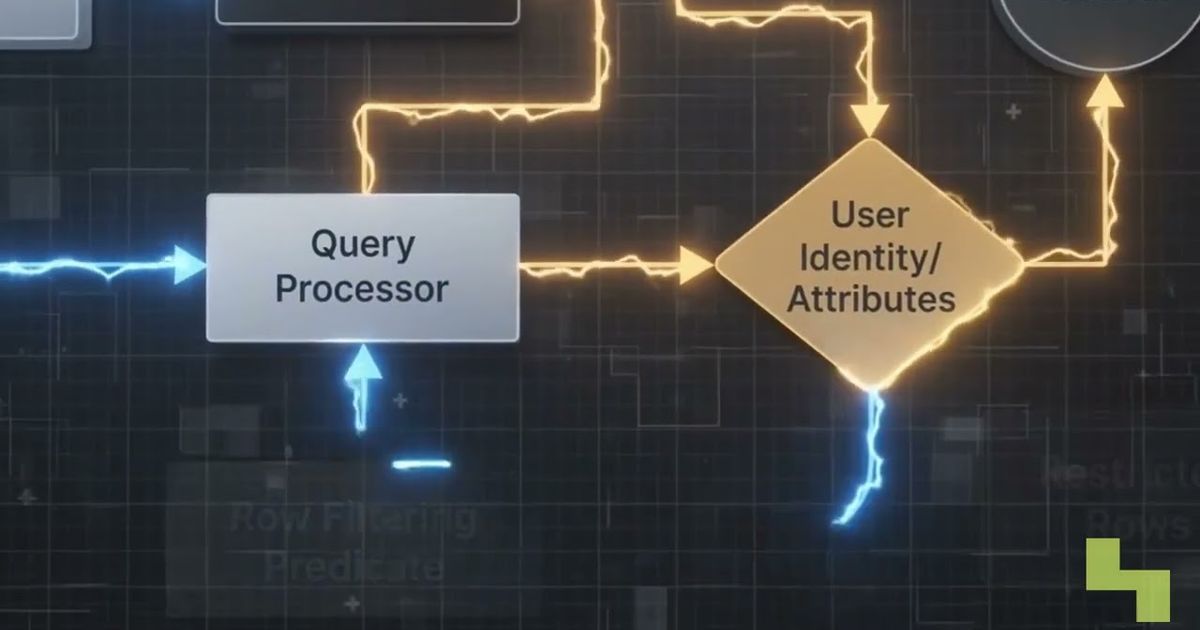
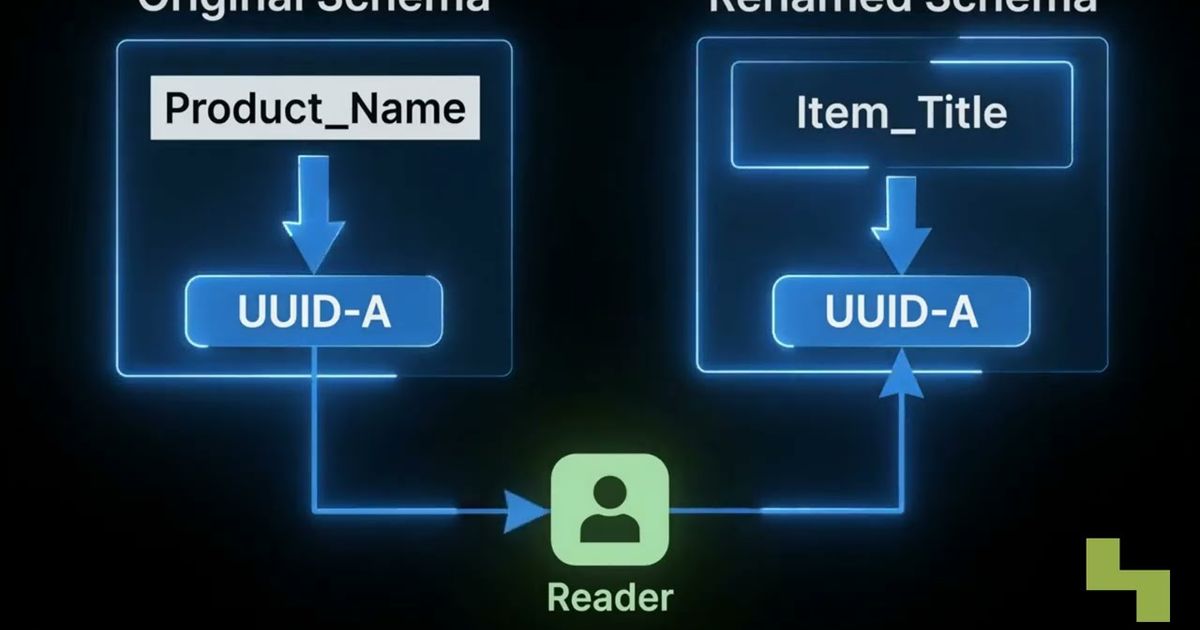
ETL transforms data before loading it into a destination, while ELT loads source data first and transforms it inside the destination. ETL fits cases requiring pre-load controls or limited destination compute; ELT often fits analytical systems that benefit from scalable compute, preserved raw data, and repeatable transformations.
The choice affects pipeline recovery, testing, security boundaries, compute use, and how quickly teams can revise transformation logic. The video above walks through the core ideas.
What is the difference between ETL and ELT?
ETL and ELT perform the same three broad activities but place transformation at different points. The distinction determines whether processing logic runs before data enters the destination or after it has been loaded.
ETL means extract, transform, load:
- Extract data from source systems.
- Transform it in a dedicated processing layer.
- Load the prepared result into the destination.
ELT means extract, load, transform:
- Extract data from source systems.
- Load it into the destination, often in a raw or minimally processed form.
- Transform it using the destination’s compute engine.
Traditional ETL puts more logic in the pipeline. ELT separates data ingestion from downstream modeling and commonly expresses transformations as SQL executed against a warehouse or lakehouse.

Why did analytical data platforms shift toward ELT?
ELT became practical when destinations gained enough affordable, scalable compute to process large datasets efficiently. Cloud data warehouses and modern analytical engines made it less necessary to transform everything in a separate processing system before loading.
Historically, destination storage and compute were expensive. Teams prepared data externally so the destination received only data that matched its schema and analytical requirements. That made ETL the accepted sequence for much of data engineering history.
With ELT, the destination becomes both the storage location and the transformation engine. Teams can load data sooner, then create cleaned tables, business models, and aggregates as separate downstream operations. This pattern is especially useful when several teams need different representations of the same source data.
The shift is not simply a reversal of letters. It reflects a change in where compute is available, how storage is priced, and whether the destination can safely retain and process source data at scale.
What operational advantages does ELT provide?
ELT improves recoverability and iteration by preserving source data before transformation logic changes it. If a transformation contains a bug or its requirements change, teams can rerun it against retained data without extracting everything from the source again.
That separation creates several practical advantages:
- Ingestion and transformation can be developed, scheduled, tested, and monitored independently.
- Raw data provides a stable input for rebuilding downstream models.
- Multiple transformations can use the same extracted dataset.
- Teams can inspect whether an error began during extraction, loading, or transformation.
This separation also improves data observability because each stage has a clearer responsibility. Engineers can monitor source arrival, load completeness, transformation failures, schema changes, and downstream freshness without treating the whole pipeline as one opaque job.
Raw retention still requires discipline. Teams need access controls, retention policies, lineage, and clear distinctions between raw, validated, and business-ready datasets. ELT does not mean every user or workload should have unrestricted access to source data.

When should you use ETL instead of ELT?
ETL remains appropriate when data must be transformed, filtered, masked, or validated before it crosses the destination’s security perimeter. It also fits destinations that cannot efficiently store raw data or execute the required transformations.
Sensitivity and compliance requirements may prohibit loading original values into an analytical environment. In that case, an external processing layer can remove restricted fields, tokenize identifiers, aggregate records, or enforce an approved schema before loading.
Teams should evaluate the choice through a few practical questions:
- Can the destination safely receive the original source data?
- Does it have sufficient compute for the transformation workload?
- Must restricted data be removed before crossing a boundary?
- Will preserving raw inputs materially improve recovery and iteration?
A platform can use both patterns. For example, sensitive fields might be transformed before loading, while approved records are loaded and modeled with ELT. The right architecture follows the security boundary, destination capabilities, and workload rather than treating either sequence as universally better.
Key takeaways
- ETL transforms data before loading, while ELT transforms it inside the destination.
- ELT became common for analytics as destinations gained scalable storage and compute.
- Retaining raw data can simplify reruns, debugging, testing, and downstream iteration.
- ETL remains valuable when security, compliance, or destination limitations require pre-load processing.
- Many environments use a hybrid of ETL and ELT for different datasets and controls.
How Hyperlake helps
Hyperlake can assemble governed data foundations using Iceberg and object storage with a fitting query engine, alongside operational, search, vector, graph, and streaming services selected for the workload. Shared controls can cover identity, access policy, network isolation, audit, lineage, and lifecycle operations, with procedures varying by engine and solution pack. To discuss an ETL, ELT, or hybrid architecture in infrastructure you control, talk to our team.
Frequently asked questions
Is ELT always faster than ETL?
ELT is not inherently faster for every workload. It can reduce pipeline processing by using the destination’s scalable compute, but performance depends on data volume, query design, engine capabilities, concurrency, and transformation complexity. ETL may perform better when data can be substantially reduced before loading or when the destination has limited processing capacity.
Does ELT require keeping all source data forever?
No. ELT requires loading data before transformation, but retention duration remains an architectural and governance decision. Teams can define lifecycle policies for raw data based on recovery needs, regulatory obligations, storage costs, and sensitivity. Some datasets may be retained long term, while others must be deleted or transformed quickly.
Can one data platform use ETL and ELT together?
Yes. A hybrid design is common when different datasets have different security and processing requirements. Sensitive data can be masked or filtered through ETL before loading, while approved data can follow ELT so teams retain flexible source inputs and perform transformations in the analytical destination.
Where does transformation code live in an ELT architecture?
In ELT, transformation logic usually runs within or against the destination and is often written in SQL, although supported languages depend on the engine. The code should still be versioned, tested, reviewed, observed, and connected to lineage. Moving transformation into the destination changes its execution location, not the need for software engineering discipline.