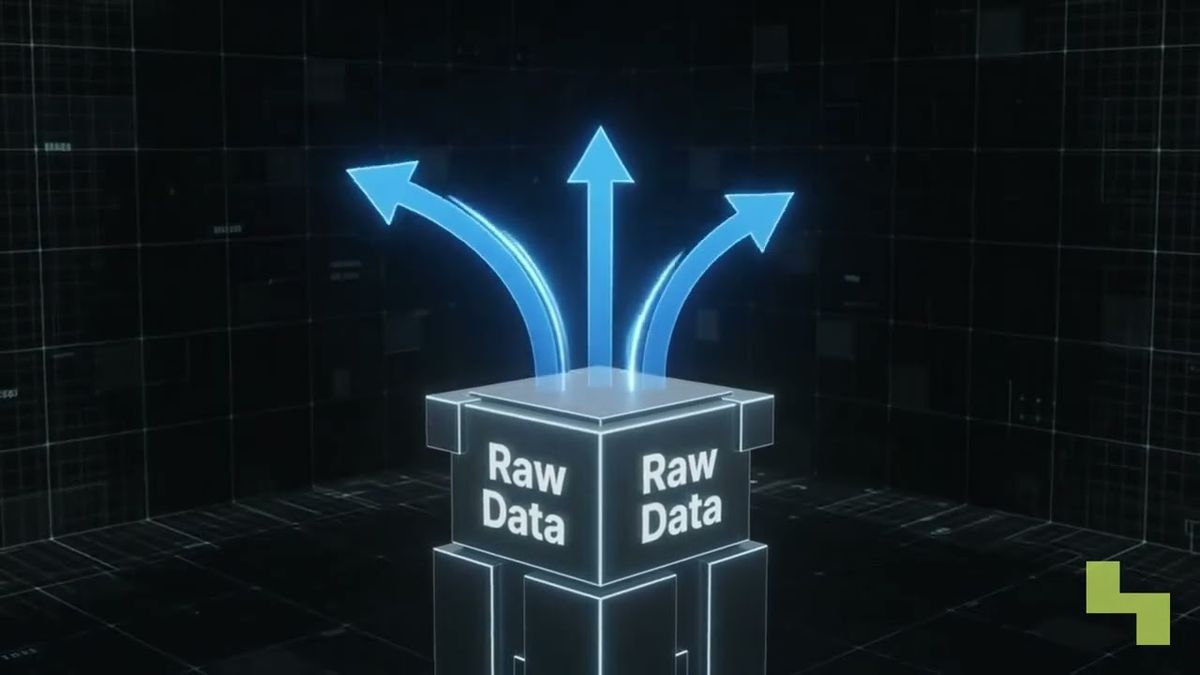
A churn score that lives only in a dashboard doesn't save many customers. Reverse ETL is an architecture that moves refined data from a warehouse or lakehouse into operational applications. Verified customer, product, risk or account insights leave the analytical layer and sync into the software where teams and automated workflows make day-to-day decisions.
Central analytics only pays off operationally once its results reach the systems where work happens. Getting them there reliably takes several jobs: spot what changed, map the fields, respect each destination's limits, retry failures, and avoid duplicate records.
What is reverse ETL in operational analytics?
Think of it as the return trip. Reverse ETL reads curated data out of a central analytical store and delivers it to downstream operational systems, which flips the direction of a conventional pipeline. Whatever fills the warehouse or lakehouse stays exactly where it was.
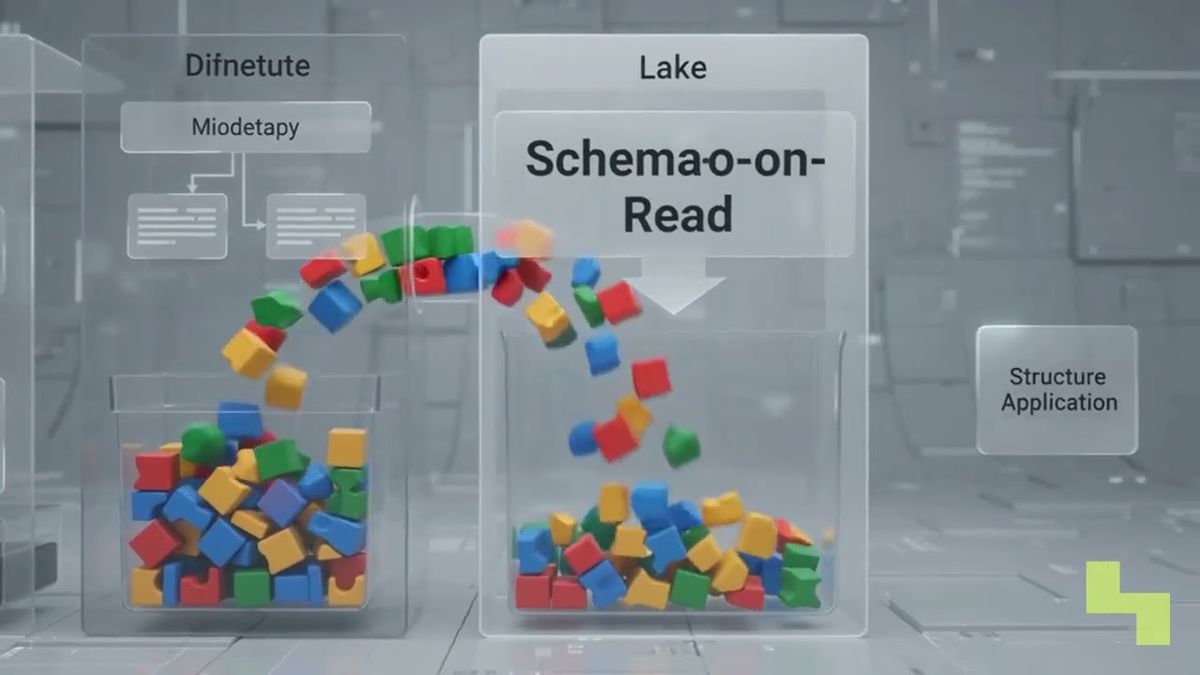
That first direction came earlier: ETL and ELT patterns pull source data from production databases, applications and event streams into a central repository, where teams turn it into verified models for reporting, forecasting, segmentation and other analysis.
Operational analytics with reverse ETL picks chosen outputs from those models and makes them actionable by syncing them into customer applications, support tools, internal workflow software or other operational services. The payload might be a calculated customer segment or account status, a product availability or eligibility flag, a risk score that has passed defined validation rules, or a recommended action from an approved data model.
Nobody is copying the whole warehouse. You're switching on specific, governed data products at the point where they can inform a decision or start a workflow.
How does a reverse ETL architecture move data?
In four stages, and you should be able to inspect the state of each one. A reverse ETL pipeline links a refined analytical model to a destination application through change detection, transformation and controlled delivery, so operators can see what changed, what was sent and whether the target accepted it.
It starts by reading a verified warehouse or lakehouse model, rather than rebuilding business logic inside every destination. Next, change data capture or an incremental query picks out the records added or modified since the last successful run. The sync engine then applies schema transformations and maps source fields to the objects and attributes the destination expects. Last, it calls the target API, observes rate limits, retries the failures that are eligible, and stores the synchronization state.
Why split it like this? Analytical modeling stays apart from delivery mechanics. Data teams define an approved metric or segment in one place, and the sync layer deals with each destination's contract.
We'd push hard for that boundary. Copy business logic into five destinations and you've got five slightly different truths.

What makes a reverse ETL sync reliable?
Correct data, delivered inside the destination's rules. A sync has to survive changing schemas, partial failures, repeated deliveries, API throttling and records the target refuses. What to insist on:
- Explicit field mapping, plus schema validation that catches incompatible changes before malformed payloads reach operational tools.
- Rate-limit handling: respect quotas, and back off in a controlled way when a destination throttles.
- Retry state, so transient failures retry without losing progress or resending the whole dataset.
- Idempotent writes: replaying a payload updates or preserves the intended record and doesn't create a duplicate.
- Logs, checkpoints and error records that show what synced, what failed and what's still pending.
Idempotency is the one we'd stress most. In distributed systems an acknowledgment can vanish even though the destination processed the request, so your pipeline will send things twice, sooner or later. Stable destination keys, upserts and recorded sync state make that safe.
With these controls in place, static analytical outputs become dependable operational payloads, built on synchronized, high-quality business context.

How do reverse ETL pipelines detect changed records?
Resending every record on every run gets pricey fast, and destination APIs don't love it. Efficient pipelines handle only what changed. They use change data capture, incremental queries, or a mix chosen for the source platform and the freshness you need.
Change data capture architecture records inserts, updates and deletes from a transaction log or another change stream, provided the source supports one. An incremental query takes another route: a modification timestamp, sequence, version, partition or stored high-water mark finds records changed after a known checkpoint.
The choice sets your latency and your operational complexity. CDC can support more continuous propagation, while scheduled incremental queries are often simpler for warehouses and for use cases that can live with periodic updates.
Either way, reverse ETL isn't automatically real time. Freshness depends on source capabilities, pipeline frequency, processing time, destination API limits and failure recovery.
How Hyperlake helps
Hyperlake can provide the governed data foundation and operational services around this pattern, and teams don't have to give up control of their infrastructure, data, applications or keys. Depending on the workload, they can assemble fitting analytical, operational, streaming and application engines with shared identity, policy, observability, audit and lifecycle controls, in their own environment or a client's. To talk through an architecture and its deployment requirements, talk to our team.
Frequently asked questions
Does reverse ETL replace traditional ETL or ELT?
No. Traditional ETL or ELT brings source data into a warehouse or lakehouse, where teams clean, combine and model it. Reverse ETL starts from those refined outputs and sends selected fields back out to operational systems. In practice the two directions run side by side.
Can reverse ETL provide real-time data synchronization?
It can come close when the source exposes changes quickly, the pipeline runs continuously and destination APIs can take the volume. Scheduled incremental queries might only update every few minutes or hours. How fresh the data really is depends on detection latency, processing, API limits and how failures get recovered.
How does reverse ETL prevent duplicate destination records?
It relies on stable source and destination identifiers, idempotency keys, upserts or equivalent destination operations, plus recorded checkpoints and delivery outcomes. If a request has to be repeated after a timeout or a lost acknowledgment, the same payload updates the intended object instead of making a new one.
What data should be synchronized into operational applications?
Only data that supports a defined operational decision or workflow, such as an approved account status, segment, eligibility result or risk indicator. It should come from a trusted model with clear ownership and quality expectations. A small payload also means less exposure, simpler mapping and less pointless API traffic.