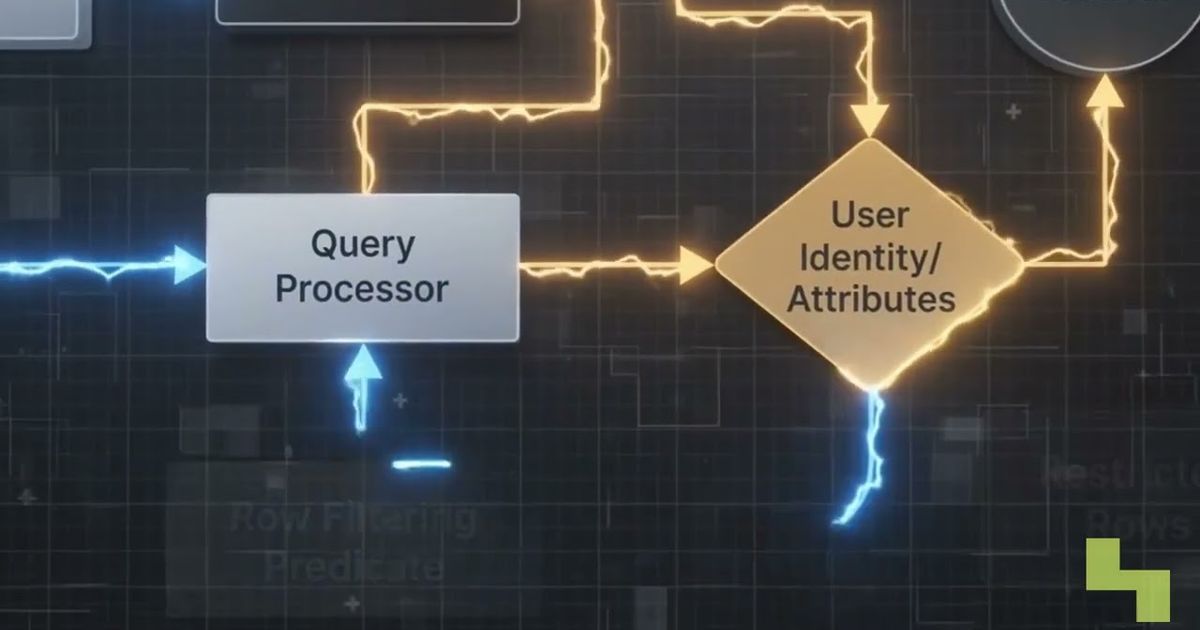
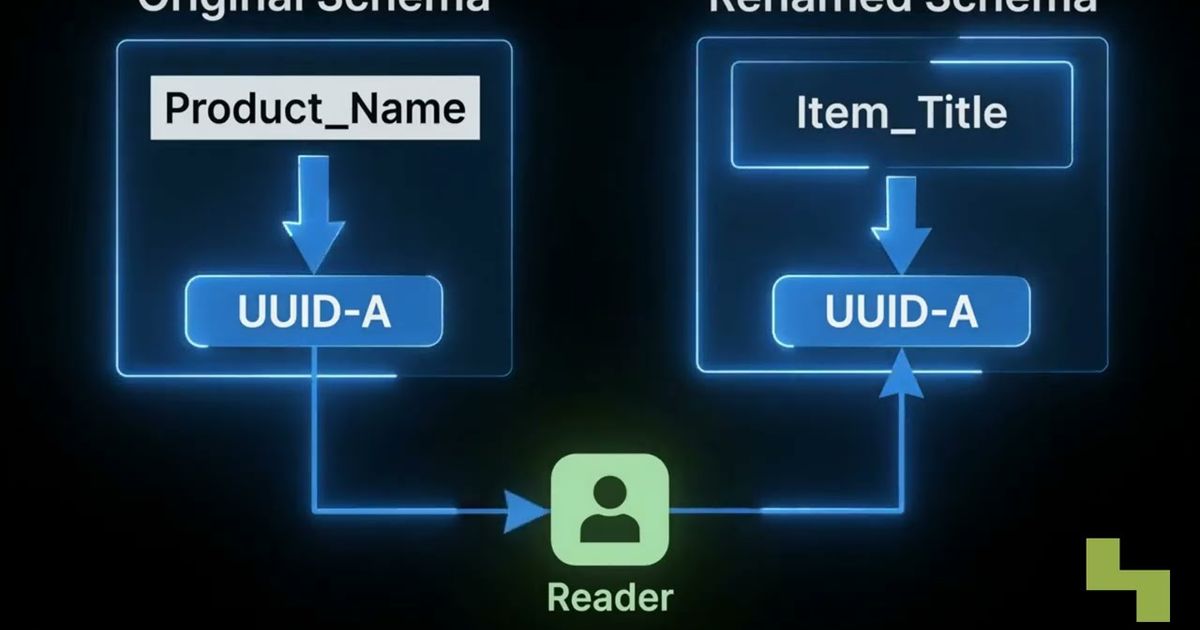
LLM testing and benchmarking is the practice of measuring probabilistic model behavior against representative data, explicit quality rubrics, production traffic, and enterprise risk criteria. Unlike deterministic software tests, it compares scored outcomes to a baseline so teams can detect regressions, drift, unfair performance, and documentation gaps before or after release.
This matters because a prompt, model, retrieval, or configuration change can subtly degrade quality without breaking an API or failing a conventional unit test. A structured evaluation process makes release decisions measurable rather than subjective. The video above walks through the core ideas.
Why is LLM testing harder than traditional software testing?
LLM outputs are probabilistic, so tests usually cannot rely on exact equality with one expected answer. Many responses can be acceptable, while a fluent response can still be incomplete, unsupported, biased, or wrong.
The input space is also effectively unbounded. A test suite cannot cover every wording, context combination, retrieved document, conversation history, or tool result that users may produce. Regressions often appear as gradual quality degradation rather than clear functional failure.
Traditional tests still matter for deterministic parts of the system, including schemas, API contracts, permissions, tool calls, and structured output validation. Behavioral quality needs evaluation methods that score meaning, relevance, safety, grounding, and task completion. A broader LLM evaluation strategy combines these checks instead of treating one benchmark score as sufficient.
How does a golden dataset support offline evaluation?
A golden dataset provides a stable, curated set of representative inputs, reference outputs, or quality criteria for comparing a candidate system with the current baseline. Teams run it before promoting prompt, model, retrieval, or configuration changes.
The dataset should cover the most important use cases and known failure modes, not just easy or common requests. Useful entries may contain an input, relevant context, expected facts, an acceptable answer, prohibited behavior, and a scoring rubric.
A practical offline evaluation process is:
- Curate representative examples from intended workflows and known failures.
- Define measurable criteria for correctness, relevance, grounding, safety, and format.
- Run the current baseline and the proposed version under comparable conditions.
- Promote the change only if results maintain or improve the required performance.
Golden datasets need versioning and periodic review. Production discoveries should become new test cases so the suite grows with the system’s real failure modes.

How does LLM-as-a-judge evaluation scale testing?
LLM-as-a-judge evaluation uses a capable model and an explicit rubric to score outputs from the model under test. It can reduce dependence on human review for every run and make evaluation practical for frequent changes or pull requests.
Custom rubrics let teams test domain-specific requirements such as whether an answer cites supplied evidence, follows an escalation policy, or includes required technical details. Structured score outputs also make candidate-to-baseline comparisons easier to automate.
A model judge is not an unquestionable authority. Its scores can be affected by prompt wording, ordering, verbosity, and the judge model itself. Teams should calibrate judge results against expert-reviewed examples, keep judge settings stable during comparisons, and retain human review for ambiguous or consequential cases.
How does online evaluation detect production drift?
Online evaluation applies quality rubrics to a sample of live production traffic. It finds issues caused by real inputs, changing data, retrieval behavior, user patterns, or edge cases that the golden dataset did not represent.
Teams can compare production scores over time and investigate changes by model version, prompt version, workflow, user segment, or other relevant dimensions. Offline and online evaluation serve different purposes: offline tests gate known changes, while online evaluation reveals unexpected behavior after deployment.
Production findings should feed back into offline testing. Once an important failure is confirmed and appropriately handled, a representative version can be added to the golden dataset to prevent recurrence.
What should enterprise LLM benchmarks include?
Enterprise benchmarks should reflect the system’s actual domain, users, decisions, and regulatory context. General-purpose benchmarks can provide context, but they do not replace testing on representative enterprise inputs.
A complete program should include:
- Domain-specific datasets: Test the terminology, tasks, documents, and input patterns the deployed system will encounter.
- Protected-class analysis: For systems involved in consequential decisions, evaluate performance across applicable protected-class dimensions and investigate material disparities.
- Evaluation artifacts: Record dataset and rubric versions, model and configuration details, results, identified limitations, and approval decisions.
- Risk-based oversight: Use human review where policy, uncertainty, or potential impact makes automated scoring insufficient.
Documentation does not automatically establish compliance, but it creates evidence for internal governance and applicable requirements for high-risk systems. Teams operating in Europe should connect evaluation records to their broader understanding of the EU AI Act’s enterprise requirements.

Key takeaways
- LLM quality cannot be tested solely with deterministic equality assertions.
- Golden datasets make offline regression testing repeatable and comparable to a baseline.
- Model-based judges can scale rubric-driven evaluation but still require calibration and oversight.
- Online evaluation catches drift and edge cases that curated offline datasets miss.
- Enterprise benchmarks should address domain performance, protected-class dimensions, and evaluation documentation.
How Hyperlake helps
Hyperlake supports open-model serving, fine-tuning, and evaluation alongside governed data, observability, audit, and lifecycle capabilities in infrastructure the customer controls. Teams can assemble model and application services with identity, policy, monitoring, and approval controls, while specific evaluation procedures depend on the engine, workload, and deployment. To discuss an enterprise evaluation environment, talk to our team.
Frequently asked questions
Can traditional unit tests still be used for LLM applications?
Yes. Unit tests remain appropriate for deterministic behavior such as API responses, tool arguments, data transformations, permissions, schemas, and required output formats. Semantic quality requires additional evaluation because multiple answers may be valid and an answer can satisfy its schema while still being inaccurate, irrelevant, unsafe, or unsupported.
How large should an enterprise golden dataset be?
There is no universally correct size. Coverage matters more than collecting an arbitrary number of examples: the dataset should represent priority workflows, meaningful input variations, known failures, and high-risk cases. Teams should expand it when production evaluation or incident review reveals an important behavior that existing cases do not test.
Should an LLM judge replace human reviewers entirely?
No. An LLM judge is useful for frequent, rubric-based scoring at scale, but it can introduce its own biases and inconsistencies. Human experts should calibrate the judge, review disagreements and borderline results, and remain involved when outputs affect consequential decisions or require nuanced domain interpretation.