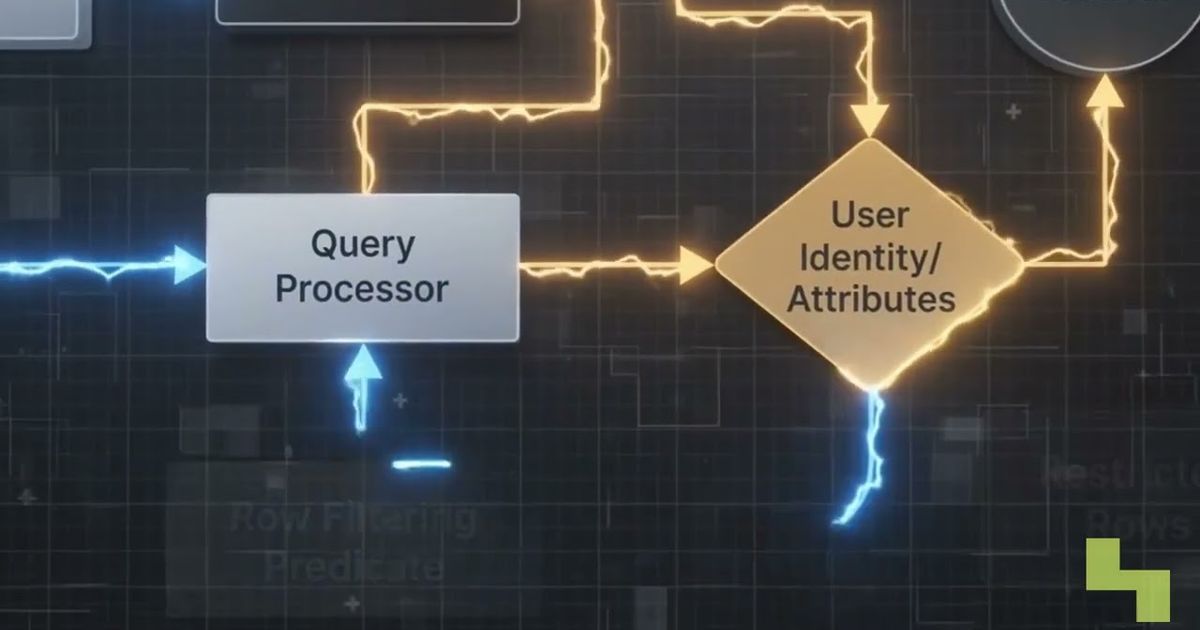
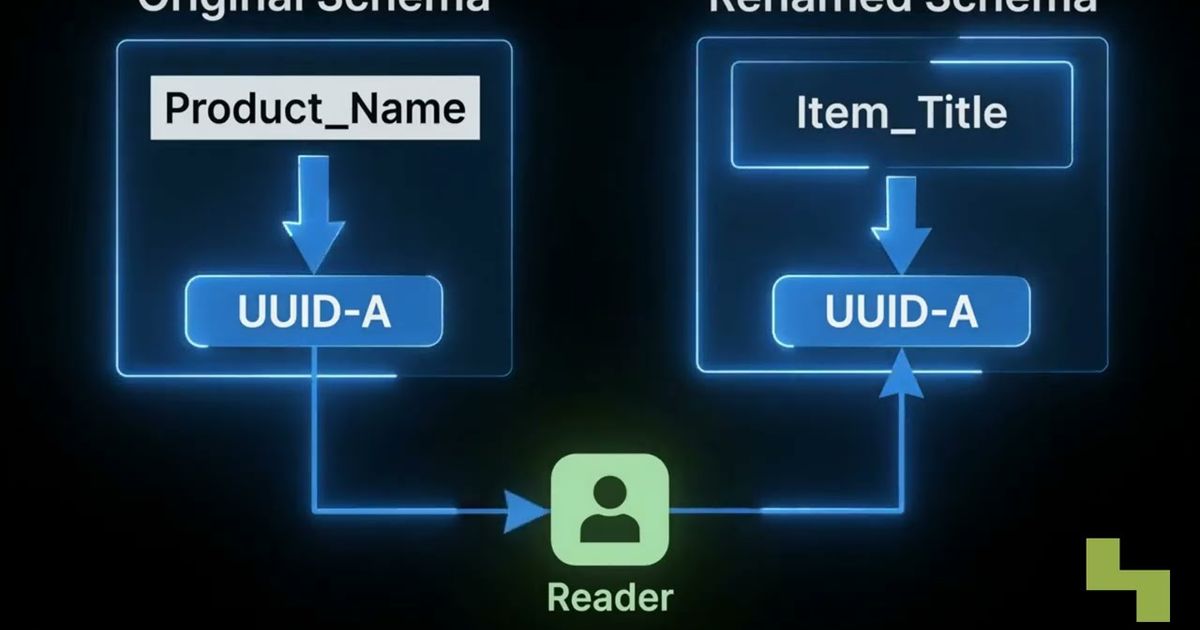
LLMOps extends MLOps for systems whose behavior depends on prompts, retrieved context, model configuration, and probabilistic generation. Traditional model monitoring remains useful, but it cannot independently detect prompt drift, semantic quality loss, retrieval failures, unexpected token consumption, or the cost anomalies that arise when large language model applications change.
This matters because an LLM application can fail even when its model weights, endpoint health, and infrastructure metrics remain unchanged. Teams need operational controls around the entire compound system, not only the model artifact. The video above walks through the core ideas.
What is the difference between LLMOps and MLOps?
MLOps primarily manages the lifecycle of machine learning models, while LLMOps expands that lifecycle to include prompts, context, retrieval, generation quality, token usage, and cost. LLMOps does not replace MLOps; it adds controls for the components and failure modes specific to language-model applications.
Conventional MLOps practices commonly focus on training data, feature pipelines, model versions, deployment, statistical performance, and data drift. Many supervised systems can be assessed against known labels or expected values using metrics such as accuracy, precision, and recall. When incoming data diverges from training data, retraining or fine-tuning may be the appropriate response.
LLM behavior depends on more than model weights. The system prompt, user prompt, context-window contents, retrieval results, sampling settings, tool definitions, and application configuration can all change an answer without changing the deployed model. Although conventional ML models can also produce probabilistic outputs, language generation makes semantic and context-dependent evaluation especially important.

Why does MLOps miss some LLM failures?
Model-centric monitoring misses failures that originate outside the model artifact or cannot be recognized through exact output comparisons. An LLM endpoint can be healthy and responsive while the application produces less useful, less grounded, more expensive, or off-policy answers.
Important blind spots include:
- Prompt drift: A prompt edit changes behavior, but a system that does not version or monitor prompts sees no model change.
- Context-driven degradation: Poor documents, oversized context, or irrelevant retrieved passages reduce answer quality while model metrics remain stable.
- Semantic quality loss: Two different responses may both be valid, while a fluent response may still be inaccurate or inappropriate. Equality checks cannot make that distinction.
- Token cost anomalies: A prompt or upstream data change causes longer inputs or outputs, increasing inference cost without triggering traditional model alerts.
- Retrieval failures: The generator works as designed, but it receives missing, stale, or irrelevant evidence from the retrieval layer.
These are system-level failures. They require traces and evaluations that connect an output to its prompt version, retrieved context, configuration, model, token usage, and policy decisions. This broader view reflects the compound AI systems approach, where application behavior emerges from several interacting components.
What should LLMOps monitor?
LLMOps should monitor model and infrastructure health alongside semantic quality, prompt changes, retrieval behavior, token consumption, and cost. The exact metrics must match the application’s purpose, risk level, and definition of an acceptable response.
A practical observability model covers several dimensions:
- Prompt and configuration lineage: Record which prompt, system instructions, model settings, and tool definitions produced each result.
- Semantic evaluations: Continuously test helpfulness, accuracy, relevance, groundedness, and policy compliance using task-appropriate scoring methods.
- Retrieval quality: Measure whether the retrieval system supplied relevant and sufficient context for grounded answers.
- Hallucination indicators: Evaluate unsupported claims against available evidence and application-specific criteria rather than treating hallucination as a single universal metric.
- Token and latency behavior: Track input tokens, output tokens, context size, response duration, and unusual changes by application or workflow.
- Cost: Treat inference cost as an operational signal because token growth, repeated calls, and agent loops can increase consumption even when availability remains normal.
Continuous evaluation complements production telemetry by testing behavior against controlled cases over time. A useful LLM evaluation strategy combines repeatable test sets, semantic scoring, targeted review, and thresholds appropriate to the use case.
How should teams extend MLOps to LLMOps?
Teams should keep their existing MLOps foundation and add LLM-specific artifact management, evaluation, tracing, and cost controls. Reusing deployment, model registry, infrastructure, security, and incident-management practices is usually more practical than replacing the entire stack.
The extension can follow four steps:
- Inventory the full application path. Map prompts, retrieval sources, models, tools, policies, and downstream actions rather than documenting only the endpoint.
- Version behavioral artifacts. Treat prompts and relevant configuration as reviewed, auditable artifacts tied to deployments and evaluations.
- Add continuous semantic evaluation. Test expected behavior before release and monitor representative production outcomes after deployment.
- Connect quality to operations. Correlate evaluations with retrieval traces, token usage, latency, configuration changes, and cost so teams can diagnose the actual cause.
This approach preserves what MLOps already handles well while closing the gaps created by context-dependent generation. Retraining remains one possible remediation, but many LLM incidents are better resolved by correcting prompts, retrieval, context selection, policies, or application configuration.

Key takeaways
- LLMOps extends rather than discards the deployment and lifecycle foundations established by MLOps.
- LLM behavior can change through prompts, context, retrieval, and configuration even when model weights remain fixed.
- Semantic evaluation is necessary because exact-match checks cannot reliably judge helpfulness, accuracy, grounding, or policy compliance.
- Token consumption and inference cost are first-class operational signals for LLM applications.
- Effective diagnosis connects outputs to the complete application path instead of monitoring the model in isolation.
How Hyperlake helps
Hyperlake lets teams assemble and operate model services, evaluation capabilities, governed enterprise context, applications, and shared observability controls in infrastructure they or their clients control. It supports open and custom model serving, fine-tuning and evaluation, governed data access, audit, and lifecycle management, with procedures depending on the engine and deployment. To discuss an LLMOps environment for a specific workload, talk to our team.
Frequently asked questions
Can LLM outputs be monitored when there is no single correct answer?
Yes. Teams can define criteria such as relevance, groundedness, completeness, policy compliance, and task success, then apply repeatable semantic evaluations. Depending on the risk and use case, evaluation may combine deterministic checks, reference-based scoring, model-assisted assessment, and human review rather than relying on exact string matches.
Do teams need a separate platform for LLMOps?
Not necessarily. Existing MLOps capabilities for deployment, model versioning, infrastructure monitoring, access control, and incident response remain valuable. Teams can extend that foundation with prompt versioning, retrieval traces, semantic evaluations, token telemetry, and cost monitoring, provided the resulting system can connect these signals across the full LLM application.
Why should token usage be treated as an operational metric?
LLM inference consumption depends partly on input and output length. A prompt revision, larger retrieved context, verbose output, or repeated agent loop can increase token usage without causing an availability failure. Monitoring tokens by model, application, and workflow helps teams find behavioral changes that affect both performance and cost.