AI model deployment is the continuous operational process of putting a model into production and keeping it reliable through serving, version updates, fine-tuning cycles, scaling events, monitoring, rollback, and governance reviews. It starts with the first production request and continues for as long as the model remains in service.
This matters because production models are non-deterministic systems whose behavior, cost, latency, and inputs can change even when the surrounding application appears healthy. Treating deployment as a milestone causes teams to underestimate the infrastructure and operational work required after launch. The video above walks through the core ideas.
What does AI model deployment include?
AI model deployment includes every activity required to serve, evaluate, update, scale, govern, and retire production model versions. It is a lifecycle rather than a single release step.
The initial deployment makes a model available through an endpoint, application, agent, or internal service. From that point, teams must manage new model releases, fine-tuned variants, prompt changes, scaling events, infrastructure updates, and governance reviews.
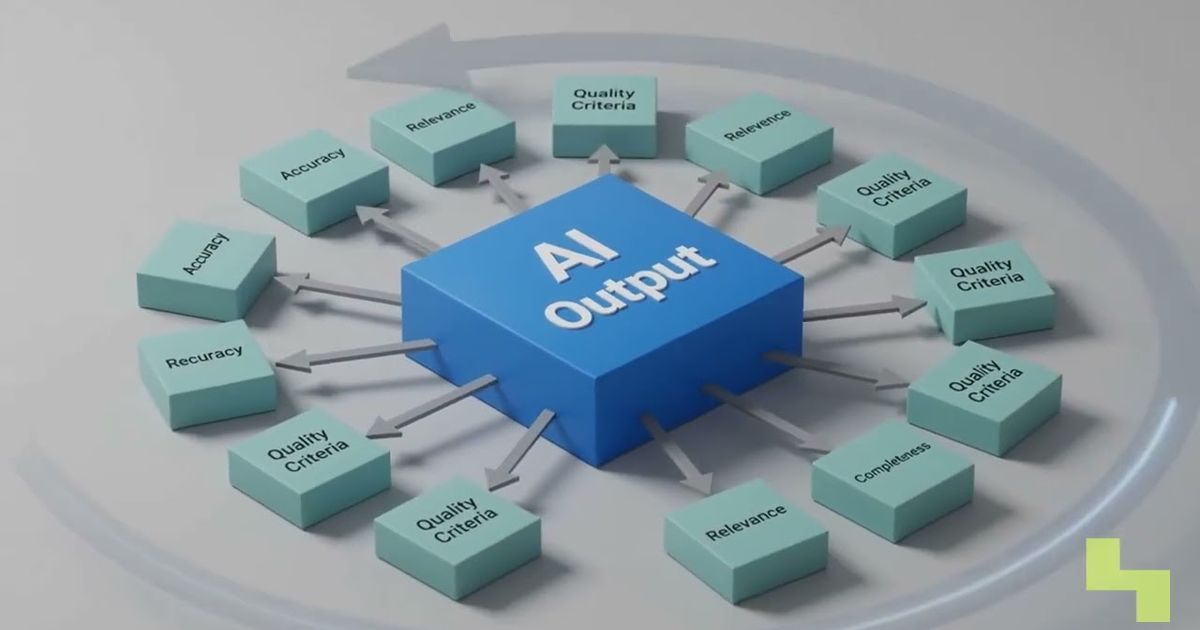
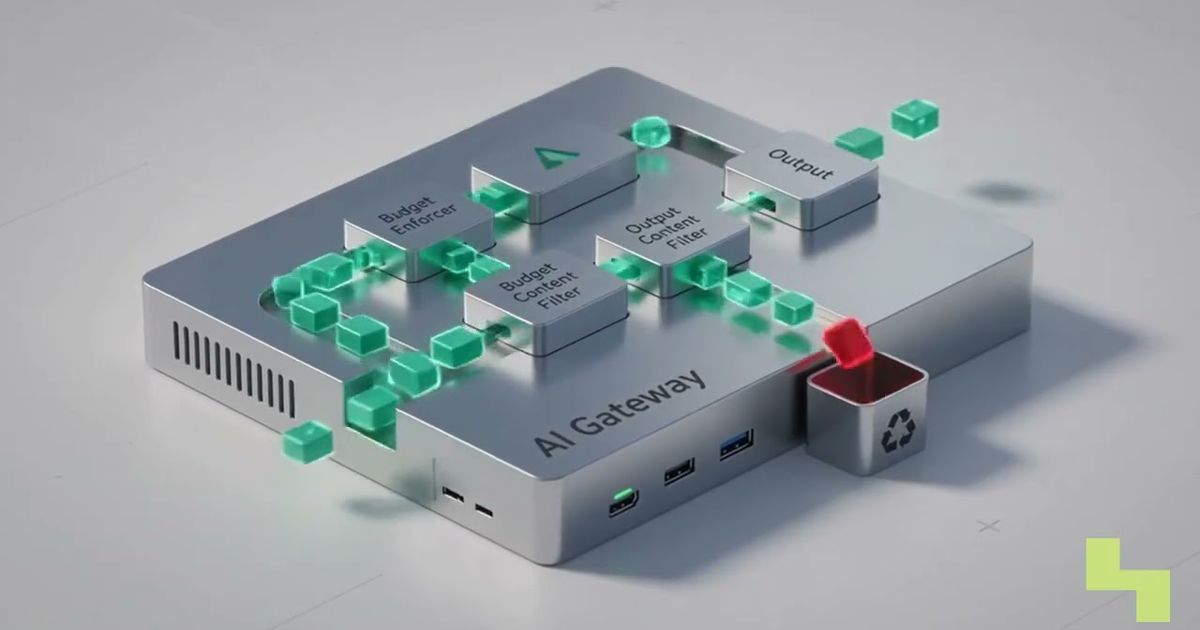
This lifecycle also needs repeatable procedures for validation and rollback. Because model outputs can vary, a successful health check does not prove that a candidate model produces acceptable answers. Teams need operational checks for system health alongside evaluations of output quality, behavior, and cost.
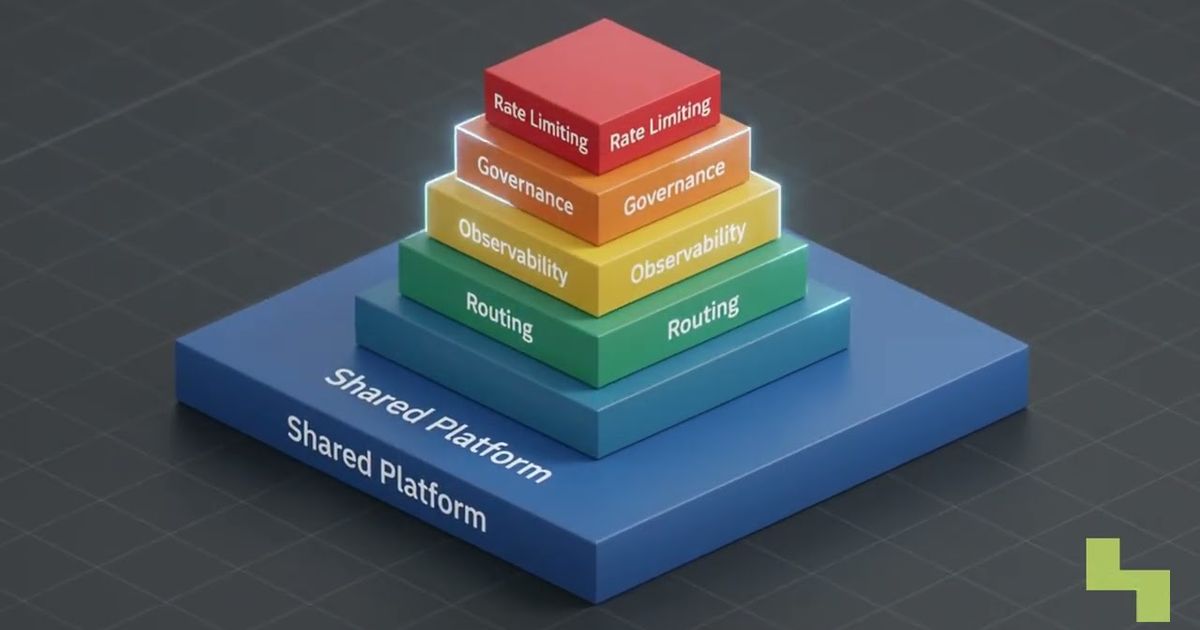
Deployment therefore sits at the intersection of model engineering, application delivery, infrastructure, and governance. A mature process assigns ownership for each stage and preserves enough evidence to explain which model handled a request and under which configuration.
Which model deployment strategies reduce update risk?
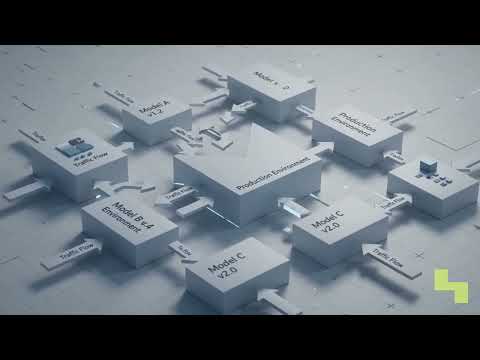
Blue-green, canary, and shadow deployments reduce risk by limiting how and when a candidate model reaches users. Each pattern provides a different balance between isolation, live validation, infrastructure use, and rollback speed.
- Blue-green deployment maintains two equivalent production environments. One serves traffic while the other receives the update; after validation, routing shifts to the updated environment. Keeping the previous environment available can support zero-downtime changes and fast rollback.
- Canary release sends a small portion of production traffic to the candidate model. Teams monitor quality, latency, and cost, then increase its traffic share only when behavior remains acceptable.
- Shadow mode copies live requests to a candidate model but does not return its outputs to users. Teams compare the candidate with the current production version before exposing users to its behavior.
These approaches adapt established software delivery practices to models whose outputs cannot be validated only through deterministic pass-or-fail tests. The release gate should combine infrastructure health with task-specific evaluation, as explained in LLM testing and benchmarking.

How should multiple model versions be managed in production?
Production systems often run several model versions simultaneously, so routing and observability must preserve model identity throughout every request. A simple “current version” label is not enough.
At one time, a platform may operate:
- A primary version serving most user traffic.
- A canary version handling an experimental traffic slice.
- A shadow version processing copies of live requests.
- A previous version retained for rollback.
The platform must know which version received each request, what configuration it used, and where the resulting metrics belong. Without that identity, teams cannot reliably compare versions, attribute costs, connect evaluation results to the right candidate, or diagnose regressions.
Routing logic, evaluation pipelines, and cost attribution should therefore use the same version identifiers. Rollback procedures must also retain the previous model and the serving configuration needed to restore it safely.
What should teams monitor after deploying an AI model?
Teams should monitor latency, output quality, cost per request, and input distributions in addition to standard application health. A model endpoint can be available and still become slower, more expensive, or less useful.
The core production signals include:
- Latency percentiles: Show whether typical and slower requests remain within acceptable response-time bounds.
- Quality score distributions: Continuous evaluation reveals whether output quality is stable or drifting, rather than reducing behavior to one average score.
- Cost per request: Trends can reveal that prompt changes or upstream data changes are increasing token consumption.
- Input distributions: Monitoring detects when production inputs shift away from the data distribution used during evaluation.
These signals should be segmented by model version so that canary and shadow results can be compared with the primary model. Broader LLM observability practices can connect these model-level indicators with request traces, application behavior, and infrastructure health.

Key takeaways
- AI model deployment is a continuous production lifecycle, not a one-time launch.
- Blue-green, canary, and shadow patterns provide different ways to validate model updates safely.
- Production platforms must track model identity through routing, evaluation, monitoring, and cost attribution.
- Model monitoring must cover latency, quality, cost, and input distribution shifts.
- Reliable rollback requires retaining both the previous model and its serving configuration.
How Hyperlake helps
Hyperlake lets teams assemble, deploy, govern, observe, and maintain models and AI services in infrastructure they or their clients control. It can serve open models through KServe and combine model services with identity, policy, scoped secrets, observability, audit, and lifecycle controls, subject to the selected engine, solution pack, and validated integrations. To discuss a production deployment, talk to our team.
Frequently asked questions
Is deploying an AI model the same as deploying an application?
No. Both use release automation, traffic routing, health checks, and rollback, but model deployment also requires behavioral evaluation. An application can remain technically available while its model produces lower-quality outputs, consumes more tokens, or encounters inputs that differ from those used during evaluation.
When should a team use shadow mode instead of a canary release?
Shadow mode is appropriate when a team needs evidence from live requests without exposing users to candidate outputs. A canary is more suitable when limited user exposure is acceptable and the team needs to observe the complete production path. Teams may run shadow validation first and then promote the candidate to a canary.
Why must cost monitoring be tied to the model version?
Different model versions, prompts, and upstream data can change token consumption and request cost. Version-level attribution lets teams determine whether a cost increase came from the primary model, a canary, or duplicated shadow traffic. It also prevents experimental workloads from being mixed into the production model’s cost baseline.