LLMOps, short for large language model operations, is the discipline of deploying, monitoring, evaluating, iterating on and governing language models in production. It extends MLOps with practices for open-ended outputs: prompt versioning, semantic evaluation, token and cost monitoring, retrieval quality, policy compliance, and traceability across agent decisions and actions.
A model that shines in a controlled demo can still regress, get expensive, break policy or behave unpredictably once prompts, data, models and usage start to change. LLMOps is how you catch that.
What is LLMOps?
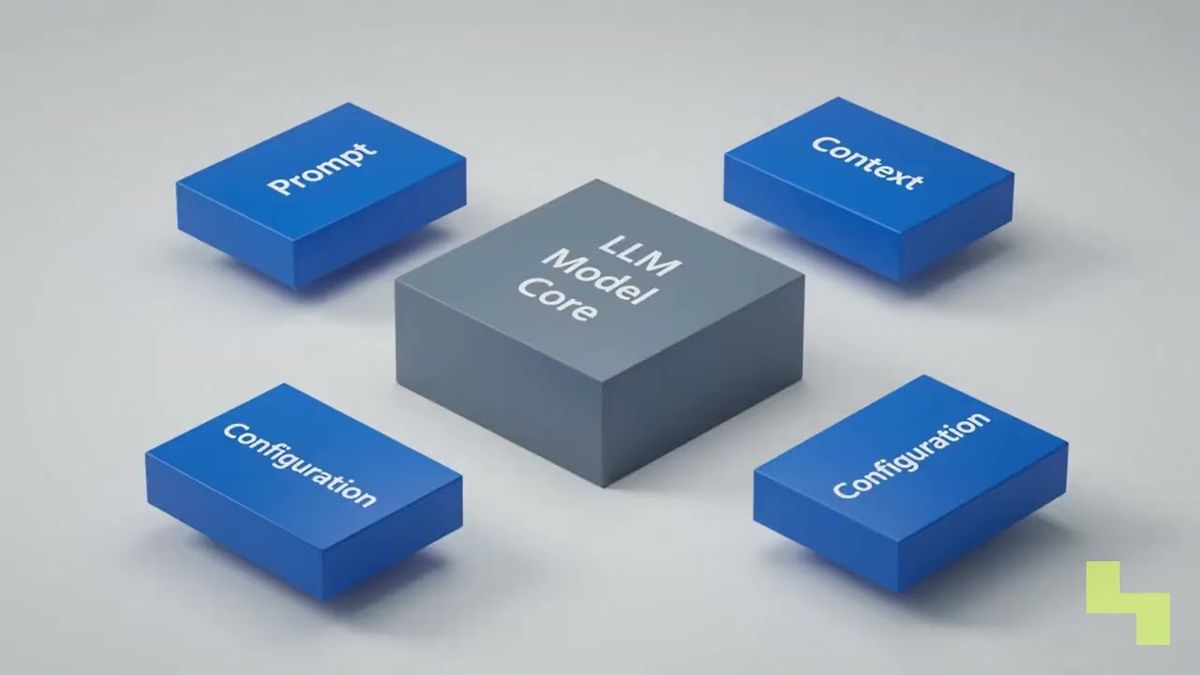
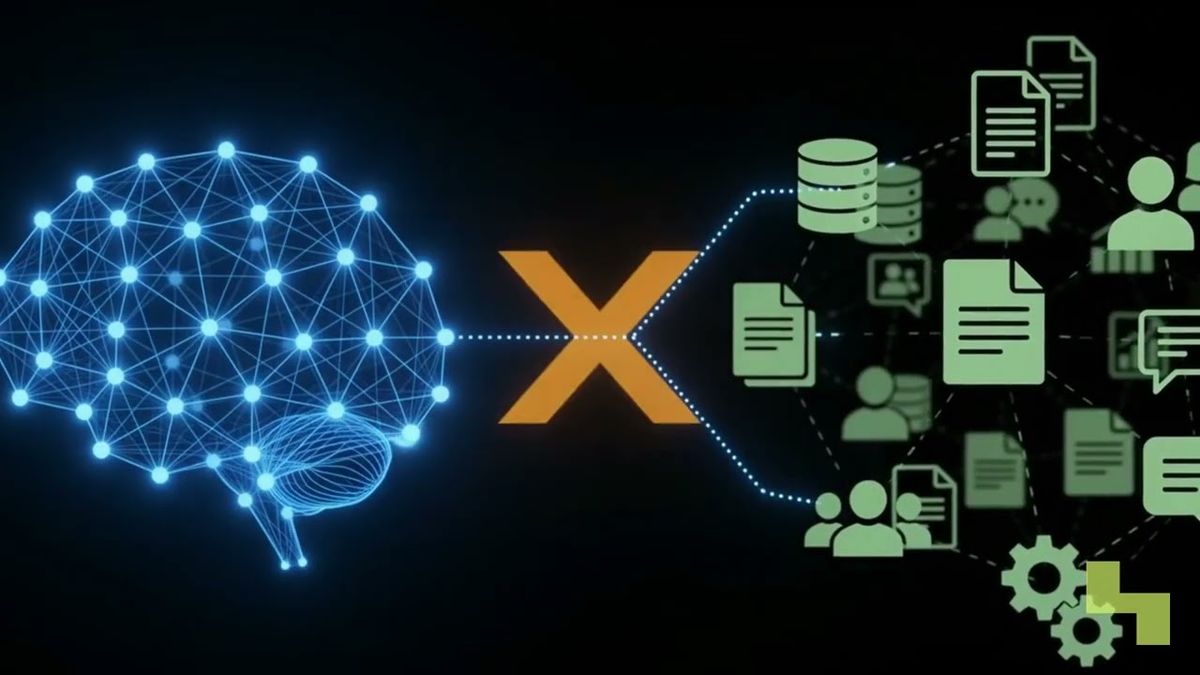
The operational practice that keeps language-model applications reliable, measurable and governable for their whole life. Deploying the model is one piece. Production behavior depends on prompts, retrieval systems, policies, tools, data and application logic about as much as on the model weights.
In practice the lifecycle runs in four moves. You deploy models, prompts, retrieval components and application code into a controlled environment. You observe availability, latency, errors, usage, cost, quality and policy behavior. You evaluate outputs against curated examples and task-specific criteria. And you iterate and govern: review changes, promote approved versions, keep audit records, respond to regressions.
It's part software operations, part model operations, part governance. What you get is the engineering control that turns an experiment into a production system somebody actually maintains.
How is LLMOps different from MLOps?
LLMOps builds on MLOps, so most of the machinery carries over. What changes is what you have to evaluate. Language models give probabilistic, open-ended responses whose quality often depends on context, and conventional machine-learning workflows weren't built for that.
Plenty of traditional ML tasks can be scored against a known label or a numerical target. A language-model response, on the other hand, can be factually accurate and irrelevant. Nicely written and unsupported. Useful in one context, unsafe in another. A simple equality check can't tell those apart.
Hence semantic evaluation. A capable evaluator model can judge whether an output meets defined criteria, while human review stays important for validating the evaluation design and checking consequential cases. Run evaluation pipelines against curated datasets continuously, or at meaningful change points, not only at first deployment.
There's more in our piece on LLMOps vs. MLOps.

What should LLMOps observability measure?
Latency and error dashboards can't tell you whether an application is still useful and safe, because quality, retrieval, policy and cost each degrade on their own. So watch service health, and then the signals around the model.
On the service side that means request volume, latency, availability, errors and timeouts. On the economics side, input and output token consumption and cost per request, workflow, user or application. For quality you want task-specific evaluation scores, groundedness, hallucination indicators and output-policy compliance. In retrieval-augmented generation pipelines, add search relevance, context selection and missing evidence. And always record the change context: the prompt, model, dataset, retrieval configuration and application version active during a request.
Then connect those signals. A quality regression might trace back to a prompt update, a model change, stale retrieval data, different context selection or application logic. Often there's no infrastructure failure anywhere.
How does LLMOps work for AI agents?
When an agent can modify a database, submit a transaction or call an API, a wrong output can turn into an operational or security incident. The stakes go up, so agentic systems need run-level traces that connect model reasoning, tool selection, intermediate results and external actions.
For agents, LLMOps should capture tool-call logs, action sequences, identity context, policy decisions, inputs, outputs and resulting state changes. Pick any specific run, and operators should be able to rebuild the full decision chain, from first request to final action.
Governance also has to limit what an agent may do before it runs. Scoped credentials, authenticated access, policy checks, spending limits, network boundaries and human approval for consequential actions all shrink the blast radius of model errors. Tracing then supports investigation, audit, evaluation and remediation afterward.
How should prompts and model quality be managed?
Treat prompts like code. Edit a prompt and system behavior can change with no change to the model, so every prompt version needs testing, controlled promotion and an audit trail that links it to observed results.
A workflow that holds up:
- Keep a curated evaluation dataset covering expected tasks, difficult cases and relevant policy boundaries.
- Test candidate prompt versions against consistent quality criteria before promoting them.
- Record the prompt, model, retrieval configuration, evaluator and application version for each run.
- Compare production signals with evaluation results to find gaps in the test set.
- Roll back or fix changes when quality falls below accepted thresholds.
One caution: semantic evaluation isn't a universal correctness oracle. Criteria must fit the task, evaluators can have biases or blind spots, and high-impact use cases may need human review. For broader guidance on designing these tests, see LLM evals.

How Hyperlake helps
Hyperlake lets teams assemble, deploy, govern, observe and maintain private AI services in infrastructure they or their clients control. Its modular capabilities can combine model serving, governed data access, applications, identity, policy enforcement, observability, audit and lifecycle operations. Specific procedures depend on the engine and deployment. To talk through an LLMOps or agent deployment, talk to our team.
Frequently asked questions
Does LLMOps apply when using a hosted model API?
Yes. Even when a provider handles model hosting and infrastructure, your application team still owns prompt versions, evaluation datasets, retrieval behavior, policy controls, usage monitoring and release decisions. You also need to trace which provider model and configuration produced each result, especially when models or API behavior change.
How often should an LLM application be evaluated?
Before deployment, and again whenever prompts, models, retrieval logic, policies, tools or important data sources change. Production monitoring can trigger evaluation too, when quality, cost, latency or policy signals drift. The right cadence depends on how often things change, how risky the workload is, and what a wrong output or action would cost.
Can automated evaluation replace human review in LLMOps?
Not entirely. Automated evaluation tests many examples consistently and spots regressions quickly, but evaluator models can miss context, inherit biases or reward superficial answers. People still matter most for defining criteria, validating evaluators, examining ambiguous failures and approving consequential agent behavior.
What information is needed to investigate a failed agent run?
The initial input, identity context, active prompt and model versions, retrieved context, intermediate outputs, tool calls, policy decisions, action sequence and resulting state changes. Tie them together under one run identifier and you can reconstruct what happened, see whether controls worked, and find the component that needs fixing.