Three teams, four model providers, and nobody in charge of the traffic: that's when you need an AI gateway. It's an infrastructure layer between AI applications and model providers that gives applications one controlled interface for model access. Routing, failover, cost attribution, observability, security and policy enforcement live there, so you can change providers or rules without rebuilding them in every application.
The need creeps up on you. A few isolated integrations turn into an operational system once more teams, models and providers pile in.
Skip the gateway and failures, spending, sensitive prompts and uneven controls get hard to trace.
Why do AI agents make gateways more important?
Give an agent one user task and it may fire off many model calls, tool invocations and memory retrievals. The gateway is a shared spot where that chain becomes visible, attributable and governable.
Without central context, you can see individual requests and still not link any of them to the task, agent, product or user behind it. Now try finding out which workflow caused a cost spike, a failed tool call, a policy violation or a poor outcome.
Here's where we think gateways earn their keep. Correlation data should travel across the whole sequence, with identity and policy enforced at each relevant call.
A gateway doesn't replace agent orchestration, memory, evaluation or tool authorization. What it gives you is traffic control, plus the operational evidence to run those pieces responsibly in production.
What is an AI gateway and how does it work?
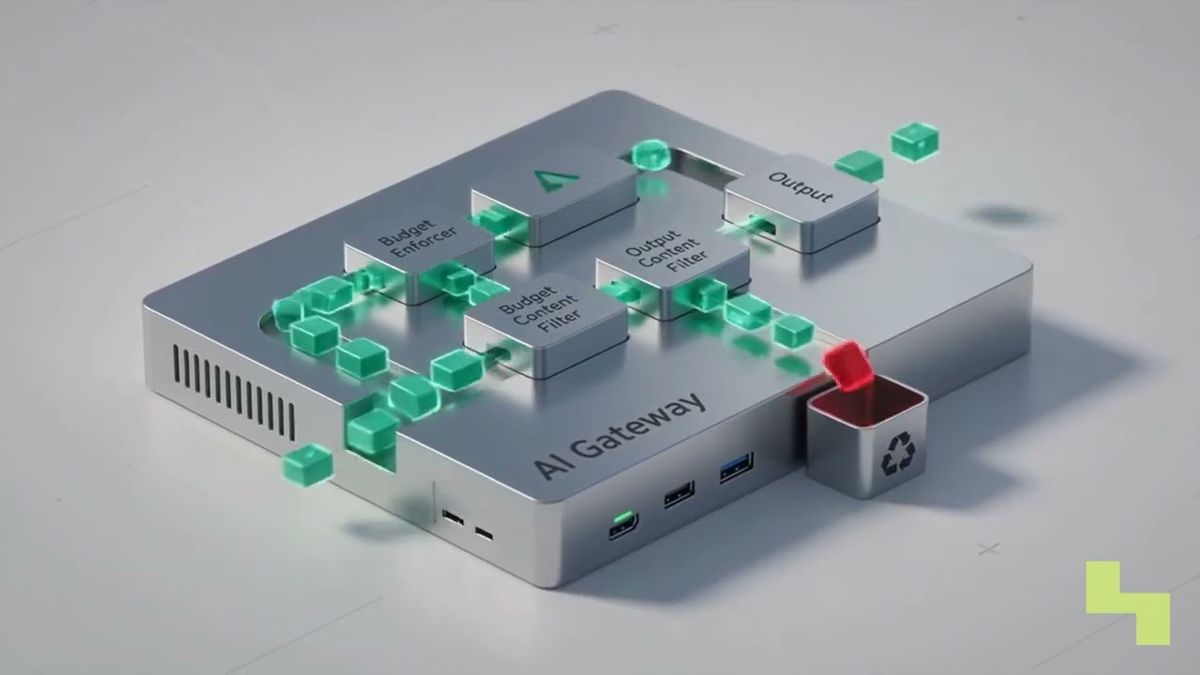
Think of it as a front desk for model traffic. It takes model requests from applications and forwards them to the right model endpoint. Applications connect to the gateway once, and they stop juggling separate provider APIs, credentials and policies.
Follow one request through:
- The application sends a prompt or model request to the gateway.
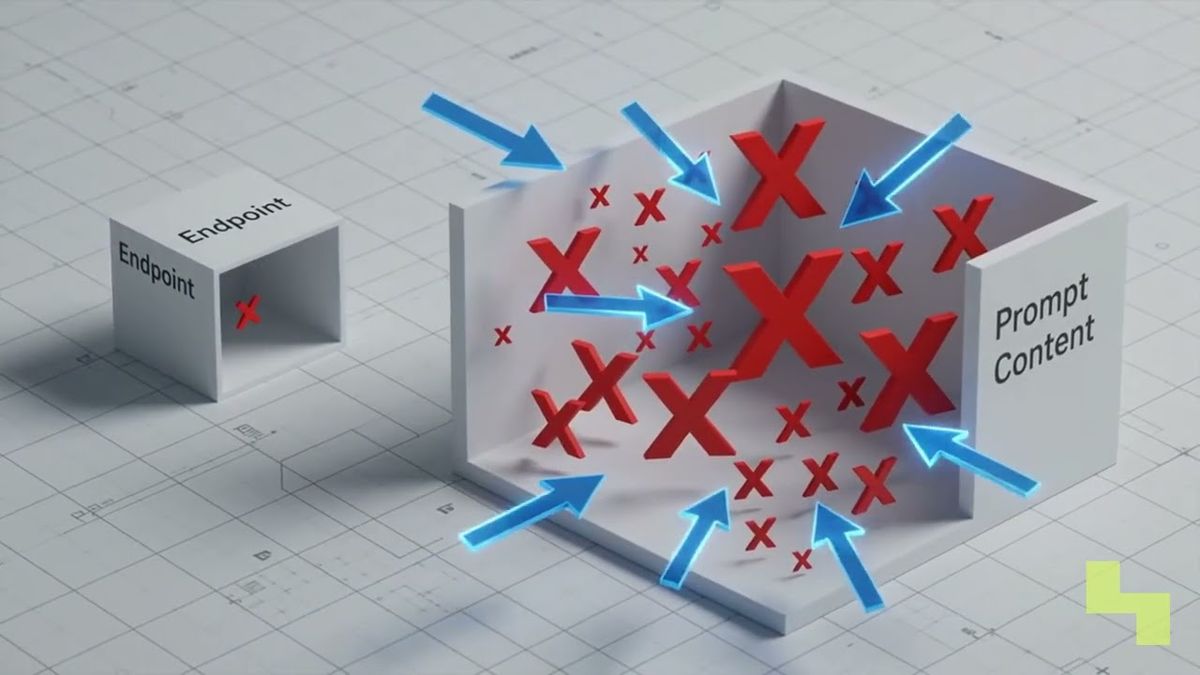
- The gateway checks who's calling and applies access, content and data policies.
- Routing logic picks a model for what's needed (capability, cost or latency).
- Usage and trace get recorded, then the result goes back to the application.
Operational concerns stay out of product code. Adding a provider, changing a routing rule or dropping in a guardrail happens once, in the shared layer, and platform teams end up maintaining far fewer separate integrations.
What capabilities should an AI gateway provide?
Four jobs make model usage manageable across teams, products and features: routing and reliability, cost controls, observability, and security and governance.
- Routing and reliability: choose a model by cost, latency or capability, and redirect to a compatible alternative when a provider is down (provided teams have configured and tested that fallback path).
- Cost controls. Token use gets attributed to a team, application, feature, user or workload, not to one lump provider charge, so budgets and usage policies can rest on real ownership data.
- Observability: traces can capture prompts, responses, model choices, errors, latency and tool calls. They may hold sensitive data, so handle them carefully. They help with debugging failures, chasing regressions and audits; see AI cost observability for the spending side.
- Security and governance, meaning PII redaction, content policies, guardrails, authentication, authorization and logging applied the same way everywhere instead of rebuilt in each app.

How is an AI gateway different from an API gateway?
Many teams run both. They solve different problems.
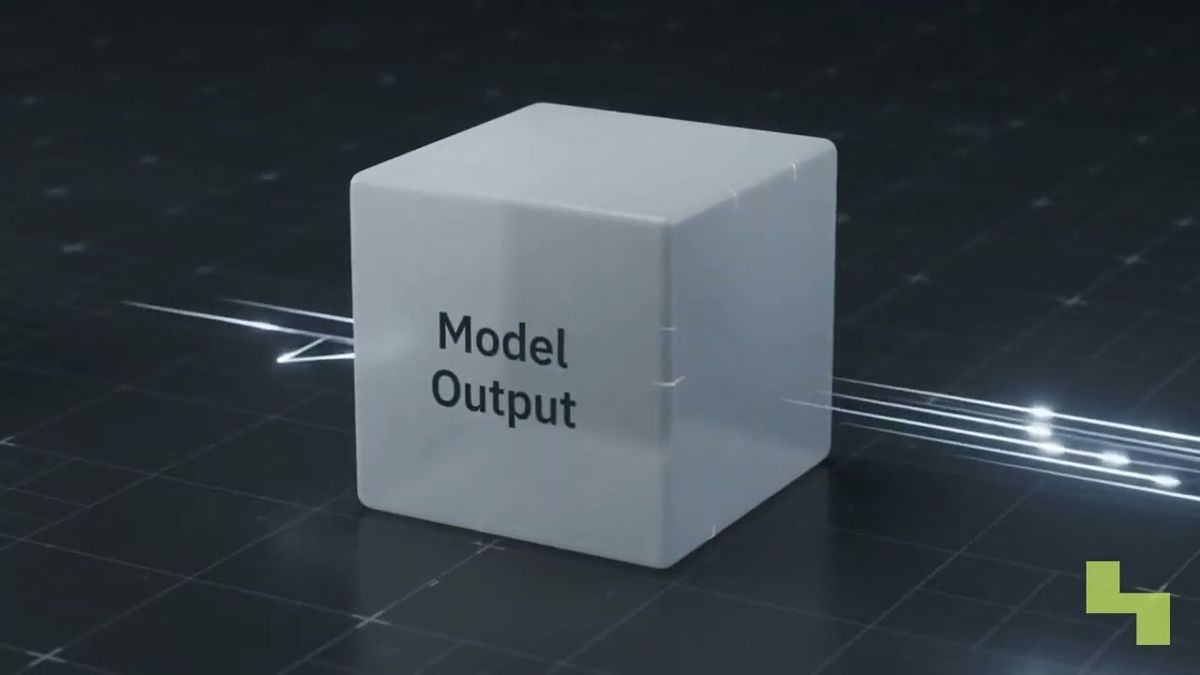
An API gateway manages general HTTP traffic: authentication, rate limiting, request routing and service protection, usually. Prompts, token-based billing, variable output lengths, semantic content, model selection and probabilistic responses aren't things it inherently understands. An AI gateway builds controls around exactly those. It can attribute tokens, route by model capability, inspect AI-specific request structures and apply policies to prompts and outputs.
Why does that matter? An HTTP 200 can still carry a low-quality, unsafe or policy-violating answer, and a plain API gateway waves it through. For a fuller architectural comparison, read AI gateway vs. API gateway.

How Hyperlake helps
Hyperlake is the AI cloud for your team and your agents, on your cloud. It lets teams assemble and operate model services, applications, data services, policies, identity controls and observability in infrastructure they or their clients control. Its modular architecture supports governed model and data access, scoped secrets, audit and reusable deployment patterns across environments, with specific integrations and automations depending on the deployment. To discuss the AI platform architecture your workloads need, talk to our team.
Frequently asked questions
Does an AI gateway replace direct model provider APIs?
Mostly no. Applications usually call the gateway, but provider APIs keep running behind it. The gateway standardizes access and centralizes operational controls, then forwards requests to configured providers or privately hosted model endpoints. Differences in model capabilities, request formats and provider-specific features still need accounting for.
Can an AI gateway prevent an application outage when a model provider fails?
It can support failover by routing requests to an alternative endpoint, but owning a gateway doesn't make continuity automatic. You need a compatible backup model, routing criteria, spare capacity, suitable credentials and tested behavior. Your applications also have to cope with differences in output quality, latency, context limits and response structure.
Should AI gateway logs store complete prompts and responses?
Not always. Full content helps with debugging and evaluation, but it can include personal, confidential or regulated data. Write a logging policy that says what's retained, what's redacted, what's encrypted and who can see it, with retention periods and permissions to match the workload's security and audit needs.