RAG vs. fine-tuning is primarily a choice between changing what a model knows at runtime and changing how it behaves. Retrieval-augmented generation supplies current, external knowledge with each request, while fine-tuning modifies model weights to shape output formats, terminology, reasoning patterns, or tone. Many production systems benefit from using both.
Choosing the wrong method can create unnecessary engineering work, stale answers, weak governance, or behavior that remains inconsistent despite better context. The video above walks through the core ideas.
What is the difference between RAG and fine-tuning?
RAG connects an unchanged model to external knowledge at query time, while fine-tuning retrains a model on examples that influence its weights. In practical terms, RAG primarily addresses knowledge gaps, and fine-tuning primarily addresses behavior gaps.
A typical RAG request follows this path:
- A user submits a question.
- The system searches documents, databases, or another knowledge service.
- It places the most relevant passages in the model’s context window.
- The model generates an answer grounded in that retrieved material.
Fine-tuning instead trains the model on representative inputs and desired outputs. The resulting model may follow a domain-specific style, use specialized vocabulary, or produce a required structure more consistently. Information represented in training examples affects the model’s weights, so updating it generally requires another training and deployment cycle.
This distinction is central to agent grounding in enterprise AI: retrieval provides approved context, while model behavior determines how that context is interpreted and presented.

When should an enterprise use RAG?
Use RAG when answers depend on information that changes, must remain governable, or needs to be linked to source material. Product documentation, support policies, asset records, operating procedures, and regulatory updates are common examples.
RAG lets teams update the knowledge layer without retraining the base model. A revised document or database record can become available to retrieval once the relevant ingestion and indexing process completes.
It also supports stronger evidence handling. The application can retain retrieved passages, document identifiers, access decisions, and generated citations for review. This does not guarantee that every generated statement is correct, but it creates a clearer path for evaluating whether an answer is supported by approved sources.
RAG is usually the better starting point when:
- Knowledge changes more frequently than the model release cycle.
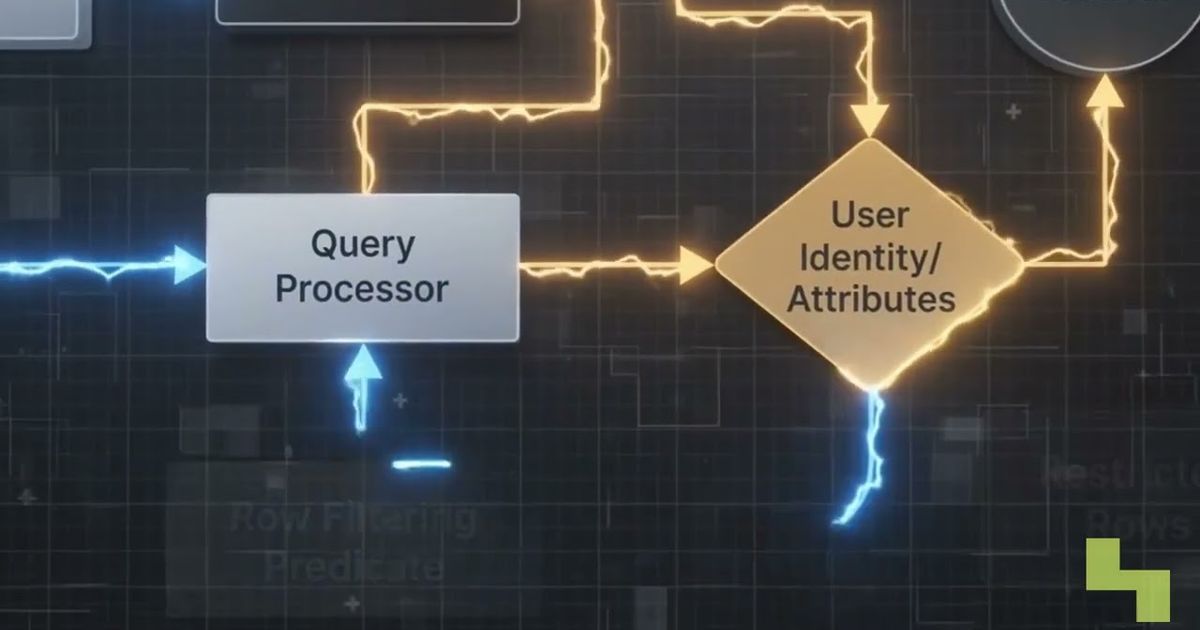
- Different users or agents should retrieve different information.
- Answers need citations or traceable supporting evidence.
- The organization wants to update content without managing retraining jobs.
Retrieval quality still matters. Weak chunking, incomplete indexes, poor ranking, or missing access controls can provide irrelevant or unauthorized context even when the model itself performs well.
When should an enterprise use fine-tuning?
Use fine-tuning when the main problem is repeatable behavior rather than missing facts. It can help a model follow a particular output schema, adopt domain vocabulary, produce a consistent voice, or handle recurring task patterns demonstrated by high-quality training examples.
For example, a team may want every response to follow a precise JSON structure or every support summary to use the same categories and terminology. Retrieval can show the model instructions and examples, but it does not reliably change the model’s underlying behavior across all inputs. Fine-tuning can make those patterns more consistent.
Techniques such as low-rank adaptation, or LoRA, can reduce the compute needed to adapt a model compared with updating all its parameters. However, training cost is only one part of the decision. Teams must also manage datasets, evaluations, model versions, deployment compatibility, rollback procedures, and retraining when requirements change.
Fine-tuning is not a dependable substitute for a current knowledge system. Facts encoded during training can become stale, and the model may not reproduce them accurately. It also does not inherently provide citations or show which training example influenced a particular answer.
Should RAG and fine-tuning be used together?
RAG and fine-tuning are complementary when an application needs both current evidence and specialized behavior. Retrieval can provide facts and source context, while a fine-tuned model can control how the system interprets and presents that information.
A practical implementation sequence is:
- Start with RAG to connect the model to approved, current knowledge.
- Evaluate failures and separate retrieval problems from behavior problems.
- Improve ingestion, chunking, ranking, prompts, and access controls first.
- Fine-tune selectively when repeated behavioral failures remain.
This approach avoids training a model to compensate for a broken retrieval pipeline. It also preserves source attribution for knowledge-intensive answers while allowing teams to refine format, vocabulary, and voice.
The combined architecture is especially useful for on-brand, evidence-backed assistants. Governance teams can inspect retrieved sources and access logs, while application teams evaluate whether the adapted model follows required behavior. Broader LLM testing and benchmarking should cover retrieval relevance, answer faithfulness, formatting, policy compliance, latency, and failure handling.

Key takeaways
- RAG supplies external knowledge at query time without changing the base model.
- Fine-tuning modifies model behavior through training examples and updated weights.
- Frequently changing or citable information generally belongs in a retrieval system.
- Fine-tuning is most useful for persistent requirements involving format, terminology, task patterns, or tone.
- Teams should start with RAG, measure failures, and add fine-tuning only for gaps retrieval cannot solve.
How Hyperlake helps
Hyperlake lets teams assemble and govern private AI environments that combine model serving with structured data, documents, vector search, knowledge graphs, or ontologies. Teams can host open or custom models, fine-tune and evaluate them on selected compute, and control how agents reach enterprise context through identity, policy, scoped secrets, logging, and integrated access points. To discuss a RAG, fine-tuning, or combined deployment in your infrastructure or a client’s, talk to our team.
Frequently asked questions
Can RAG replace fine-tuning for enterprise applications?
RAG can replace fine-tuning when the principal requirement is giving a model access to private, current, or citable information. It is less effective when the model must consistently follow a specialized format, reasoning pattern, vocabulary, or tone. Prompting may address some behavioral needs, but persistent failures can justify selective fine-tuning.
Does fine-tuning teach a model new company knowledge?
Fine-tuning can expose a model to company terminology and recurring domain patterns, but it is not a reliable knowledge database. Facts incorporated into model weights can become stale, may be reproduced incorrectly, and are difficult to trace to a source. Frequently updated company knowledge is usually better stored externally and supplied through RAG.
Is RAG easier to govern than a fine-tuned model?
RAG can make governance more direct because the system can record which sources were retrieved, which identity requested them, and which access policies applied. Fine-tuned behavior still requires dataset lineage, model versioning, evaluation, and deployment controls. Neither approach is automatically compliant; governance depends on the complete data, model, application, and access architecture.
How can teams tell whether a failure needs RAG or fine-tuning?
First ask whether the model lacked the correct evidence or mishandled evidence it already had. Missing, irrelevant, or unauthorized context points to ingestion, retrieval, ranking, or access-control problems. If the correct context was present but the response repeatedly violated required format, vocabulary, or style, prompting or fine-tuning may be the appropriate next step.